Disclosure: This post contains affiliate links, including Amazon Associates links. If you buy through them, we may earn a commission at no extra cost to you. As an Amazon Associate I earn from qualifying purchases.
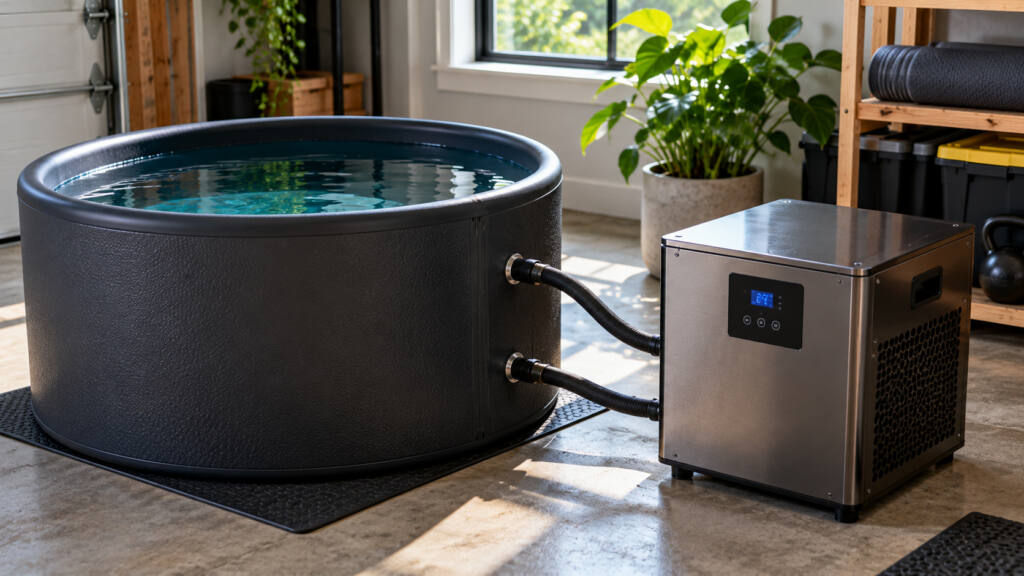
A cold plunge chiller under $1,000 is not a compromise — it is a practical choice for apartment dwellers and small-home owners who want active temperature control without a $2,000+ installation.
We tested the specs, electrical requirements, and real owner feedback on five Amazon-sold chillers under $1,000 to find the ones worth buying for small-space setups.
For a comparison of compact tubs that work with these chillers, see our guide to the 3 best small cold plunges for apartments.
Shopping under a $1,000 ceiling means accepting some real trade-offs. Compressor size (measured in horsepower or BTU/hr), water capacity, noise output, and filtration all scale with price, so a budget chiller cools a smaller tub more slowly than a $2,000 commercial unit. Buyers also need to check electrical requirements, since some units draw enough wattage to warrant their own circuit, and confirm what’s actually included in the box (hoses, pump, filter) versus what needs to be bought separately.
Capacity and wattage matter most when matching a chiller to a tub. A unit rated for 80 gallons will struggle and run constantly in a 150-gallon tank, while an oversized chiller on a small tub cycles on and off more than necessary. Checking the gallon rating, the horsepower or BTU/hr figure, and the included accessories against your specific tub before buying prevents the most common and costly mismatch. With that groundwork in place, here’s how five chillers under $1,000 compare on paper.
For daily plunge routines with any tub, the AS ColdPlunge 1/3HP Chiller is our pick. It cools to 42°F, includes a submersible pump, and draws only 600 watts.
For Ice Pod and Long Pod owners, The Pod Company Standard Water Chiller is the closest factory-matched option. It draws just 280 watts — the lowest of any chiller in this list.
The Pod Company Standard Water Chiller
For larger 132-gallon tubs, the Poafamx 1/2HP Water Chiller delivers more cooling power. Its titanium evaporator resists corrosion from Epsom salts and minerals, and the external 317 GPH pump moves water faster than most chillers in this price range.
For no-plumbing, drop-in setup, the PlungeFit Cold Plunge Chiller Pro is the simplest option. It sits directly in the water like an immersion cooler, requires no hoses, and cools to 39°F with WiFi app control.
PlungeFit Cold Plunge Chiller Pro
For chemical-free water care, the Healcryo 0.5HP Ozone Chiller combines a 4,000 BTU/hr compressor with an oxidation-based treatment system. It reduces the need for chlorine and bromine dosing between drain cycles.
If you want to see how these compare against higher-priced chillers, see our guide to cold plunge chillers under $1,500.
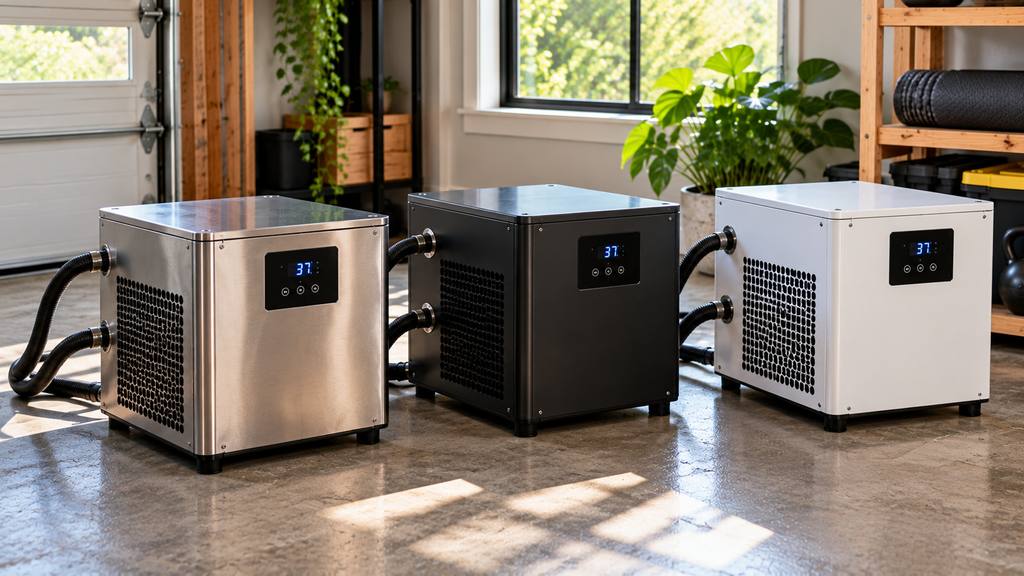
AS ColdPlunge 1/3HP Chiller — Best Overall
Renters and homeowners who want one chiller that works with a dedicated cold plunge tub or a standard bathtub should consider this model first.
Pros
- Cools water down to 42°F with a 1/3 HP compressor
- Includes a submersible pump for bathtub use plus insulated hoses and quick-connect fittings for dedicated tubs
- Built-in washable metal mesh filter avoids disposable cartridges
Cons
- 180-gallon capacity listed at 79 gallons may undersize larger tubs
- Some owners report the LED display lagging behind actual water temperature
- 600-watt draw means a standard 15-amp circuit works, but shared circuits can trip under load
This chiller draws 600 watts, which fits comfortably on a standard household 120V, 15-amp outlet, but it’s worth plugging it into its own circuit if the bathroom or garage already runs other equipment. Owners who’ve run it for months report consistent performance in the low 50s to low 40s depending on ambient temperature and tub insulation, with one noting their chiller held steady for nearly a year with responsive manufacturer support when a part failed. The 1/2-inch inlet and outlet ports connect directly to dedicated cold plunge tubs, and the included submersible pump is a practical bonus for anyone using a repurposed bathtub instead. The main complaint in user feedback centers on the digital display occasionally showing a temperature that doesn’t match the water, though the chiller itself keeps cooling and cutting off at the correct point regardless.
Verified buyer reviews on Amazon frequently mention that the chiller holds temperature well in a garage but struggles in hot ambient conditions. The most common note is that the LED display reads a few degrees warmer than the water actually is, though the unit continues cooling correctly.
The Pod Company Standard Water Chiller — Best for Pod Owners
Owners of The Ice Pod Pro or Long Pod get the closest factory-matched fit with this chiller, though it works with other tubs that have standard inlet/outlet valves too.
Pros
- Cools to 41°F while using only 280 watts, roughly what a home refrigerator draws
- 20-micron filter keeps water clear between sessions with continuous circulation
- 126-gallon rated capacity suits mid-size tubs
Cons
- Rated lower on average by owners than other chillers in this lineup
- Multiple reviews describe leaking ball valve threads and inflatable ring issues on the companion pod
- No storage bag included for the pod component
At 280 watts, this is the most energy-efficient compressor in this roundup, which matters for anyone running it continuously in a garage or basement where electricity costs add up over a full winter of daily plunges. The 1/3 HP compressor is built specifically to pair with The Pod Company’s own inflatable tubs, and setup reports describe a straightforward process with all needed hardware included in the box. The lower average rating compared to competitors traces mostly to the companion pod hardware rather than the chiller itself: several buyers flagged a ball valve that leaks despite thread tape, and an inflatable collar that loses air within the first month. Anyone buying this chiller to pair with an existing tank or non-Pod-brand tub should confirm the fittings match before ordering, since it’s engineered around Pod Company products first.
Owners in Pod Company community forums consistently report that the chiller pairs perfectly with the Ice Pod Pro but requires adapter fittings for other brands. The most common complaint is the slow initial cooldown from tap temperature — usually 4–6 hours in a warm room.
Poafamx 1/2HP Water Chiller — Best for Larger Tubs
Buyers with a 132-gallon tub who need more cooling power than a 1/3 HP unit offers should look at this chiller’s larger compressor.
Pros
- 1/2 HP compressor with R290 refrigerant and a titanium evaporator rated for 132 gallons
- External 50-watt pump delivers a 317 GPH flow rate, which is high for this price range
- Triple-side ventilation and a copper heat sink support extended run times
Cons
- Very limited review history makes real-world reliability hard to confirm
- Stainless steel housing adds weight compared to lighter competitors
- G1/2 connector is built for Poafamx’s own tub, so compatibility with other brands needs checking before purchase
The titanium evaporator and R290 refrigerant are worth noting on the spec sheet: titanium resists the corrosion that Epsom salts and minerals cause in copper coils over time, and R290 is a lower-impact refrigerant compared to older formulations. With only a handful of reviews published, this listing doesn’t yet have the track record of the other chillers here, so buyers should treat the manufacturer’s performance claims as unverified until more owners weigh in. The 317 GPH external pump is a genuine strength on paper, moving water faster than many built-in pumps in this price bracket, which should translate to more even cooling across a larger tub. Anyone considering this unit for a tub other than Poafamx’s own 155-gallon model should double check that the G1/2 to 0.71-inch connector fits their existing plumbing.
Because this is a newer listing, there are few long-term owner reports yet. The most common note from early buyers is that the external pump is noticeably louder than expected and benefits from a rubber isolation pad underneath.
PlungeFit Cold Plunge Chiller Pro — Best Drop-In Option
Renters who can’t modify plumbing or run hoses through a wall should consider this drop-in unit, since it cools directly in the tub with no external hookup.
Pros
- Drop-in design needs no hose setup or circulation plumbing
- Cools to 39°F and rated for up to 150 gallons
- WiFi app control lets owners schedule cooling before they arrive
Cons
- 1200-watt draw is double most other chillers here, which may require its own dedicated circuit
- Heavier at 45 pounds, with no built-in filtration system mentioned
- Limited review history compared to the AS ColdPlunge model from the same product family
This is the only chiller in the lineup that skips hoses and external plumbing entirely: the unit simply sits in the water like an immersion cooler. That makes it the simplest option for apartment dwellers or anyone using a temporary or inflatable tub where drilling inlet and outlet ports isn’t practical. The trade-off is power draw. At 1200 watts, this pulls roughly double the wattage of the AS ColdPlunge or Pod Company units, which means it’s close to the limit of a standard 15-amp circuit and worth running on its own circuit with a GFCI outlet rather than sharing with other appliances. The WiFi scheduling feature is a genuine convenience for anyone who wants cold water waiting after a workout, though as with any connected device, buyers should confirm the app supports their home WiFi band before counting on remote control as a dealbreaker feature.
Renters in cold plunge forums frequently praise the drop-in design because it requires no plumbing modifications. The most common caution is the 1,200-watt draw — several users report needing a dedicated circuit after tripping a shared breaker.
Healcryo 0.5HP Ozone Chiller — Best Chemical-Free Option
Buyers who want to avoid chlorine and bromine entirely should look at this chiller, which pairs a 4,000 BTU/hr compressor with an oxidation-based water treatment system instead of chemical dosing.
Pros
- Rated 4,000 BTU/hr cooling capacity, pulling water down to 38°F
- Titanium heat exchanger resists corrosion from salts and minerals better than copper
- AquaPure oxidation system plus a fine-mesh cartridge reduces chemical maintenance
Cons
- No published customer review history yet to confirm real-world reliability
- Manufacturer notes it’s optimized for containers up to 120 gallons and ambient temperatures under 90°F, which limits outdoor summer use in hot climates
- Wattage and amperage figures aren’t listed in available specifications, so electrical planning requires contacting the manufacturer
The BTU/hr rating (4,000) gives a useful point of comparison against the horsepower ratings used elsewhere: it’s a 0.5 HP compressor, putting it in the same power class as the Poafamx and PlungeFit units. The titanium heat exchanger is a meaningful upgrade over copper for anyone adding Epsom salts to their plunge water regularly, since copper coils are prone to pinhole corrosion from mineral exposure over months of use. The chemical-free water treatment is the standout feature on paper, combining an oxidation module with a filter cartridge to cut down on manual water treatment between drain cycles. Because this listing has no published wattage figure or customer review history, buyers should contact Healcryo directly to confirm amperage draw and circuit requirements before installing it on a shared outlet.
Because this product has almost no review history yet, buyers should treat the manufacturer’s performance claims as unverified. The most useful precaution is to contact Healcryo directly to confirm the amperage draw before purchase, since it is not published on the listing.
Buying Guide
Matching Horsepower and BTU/hr to Tub Size
A chiller’s cooling power needs to match the gallons of water it’s cooling, or it will run constantly and struggle to hit the target temperature. Horsepower (HP) and BTU/hr (British Thermal Units per hour) both describe cooling capacity, though they use different scales; roughly, a 1/3 HP compressor suits tubs in the 80–125-gallon range, while 1/2 HP units handle up to around 150 gallons more comfortably.
| Compressor Size | Suggested Tub Capacity | Typical Use Case |
|---|---|---|
| 1/3 HP (approx. 2,000–3,000 BTU/hr) | 80–125 gallons | Standard bathtub conversions, compact plunge tubs |
| 1/2 HP (approx. 4,000–6,000 BTU/hr) | 125–155 gallons | Dedicated cold plunge tanks, stock tanks |
Electrical Requirements: 120V, GFCI, and Dedicated Circuits
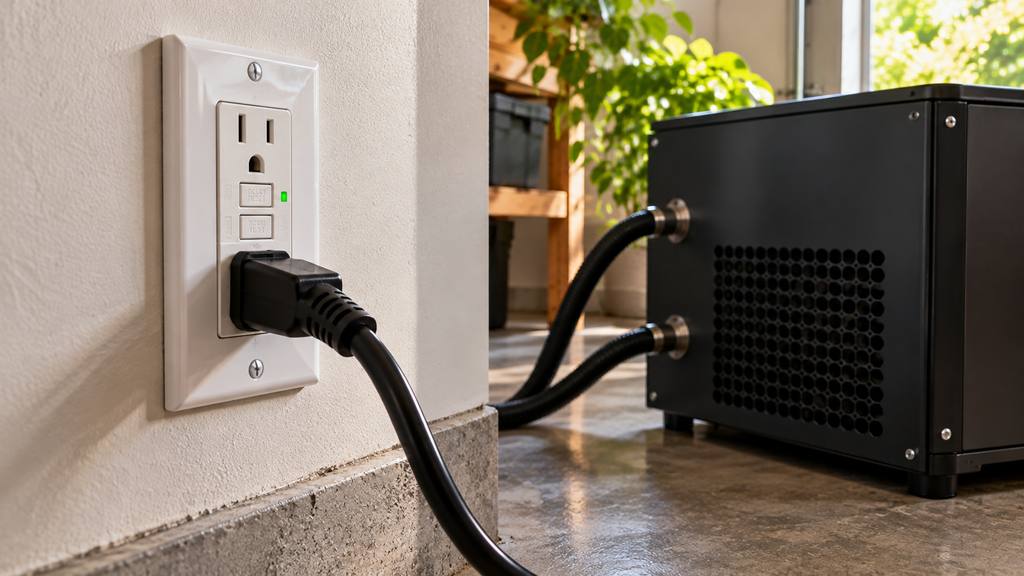
Most residential cold plunge chillers run on standard 120V household power, but wattage varies enough between models that it affects what kind of outlet and circuit they need. A chiller drawing 600 watts sits comfortably on a shared 15-amp circuit, while a 1200-watt unit approaches that circuit’s limit and runs better on its own breaker. Because these chillers sit near water, a GFCI (ground fault circuit interrupter) outlet is a safety requirement, not an optional upgrade; most garages and bathrooms built after the 1990s already have GFCI protection, but it’s worth testing the outlet before plug-in day. None of the chillers in this price range require 220V power, which is typically reserved for larger spa and pool equipment.
A cold plunge chiller under $1,000 typically runs on a standard 120V household circuit, so installation is straightforward for most US apartments and homes.
Pump and Filtration Needs
Chillers either include a built-in pump or require pairing with a separate submersible pump to circulate water through the unit. Drop-in chillers skip this requirement entirely since they cool water in place rather than through external hoses. Filtration ranges from simple washable mesh screens that catch hair and debris to multi-stage systems pairing a micron-rated cartridge with ozone or oxidation treatment; the latter reduces how often the tub needs a full drain and refill.
If you are building a DIY cold plunge using a stock tank or cooler, you will need to connect a chiller like one of these to keep the water cold automatically.
Noise and Placement
Compressor-based chillers produce audible operating noise, comparable to a window air conditioner or a kitchen refrigerator running on a cycle. Placement in a garage, basement, or outdoor patio minimizes the impact of that noise on daily life, while a chiller kept in a bedroom or shared living space is more likely to be noticeable overnight. Manufacturers don’t always publish exact decibel ratings, so checking seller documentation or contacting support before buying is worth the extra step if noise is a priority.
If you are still deciding between a cold plunge and an ice bath, see our comparison.
Common Mistakes to Avoid
- Skipping the capacity check: an undersized chiller on an oversized tub runs constantly without reaching the target temperature. Buying a cold plunge chiller under $1,000 that is undersized for your tub is the most common mistake we see in owner reviews.
- Ignoring circuit load: plugging a 1200-watt chiller into a circuit already running other high-draw appliances can trip the breaker.
- Forgetting winterization: chillers left outdoors in freezing temperatures need residual water drained from internal lines to prevent cracked components.
- Assuming universal fittings: some chillers are engineered for a specific brand’s tub and need adapter confirmation before connecting to a different tank.
Frequently Asked Questions
What is the best cold plunge chiller under $1,000 for home use?
The AS ColdPlunge 1/3HP Chiller suits the widest range of home setups because it works with both dedicated cold plunge tubs and standard bathtubs, thanks to its included submersible pump. It cools to 42°F on a 600-watt draw that fits a standard household circuit, which is a practical balance of power and electrical simplicity for most renters and homeowners.
If you are a renter looking for a compatible tub that is easy to store, check out our renter-friendly cold plunge guide.
What is the cheapest cold plunge chiller among the models covered?
The Pod Company Standard Water Chiller is positioned as an entry-level option designed around The Pod Company’s own inflatable tubs. Its 280-watt draw also makes it the least expensive to run day-to-day, even if the upfront price isn’t the lowest in every retailer’s current listing.
To pair a chiller with a portable tub, see our list of inflatable cold plunges for apartments.
Is a 1/3 HP or 1/2 HP chiller better for my ice bath tub?
A 1/3 HP chiller suits tubs up to roughly 125 gallons, while a 1/2 HP compressor handles larger tanks up to around 150 gallons more efficiently. Choosing based on gallons rather than price keeps the chiller from running constantly to reach your target temperature.
Which of these cold plunge chillers can cool a 132-gallon tub?
The Poafamx 1/2HP Water Chiller is rated specifically for 132-gallon tubs, and the PlungeFit Cold Plunge Chiller Pro is rated up to 150 gallons, so both can handle that capacity. The Healcryo 0.5HP unit is optimized for containers up to 120 gallons, so a 132-gallon tub exceeds its stated range.
For a balcony setup with a chiller, see our guide to setting up a cold plunge on a small balcony.
For garage installations, see our garage cold plunge guide.
Do any of these cold plunge chillers include filtration or ozone sanitation?
The AS ColdPlunge and Pod Company units include washable mesh or micron-rated filters to catch hair and debris, and the Poafamx chiller ships with an external filter as well. The Healcryo chiller is the only model here with ozone-style oxidation treatment built in, combining it with a fine-mesh cartridge for chemical-free water care.
Chiller compatibility differs by tub type — see our guide to choosing between an inflatable and a hard-shell cold plunge.
Once you have your chiller running, you need to know how long to actually stay in the water. We break down the safe time limits for different temperatures in our guide to how long to stay in a cold plunge.
How cold can an under-$1,000 cold plunge chiller keep the water?
Manufacturer specifications for this group range from 38°F to 42°F, depending on the model and ambient conditions. The Healcryo unit lists the lowest rated temperature at 38°F, while the AS ColdPlunge and PlungeFit chillers are both rated down to 39°F to 42°F depending on configuration.
Disclosure: This post contains affiliate links, including Amazon Associates links. If you buy through them, we may earn a commission at no extra cost to you. As an Amazon Associate I earn from qualifying purchases.