Disclosure: This article contains affiliate links, including Amazon Associates links. If you purchase through them, we may earn a commission at no extra cost to you.
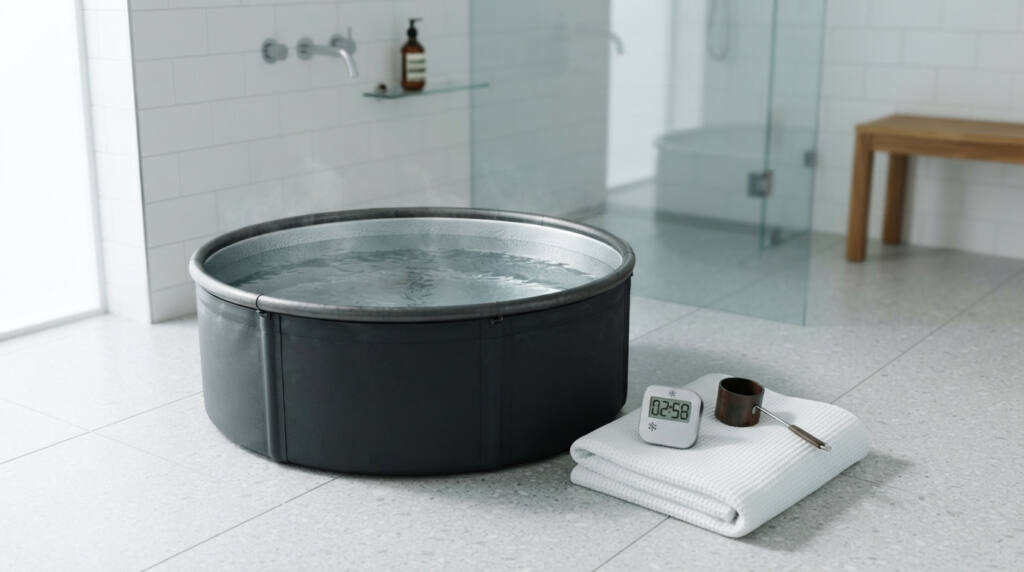
If you’re wondering how long should you stay in a cold plunge, the safest answer is usually much shorter than the extreme routines promoted on social media.
One person recommends three minutes at 50°F. Another insists on ten minutes near freezing. Some cold-water enthusiasts claim you should stay submerged until you stop shivering or your breathing becomes completely controlled.
Those approaches are not interchangeable, and some can be dangerous.
Cold-water immersion produces immediate cardiovascular and respiratory responses. Your heart rate, blood pressure, breathing, and skin circulation can change within seconds of entering the water.
The objective is not to prove how much discomfort you can tolerate.
For most beginners, a brief, controlled exposure is a more sensible starting point than an endurance challenge. The appropriate duration depends on water temperature, personal health, experience, and how your body responds.
This guide explains what happens during cold immersion, how temperature changes the risk, why your recovery goals matter, and how to build a conservative routine in a small home or apartment.
The Short Answer: How Long Should You Stay in a Cold Plunge?
For a healthy beginner who has been medically cleared when appropriate, approximately 1–3 minutes in water around 50–59°F is a commonly discussed short-session range—not a universal safe prescription.
A more conservative first exposure may be 15–30 seconds in moderately cool water, or simply a cool shower.
You do not need to complete three minutes to make a session worthwhile.
The colder the water, the more cautious you should be about both duration and entry.
| Water temperature | Practical guidance | Risk consideration |
| 60–65°F | Start with a brief, comfortable exposure | Still cold enough to trigger a response |
| 55–59°F | Short sessions may be tolerable for some acclimated users | Breathing and cardiovascular responses matter |
| 50–54°F | Use particular caution; avoid treating 1–3 minutes as a requirement | Greater cold stress |
| 45–49°F | Not a sensible starting range for beginners | More intense cold shock and faster loss of dexterity |
| 40–44°F | Avoid as a beginner | High-intensity exposure with potentially serious consequences |
| Below 40°F | Not recommended for routine beginner use | Near-freezing water presents substantial risk |
These are qualitative safety considerations, not medically validated duration limits.
A person who feels unwell after 20 seconds should exit. Someone who has tolerated longer exposures in the past is not automatically protected from cold shock or cardiovascular complications.
The most important rule: Exit when your body signals trouble, not when a timer says you have completed your goal.
The Science: What Happens to Your Body in Cold Water?
Cold immersion creates several overlapping physiological responses.
Three are particularly important for beginners: cold shock, progressive cooling and loss of function, and continued cooling during recovery.
Stage 1: Cold Shock — The First Seconds
Cold shock can begin almost immediately when your skin contacts cold water.
The response may include:
- An involuntary gasp.
- Rapid, uncontrolled breathing.
- Increased heart rate.
- A sudden rise in blood pressure.
- A strong sensation of panic or urgency.
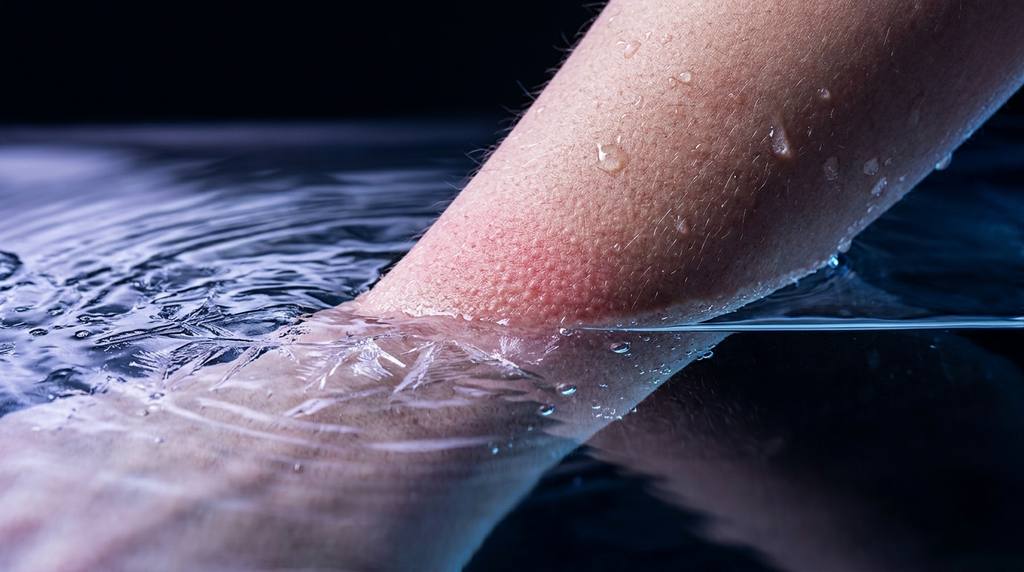
This response can be particularly pronounced when a large area of skin is immersed quickly.
For people with certain cardiovascular conditions, the sudden change in blood pressure and cardiac workload may be dangerous.
That is why you should enter gradually, keep your head above water, and avoid sudden full-body immersion.
Beginners frequently discover that the first 30 seconds are by far the hardest part of the plunge, and many note that if they can just control their breathing for one minute, their body settles down and the rest of the session feels much easier.
Cold shock does not end at an exact 30-second mark. Its intensity and duration vary with temperature, immersion depth, and the individual.
Stage 2: Progressive Cooling and Cold Incapacity
After the initial response, continued exposure cools the skin and peripheral tissues.
Hands and feet may become uncomfortable or less responsive.
Grip strength and fine motor coordination can deteriorate.
In sufficiently cold water, this can eventually interfere with the ability to hold a railing, operate a latch, or climb out safely.
Cold incapacity is not guaranteed to begin at one or two minutes. The timing varies considerably and can be faster or slower depending on conditions.
The important point is that loss of function can occur before a person becomes severely hypothermic.
For a home plunge, that means the exit must be easy to use while cold and wet.
Do not depend on a difficult ladder, slippery step, or complicated cover mechanism.
Stage 3: Rewarming After You Exit
Leaving the water stops further immersion, but it does not mean your body immediately stops cooling.
Cold peripheral tissues can continue exchanging heat with warmer internal tissues.
In some circumstances, core body temperature may continue to fall after removal from cold water.
This is known as afterdrop.
It is particularly important following prolonged or severe cold exposure, although the degree and timing vary.
A short, moderate-temperature plunge does not necessarily produce a significant afterdrop.
However, everyone should allow time to dry, dress, and recover after cold immersion.
What About Dopamine, Adrenaline, and Mood?
Cold exposure activates the sympathetic nervous system and can increase circulating stress-related chemicals, including norepinephrine.
Some studies have also reported changes in dopamine under particular cold-exposure conditions.
However, these findings do not establish that a specific one-, two-, or three-minute plunge produces a predictable dopamine increase or clinically meaningful mental-health benefit.
Feeling alert or energized after cold exposure is not proof of a particular hormone level.
Research into cold immersion and mental health remains limited, and cold plunging is not an established treatment for depression or anxiety.
Why Water Temperature Changes Everything
Two people can spend the same amount of time in a cold plunge and experience very different levels of physiological stress.
Temperature is one of the biggest reasons.
45°F vs. 55°F: A Meaningful Difference
Water at 45°F is only ten degrees colder than water at 55°F, but that difference can substantially change the intensity of the experience.
Colder water generally increases the temperature gradient between your body and the environment.
Heat loss also depends on immersion depth, movement, body composition, clothing, and exposure duration.
A minute in 40°F water may feel more intense than several minutes at 55°F.
However, there is no universal formula that makes one minute at 40°F physiologically equivalent to five minutes at 55°F.
Do not use such comparisons to justify near-freezing exposure.
Why Beginners Should Avoid Chasing the Lowest Temperature
A colder plunge is not automatically a better plunge.
The research does not establish that water near freezing provides superior recovery or mental-health outcomes for most people.
Lower temperatures can increase discomfort and make breathing control, safe exit, and recovery more difficult.
If you are new to cold immersion, begin with tolerable water and short exposures.
You can evaluate your response over time without progressively lowering the temperature.
Use a Thermometer, Not Guesswork
A tub that feels cold to your hand may be warmer or colder than you expect.
Use a suitable water thermometer to measure the temperature before entering.
A floating thermometer with an integrated timer can reduce the need for separate devices.
Suoimk Floating Thermometer with Timer
Check the manufacturer’s water-resistance rating. A water-resistant device is not necessarily suitable for continuous submersion.
For a small apartment setup, a simple thermometer is usually more useful than a complicated collection of accessories.
How Long Should You Plunge for Different Goals?
Cold plunging is often discussed as if every session has the same purpose.
In reality, someone interested in exercise recovery may have different priorities from someone who simply enjoys a brief, refreshing cold shower.
The research also varies substantially by goal.
For Exercise Recovery
Some controlled studies have investigated cold-water immersion protocols lasting approximately 10–15 minutes, often at temperatures around 50–59°F.
Those protocols are research interventions, not universal recommendations for home use.
They may improve perceived muscle soreness or certain short-term recovery measures in some circumstances, but results are mixed.
Do not assume you need 10–15 minutes to obtain a benefit.
Dividing exposure into shorter intervals, such as three three-minute immersions, is sometimes suggested, but it is not established as an equally effective or universally safe alternative to a continuous session.
Repeated immersion can also produce repeated cold-shock responses.
For beginners, a brief, tolerable exposure is a more appropriate starting point than copying an athlete’s research protocol.
For Alertness, Mood, or Energy
Some people report feeling more awake or refreshed after a cold plunge.
A brief exposure may be sufficient to create a noticeable sensation.
However, there is no proven minimum duration required to trigger a beneficial dopamine or adrenaline response.
Cold exposure is a physiological stressor, not a guaranteed mood treatment.
If your goal is simply to feel refreshed, a short cool shower may provide the experience you want with less complexity.
For renters, our guide to the best cold plunge for renters explains portable alternatives to permanent installations.
For Muscle Growth and Strength Training
This is where timing becomes especially important.
Research suggests that frequent cold-water immersion immediately after resistance training may blunt some muscle hypertrophy adaptations.
The proposed mechanisms involve changes in the cellular signaling and physiological processes associated with training adaptation.
That does not mean a single cold plunge destroys your workout.
It does mean that regular, immediate post-lifting immersion may be counterproductive if maximizing muscle growth is your priority.
If hypertrophy is your main goal, consider avoiding cold immersion immediately after strength training and discuss timing with a qualified sports-health professional.
For a broader comparison, see our guide to cold plunge vs ice bath.
For General Wellness
There is no established weekly dose of cold immersion that everyone should pursue.
You do not need to plunge every day.
A brief, occasional session may be enough if you enjoy the experience.
Consistency should never take priority over safety, comfort, or medical considerations.
For Contrast Therapy
Some people alternate sauna exposure with a cold plunge.
This can create substantial changes in cardiovascular demand, especially when transitioning quickly between heat and cold.
Avoid rushing directly from an intense sauna session into near-freezing water.
Allow time to stabilize your breathing, balance, and hydration.
Our sauna and cold plunge setup guide covers conservative transitions and small-space equipment planning.
The Afterdrop Warning: Why Your Session Doesn’t End When You Exit
One of the most overlooked cold-water risks is continued cooling after immersion.
Afterdrop refers to a continued decline in core temperature during recovery from cold exposure.
It is most concerning after substantial body cooling, such as prolonged immersion in very cold water.
Does Afterdrop Always Last 20–30 Minutes?
No.
You may see claims that body temperature continues dropping for exactly 20–30 minutes after every cold plunge.
That is not a universal physiological rule.
The magnitude and timing depend on how cold the person became, immersion conditions, body characteristics, and the recovery process.
A brief session in moderately cold water may produce little or no clinically significant afterdrop.
Nevertheless, feeling cold after exiting should be taken seriously.
Do Not Wait Until You Are Shivering Violently
Shivering is one of the body’s responses to cold stress.
Mild shivering can occur during or after cold exposure, but severe or uncontrollable shivering is a warning sign.
Do not stay in the water until you are shaking violently, losing coordination, or becoming confused.
Owners who plunge in cold garages frequently mention that the hardest part is not the water itself, but the shivering that hits 10 minutes after they get out, which is why keeping a warm robe and dry clothes right next to the tub is essential.
Also, absence of shivering does not prove safety. Severe hypothermia can impair normal responses.
A Safer Rewarming Routine
After exiting:
- Move to a safe, dry location away from the tub.
- Remove wet clothing or coverings.
- Dry yourself and put on warm, dry layers.
- Sit down if you feel lightheaded.
- Allow your body to warm gradually and monitor how you feel.
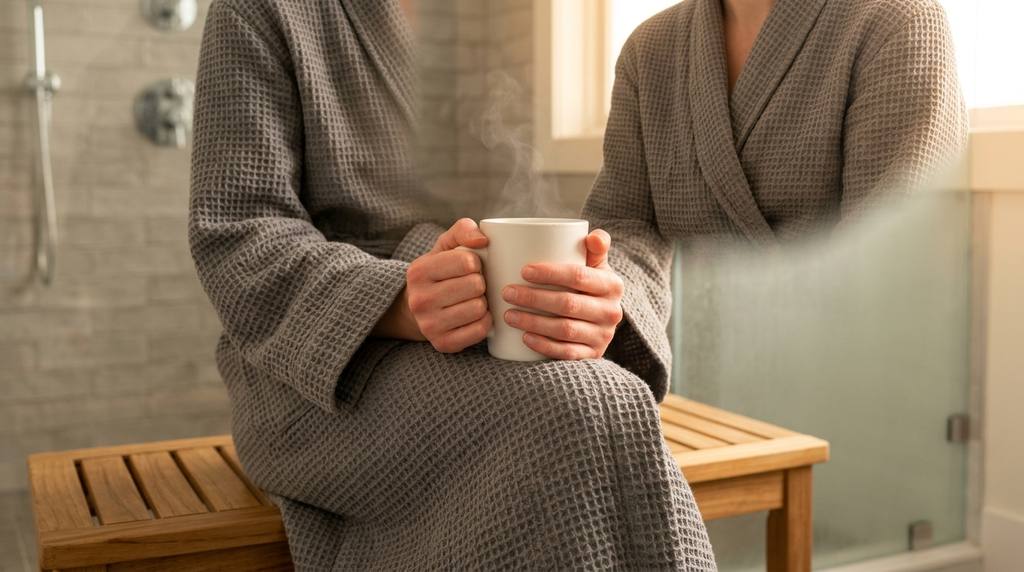
Avoid immediately jumping into extremely hot water or returning to a very hot sauna if you feel dizzy, weak, or significantly chilled.
Do not exercise intensely to force rapid rewarming.
If you develop confusion, fainting, chest pain, severe weakness, or persistent breathing problems, seek emergency medical assistance.
Cardiovascular Safety: Who Should Avoid Cold Plunging?
Cold-water immersion can place substantial stress on the cardiovascular system.
The initial response may sharply increase blood pressure and heart rate.
For some people, this can increase the risk of dangerous heart-rhythm disturbances or other cardiovascular complications.
Cold plunging is not appropriate for everyone.
People with cardiovascular disease, arrhythmias, uncontrolled high blood pressure, fainting disorders, or other conditions that may affect their response to cold should obtain individualized medical guidance before trying it.
Pregnant individuals and people taking medications that affect cardiovascular or temperature regulation should also seek medical advice.
Never plunge while intoxicated or when feeling unwell.
Never Plunge Alone
A second person should be present and able to assist if something goes wrong.
This is particularly important for beginners.
Do not rely on a phone or smartwatch as your only safety measure.
Keep the exit clear, stable, and easy to use.
Avoid immersing your head, particularly during the initial cold-shock response.
Never Practice Breath-Holding Underwater
Some popular cold-exposure routines incorporate breathing exercises.
However, hyperventilation and prolonged breath-holding in or near water can cause loss of consciousness and drowning.
Do not perform breath-holding exercises before entering a plunge, underwater, or while immersed.
Keep breathing naturally.
If you cannot control your breathing, exit the water rather than forcing yourself to remain.
How to Track Your Cold Plunge Time Safely
A timer can be useful, but it should never become a challenge to beat.
The purpose of tracking is to prevent accidental overexposure and help you understand how you respond to different conditions.
Step 1: Measure the Water Temperature
Use a reliable thermometer before every session.
Do not assume the water is the same temperature as yesterday.
Ice, room temperature, sunlight, and chiller settings can all change the actual temperature.
Step 2: Set a Conservative Time Limit
For a first session, consider a brief cool shower or a short, tolerable immersion of approximately 15–30 seconds.
If you are healthy, appropriately cleared, and comfortable with prior exposures, you may gradually explore slightly longer sessions.
The commonly discussed one-to-three-minute range is not a target you must achieve.
Step 3: Use a Visible Timer
A water-resistant watch or a dedicated floating cold-plunge timer can help you track duration. However, many budget timers have poor water resistance, so always check the manufacturer’s rating. If you are unsure, simply use the timer on your phone from a safe, dry distance.
You can also use our contrast therapy timer to organize intervals.
Keep electronic devices outside splash zones unless they are specifically rated for the intended exposure.
Step 4: Stop Before You Reach Your Limit
A timer sets an upper boundary, not a minimum.
Exit early if you experience uncontrolled gasping, dizziness, chest discomfort, unusual weakness, confusion, or loss of coordination.
Do not remain submerged to prove that you can tolerate discomfort.
Step 5: Record Your Response
A simple log can help you recognize patterns.
| Session detail | What to record |
| Water temperature | Actual reading in °F |
| Duration | Time immersed |
| Entry response | Comfortable, intense, or uncontrolled breathing |
| Exit condition | Stable or experiencing symptoms |
| Recovery | How you felt after drying and warming |
Avoid turning the log into a competition to reach colder temperatures or longer durations.
A Simple Beginner Routine for Small Homes
For a beginner with no relevant medical contraindications, a conservative routine may look like this:
Before the Session
Confirm that the tub is clean, the water temperature is known, and the exit is stable.
If your plunge retains water between sessions, follow the manufacturer’s filtration, sanitation, and testing instructions.
Our cold plunge water maintenance guide explains why clear water is not necessarily sanitary.
Have a towel and warm clothing ready.
Make sure another person is present.
During the Session
Start with moderately cool water rather than near-freezing temperatures.
Enter gradually and keep your head above the surface.
Breathe normally.
If you are uncomfortable or develop concerning symptoms, exit.
A first exposure may last only a few seconds.
After the Session
Dry off, dress warmly, and allow time for recovery.
Do not immediately repeat the plunge simply because you feel energized.
Evaluate how you felt during the session and afterward.
Only consider modest changes in duration or temperature over time if you continue to tolerate the routine comfortably.
A Practical Starting Point
For some healthy adults who are familiar with cold showers, water around 55–60°F and a brief exposure may be a manageable starting environment.
For a true beginner, a cool shower is often preferable.
Starting at 50°F for one or two minutes is not necessary and may be too intense for some people.
The safest progression is based on individual response, not a fixed social-media protocol.
Frequently Asked Questions
Is it safe to stay in a cold plunge for 10 minutes?
Not necessarily.
Ten minutes may be used in some controlled research protocols, but that does not make it appropriate for every person or water temperature.
The risks increase with colder water, longer exposure, and individual susceptibility.
Beginners should not treat ten minutes as a goal.
Do I need to stay in until I stop shivering?
No.
Shivering is not a reliable indicator of when a session becomes beneficial.
Do not stay immersed through severe shivering, loss of coordination, or other concerning symptoms.
Exit before cold stress becomes difficult to manage.
Can I cold plunge every day?
Some people choose to, but there is no established requirement for daily immersion.
Frequency should depend on your health, tolerance, goals, and recovery.
More frequent exposure is not automatically better.
Is two minutes in a cold plunge enough?
Two minutes can produce a noticeable cold response, but there is no universal minimum duration required for a specific benefit.
A shorter session may be more appropriate, especially for beginners or colder water.
Is 40°F too cold for beginners?
Yes, it is an unnecessarily aggressive starting temperature.
Near-freezing water can produce intense cold shock and make safe exit more difficult.
Beginners should start with more moderate temperatures and brief exposures.
Can cold plunging improve mental health?
Some people report improved mood or alertness after cold exposure.
However, research remains limited, and there is no established cold-plunge duration proven to treat depression, anxiety, or other mental-health conditions.
Cold immersion should not replace evidence-based care.
Should I cold plunge immediately after lifting weights?
If maximizing muscle growth is your priority, frequent cold-water immersion immediately after resistance training may be counterproductive.
Some research suggests it can blunt hypertrophy adaptations.
Consider separating cold immersion from strength-training sessions.
What should I do if I feel dizzy after a cold plunge?
Stop the session, move to a safe place, and sit or lie down to prevent a fall.
Dry off and warm gradually.
If dizziness persists or occurs with chest pain, breathing difficulty, confusion, or fainting, seek emergency medical assistance.
Do not return to the water.
Final Recommendations: Shorter and Safer Is Better
For most beginners, the goal should be a manageable exposure—not an endurance record.
A conservative approach is to begin with a cool shower or a very brief immersion in moderately cold water.
Water around 55–60°F may be a reasonable starting range for some healthy adults, but it is not a universal recommendation.
As you become familiar with your response, you may explore slightly longer sessions without chasing extreme temperatures.
Remember these principles:
- Temperature matters: Colder water generally increases physiological stress.
- Duration is individual: There is no scientifically established perfect number of minutes.
- Cold shock is real: Enter gradually and keep breathing normally.
- Recovery matters: Allow time to dry, warm up, and monitor symptoms.
- Cardiovascular safety comes first: Seek medical guidance when relevant, and never plunge alone.
- Breath-holding is not part of a safe immersion routine: Avoid hyperventilation and underwater breath-holding.
The answer to how long should you stay in a cold plunge is not determined by a celebrity protocol or a social-media challenge.
It is determined by the water temperature, your health, your experience, and how your body responds.
A short session that ends comfortably is more sensible than a longer one that leaves you dizzy, severely chilled, or struggling to recover.
This post contains affiliate links. If you buy through them, we may earn a commission at no extra cost to you.