Disclosure: This post contains affiliate links, including Amazon Associates links. If you buy through them, we may earn a commission at no extra cost to you. As an Amazon Associate I earn from qualifying purchases
Learning how to set up a cold plunge on a small balcony starts with one question: can the balcony safely support hundreds of pounds of water, equipment, and a person?
A compact cold plunge may look like an ideal solution for apartment living. It takes up less space than a hot tub, requires no permanent bathroom renovation, and can provide convenient cold-water immersion just outside your living room.
But a balcony is not the same as a ground-level patio.
A plunge holding 70 gallons of water contains approximately 584 pounds of water before you add the tub, the person using it, or any equipment. Larger plunge tubs can exceed 1,000 pounds of combined load.
For apartment and condo dwellers, structural capacity, drainage, and building rules must come before product selection.
This guide explains how to evaluate a small balcony, choose appropriately sized equipment, manage water safely, and decide whether a balcony plunge is practical in the first place.
Bottom Line
Do not install or fill a cold plunge on an elevated balcony without written building approval and a structural assessment of the proposed installation.
A manufacturer’s description of a tub as portable or apartment-friendly does not mean it is suitable for a balcony.
If your balcony is approved for the intended load, a compact portable tub such as The Pod Company Ice Pod is a reasonable product to investigate. It has a relatively small footprint and does not require a chiller when used with ice.
For floor protection, a suitable Rubber-Cal rubber utility mat may help prevent scuffs and provide a non-slip surface. It does not increase the balcony’s structural capacity.
For water monitoring, a Govee Wi-Fi Water Sensor can provide an additional warning of leaks where the sensor is rated for the installation conditions.
If you eventually want active refrigeration, investigate a purpose-built chiller such as The Pod Company Standard Chiller, but only after verifying outdoor-use suitability, electrical safety, airflow, and the additional weight.
The Pod Company Standard Chiller
For most renters, the sensible approach is to start with ice, avoid permanent modifications, and choose the smallest approved water volume.
If structural approval is unavailable, use an existing bathtub or a suitable ground-level location instead.
For compact plunge tubs that fit balcony spaces, see our guide to the 3 best small cold plunges for apartments.
If you have garage access, see our complete guide to setting up a cold plunge in a garage.
1. Can You Actually Cold Plunge on a Balcony?
Possibly. But the answer depends on much more than whether the tub fits.
A successful balcony installation must satisfy four requirements: structural approval, building permission, safe water management, and adequate usable space.
Space
A small balcony might measure 4′ × 8′, providing 32 square feet before accounting for railings, door clearance, furniture, and walking space.
A round tub measuring approximately 32 inches across may physically fit.
That does not mean there is enough room to enter and exit safely or service the drain valve.
You should be able to reach the tub without climbing over a railing, furniture, or equipment.
The balcony door must remain usable.
Weight
Water is heavy.
Unlike a chair or small table, a plunge concentrates a large load within a relatively small footprint.
The balcony’s construction, age, support arrangement, condition, and approved loading must all be considered.
Drainage
A balcony plunge creates a practical problem that a bathroom plunge does not: water can escape into another person’s property.
Overflow, splashing, or an uncontrolled drain hose may send water onto a downstairs balcony, building facade, or occupied space.
You need a controlled method of moving water to an approved drain.
Lease and HOA Rules
Renters should obtain written landlord approval.
Condo owners should check their HOA or condominium association rules.
Some buildings restrict water-filled equipment, exterior appliances, plumbing changes, or objects that affect balcony drainage.
Even if the building permits outdoor furniture and grills, that does not imply permission for a 700-pound plunge.
Permits and Insurance
Depending on the building and installation, electrical, plumbing, or structural modifications may require approval or permits.
Check your renter’s or homeowner’s insurance terms as well.
Do not assume water damage to neighboring units would automatically be covered.
2. Balcony Structural Capacity: The Most Important Step
This is the section to read before buying anything.
How Much Does a Cold Plunge Weigh?
Water weighs approximately 8.34 pounds per US gallon.
| Water volume | Water weight alone |
| 40 gallons | 334 lb |
| 50 gallons | 417 lb |
| 60 gallons | 500 lb |
| 70 gallons | 584 lb |
| 80 gallons | 667 lb |
| 100 gallons | 834 lb |
| 120 gallons | 1,001 lb |
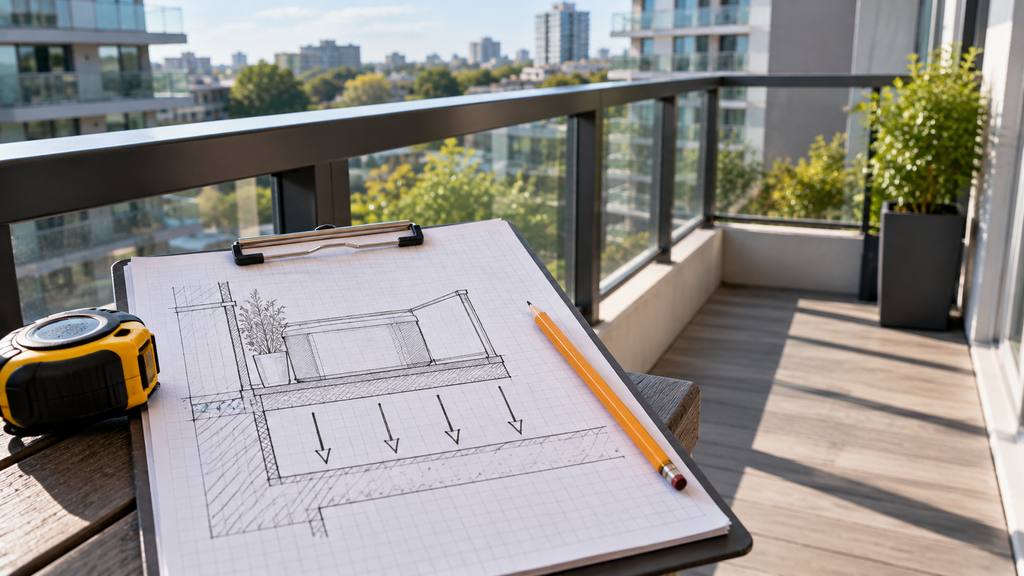
The complete installation also includes the empty tub, occupant, equipment, and potentially stored water in hoses and filters.
For example, a hypothetical setup containing 60 gallons of water, a 20-pound tub, and a 180-pound person has a combined weight of:
500 + 20 + 180 = 700 pounds
That is before adding a chiller or other equipment.
Understanding Balcony Load Ratings
You may see online discussions referring to balcony loads of 40, 60, or 100 pounds per square foot.
These figures cannot be treated as a universal safe limit for a particular balcony.
Building codes specify different design loads depending on the structure, occupancy, applicable code edition, and local requirements.
More importantly, a distributed design load is not the same as permission to place a concentrated water-filled vessel anywhere on the balcony.
Why Dividing Weight by Balcony Area Is Misleading
Suppose a 4′ × 8′ balcony has 32 square feet.
You might divide a 700-pound plunge load by 32 and calculate approximately 22 pounds per square foot.
That number is not a valid structural approval calculation.
The load is not evenly distributed across the entire balcony.
It is applied through the tub’s actual base, often within an area of only several square feet.
The position of the load relative to the building, support members, and balcony edge also matters.
Cantilevered Balconies Need Particular Attention
Some balconies extend outward from the building without columns beneath the outer edge.
These are often called cantilevered balconies.
Their structural behavior differs from a ground-supported patio.
Placing a heavy object near the outer edge can create substantial bending effects.
Do not assume that moving a tub against the building wall makes the installation safe.
That decision requires an engineer familiar with the actual structure.
What a Structural Engineer Should Evaluate
A qualified structural engineer can assess the balcony’s construction and proposed installation, including:
- Structural drawings and design loads, when available
- Joist or slab configuration
- Cantilever length and support conditions
- Existing structural condition and deterioration
- Tub footprint and contact points
- Maximum filled and occupied weight
- Proposed equipment location
- Other permanent and temporary balcony loads
Ask for written confirmation addressing the specific proposed setup.
If you want a rough load estimate before calling an engineer, use our cold plunge weight calculator.
If the engineer cannot approve it, do not fill the tub.
Can a Weight-Distribution Platform Make It Safe?
Not automatically.
A rigid platform may spread contact pressure over a larger area, but it does not increase the balcony’s total structural capacity.
It also adds weight.
Any engineered load-spreading solution should be part of the structural assessment rather than a DIY attempt to bypass a load limit.
If you cannot establish that the balcony can safely support the complete installation, stop the project here.
3. What Size Cold Plunge Fits a Small Balcony?
Once structural suitability has been established, choose a tub that fits the available space and approved weight allowance.
Compact Round Tubs
A portable round tub is often the easiest shape to accommodate.
The Pod Company Ice Pod is one real option for buyers who want a removable cold plunge without built-in refrigeration.
Its footprint varies by version, so verify the current dimensions and recommended fill volume before purchasing.
Owners on balcony plunge forums frequently mention that the Ice Pod works well on a shaded balcony but struggles to maintain temperature in direct summer sun. The most common tip is to add a reflective cover and avoid filling it until late afternoon.
Long, Narrow Tubs
A longer tub may provide a more relaxed seated position but can consume too much balcony space.
The Pod Company Long Pod is an example of an elongated portable plunge.
Its larger potential water volume makes structural approval particularly important.
Rigid Insulated Tubs
The Ice Barrel 300 is a real insulated cold-plunge product with a relatively compact footprint.
Its rigid construction and insulation may appeal to buyers who want a more permanent installation.
However, the full tub and occupant load can be substantial, and it may not be appropriate for an elevated balcony.
Owners frequently mention that the 77-gallon capacity makes the Ice Barrel 300 feel spacious for one person but potentially too heavy for a balcony without written structural approval. The most common caution is to verify the filled weight and get an engineer’s sign-off before ordering.
Practical Size Recommendation
For a small balcony, investigate a tub with a footprint around 3′ × 3′ or less.
That is a space-planning guideline, not a structural recommendation.
The approved water volume matters more than the manufacturer’s claim that the tub accommodates a particular number of people.
If the balcony cannot safely accommodate the proposed water load, a smaller footprint does not solve the problem.
4. Water Source and Drainage
Balcony drainage requires more planning than bathroom drainage.
You must prevent water from entering neighboring units, damaging exterior finishes, or overflowing balcony drains.
Filling From Inside the Apartment
The simplest approach is often a hose connected to a compatible indoor faucet or shower fitting.
Measure the distance from the water source to the tub.
Check that the hose can pass through the doorway without being crushed or creating a trip hazard.
Use a compatible faucet adapter and any backflow protection required by local plumbing rules.
Test the connection before filling.
Never leave the hose running unattended.
Avoid Carrying Buckets
A 60-gallon tub requires 30 trips with a 2-gallon bucket.
That is inconvenient and increases the likelihood of spills.
A hose is usually more practical, provided your building permits the arrangement.
Draining the Tub
A portable plunge should have a drain valve compatible with a hose.
The Pod Company’s Ice Pod includes a bottom drain tap, and the manufacturer offers a drain hose accessory.
The Pod Company Ice Pod Drain Hose
For a balcony, the safest drainage approach is usually a secured hose routed to an approved interior drain, such as a bathtub or shower, where the discharge can be controlled and supervised.
If gravity cannot move water to the destination, a suitable transfer pump may be necessary.
The Ice Pod includes a standard 3-foot drain hose. If you need more length for a balcony or garage setup, The Pod Company sells an extended 9-foot version separately.
Never Drain Over the Balcony Edge
Do not empty the tub through the railing.
Water falling from an elevated balcony can damage property, enter windows, or affect people below.
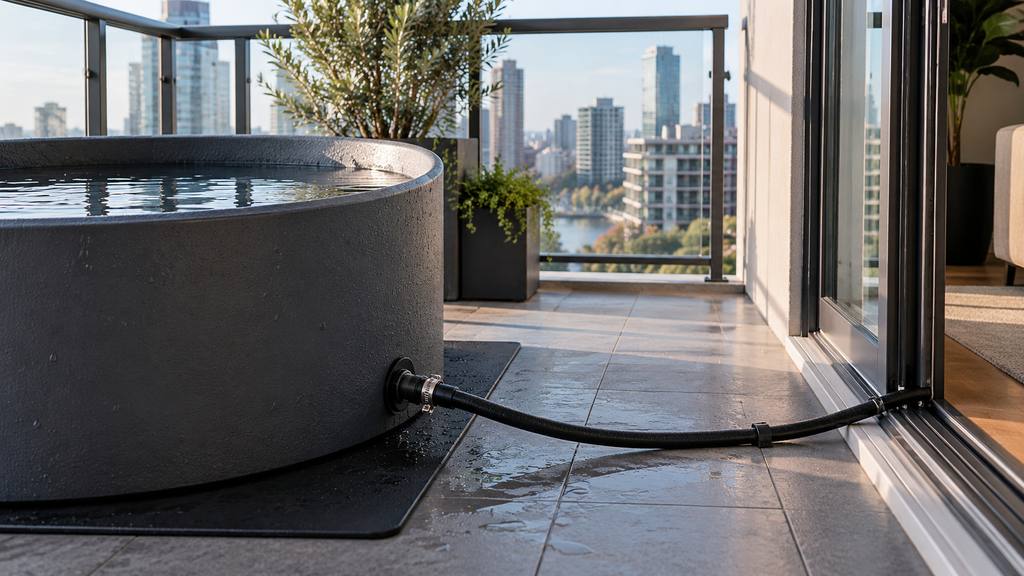
Also, do not assume a balcony’s rainwater drain is approved to accept an entire plunge tub’s contents.
Building drainage systems may have limited capacity or restrictions on discharge.
Prevent Overflow
Fill below the rim to allow for body displacement.
Test the water level by entering carefully, with another adult present during initial use.
Do not place the tub near a balcony edge where overflow could run directly down the exterior wall.
5. Floor Protection and Weight Distribution
Floor protection is useful, but it must not be confused with structural reinforcement.
Protective Mats
A suitable rubber mat can protect balcony decking or tile from abrasion and provide a more stable contact surface.
Rubber-Cal rubber utility mats are one established product category to investigate.
Choose a mat rated for the intended environment and compatible with the tub’s base.
Avoid soft foam that compresses unevenly.
Buyers frequently mention that the mat stays in place well on tile and decking, but a few note that water can pool underneath if the balcony does not drain properly. The most common tip is to lift the mat occasionally to let the surface dry.
Waterproofing and Drainage
Balcony surfaces may include waterproof membranes, coatings, tiles, or decking over a drainage system.
Do not drill through the surface to anchor the tub or attach equipment without approved construction details.
A punctured waterproof membrane can create serious water damage.
Weight-Spreading Platforms
A platform may redistribute contact pressure, but it does not create additional structural capacity.
Do not build a plywood deck and assume it makes a heavy plunge safe.
Any proposed platform should be evaluated as part of the engineered installation.
Leak Sensors
A water sensor can provide an early warning if a hose connection begins leaking.
The Govee Wi-Fi Water Sensor is a real product available through US retail channels.
However, many indoor leak sensors are not rated for continuous outdoor exposure.
Only use a sensor on the balcony if its environmental rating permits that use. Otherwise, place it at an appropriate protected location.
A leak sensor is not a substitute for supervision.
Owners typically report that the sensor alerts reliably when water reaches the contacts, but many note that the app requires a stable Wi-Fi connection to send push notifications. On a balcony, the signal strength is often weaker than indoors.
6. Temperature Control: Ice vs. Chiller
For a small balcony, ice is generally the simplest starting point.
It avoids refrigeration equipment, electrical connections, and additional weight.
Ice-Only Setup
Fill the tub with cold tap water.
Measure the starting temperature using a waterproof thermometer.
Add ice gradually, circulate the water gently, and measure again.
The amount of ice required depends on water volume, starting temperature, desired temperature, and outdoor conditions.
For example, cooling 60 gallons of water from 70°F toward 50°F may require roughly 50 pounds of ice under simplified ideal assumptions.
Actual requirements can be higher because heat enters from the surrounding environment.
Why Balcony Conditions Matter
An outdoor plunge in Arizona during summer will behave differently from one on a shaded balcony in Washington.
Sunlight, wind, air temperature, and tub insulation affect cooling demand.
A cover and suitable shade can reduce unwanted heat gain.
Adding a Chiller
If you plunge frequently, a chiller may reduce the cost and inconvenience of buying ice.
The The Pod Company Standard Chiller is a real purpose-built option.
The Pod Company Standard Chiller
The manufacturer lists the Standard Chiller as a 1/3 HP unit drawing approximately 280W, with a compact housing around 12″ × 12″ × 13″. It is intended for indoor and outdoor use, with the best performance in shaded locations and climates generally below 85°F.
Owners who run this chiller outdoors consistently note that it must be placed in shade or it runs constantly in hot weather. The most common complaint is that the 15-inch clearance recommendation is hard to achieve on a small balcony.
Outdoor Chiller Placement
A chiller must have airflow around its condenser.
The Pod Company recommends approximately 15 inches of clearance and protection from severe weather.
Do not place the unit in a sealed cabinet.
Do not cover it while running unless the manufacturer specifically provides an approved operating enclosure.
Electrical Safety
An outdoor chiller needs an appropriate outdoor-rated electrical installation with GFCI protection as required by code and manufacturer instructions.
Do not run an ordinary extension cord through a balcony doorway or across standing water.
Have a licensed electrician evaluate any new outdoor receptacle or circuit.
For budget chiller options, see our guide to cold plunge chillers under $1,000.
For higher-budget systems, see our guide to cold plunge chillers under $1,500.
7. Water Maintenance and Sanitation
Cold water does not stay sanitary automatically.
Outdoor installations also collect pollen, dust, insects, leaves, and other debris.
Use a Cover
A fitted cover helps keep debris out of the tub and can reduce temperature changes.
Use the cover recommended for the specific plunge.
A cover does not replace sanitation.
Ice-Only Water Changes
For a basic portable plunge without filtration or an approved sanitation system, frequent water changes are the conservative approach.
Emptying and cleaning after each use is the simplest way to avoid storing untreated water for extended periods.
If the manufacturer permits short-term reuse, follow its instructions and assess the conditions carefully.
Chiller Filtration
Some plunge chillers include filters.
The Pod Company Standard Chiller uses a 20-micron filtration system.
However, filtration removes particles; it does not automatically disinfect water.
Follow the complete manufacturer’s sanitation and maintenance instructions.
Cleaning Routine
Before use, check the water, inspect connections, and remove debris.
After use, close the cover and dry any standing water.
At the manufacturer’s specified interval, clean or replace filters, inspect hoses, and drain, clean, rinse, and refill the tub.
If the water becomes cloudy, develops an odor, or feels slimy, stop using it until the problem has been corrected.
Do not add household cleaning chemicals or disinfectants without verifying compatibility with the entire system.
8. Weather and Climate Considerations
Outdoor cold plunges face conditions that indoor setups do not.
Direct Sunlight
Sunlight heats the water and increases the amount of ice or chiller runtime required.
A shaded balcony is generally better for temperature control.
Do not install a shade structure or attach hardware to the building without permission.
Wind
Wind can make exiting a cold plunge uncomfortable.
Keep a towel or robe close by, and ensure the exit route is stable and unobstructed.
For outdoor plunging, an insulated changing robe may be more useful than a lightweight indoor bathrobe.
For towels and robes suitable for outdoor sessions, see our guide to the best sauna and cold plunge towels and robes.
Freezing Temperatures
Freezing weather can damage tubs, hoses, valves, and chillers.
The Pod Company specifically advises disconnecting, draining, and storing its chiller in a nonfreezing environment when outdoor temperatures approach or fall below 32°F. Keeping the chiller running is not reliable freeze protection.
Never assume a chiller designed to cool water can prevent freezing.
Heavy Rain and Storms
Secure lightweight equipment according to the manufacturer’s instructions and building rules.
Do not use electrical equipment during unsafe weather.
Protect components from severe rain, flooding, and lightning as instructed by their manufacturers.
Hot Summer Weather
A shaded, insulated tub is easier to cool than an uninsulated tub in direct sunlight.
If your balcony regularly reaches 95–105°F, a small chiller may struggle to maintain a very low water temperature.
Check the manufacturer’s ambient-temperature guidance before purchasing.
9. Step-by-Step Balcony Cold Plunge Setup
The correct order is approval first, equipment second.
Step 1: Measure the Balcony
Measure the usable length and width, including the door swing, railing, furniture, and any drainage openings.
Mark the proposed tub footprint with painter’s tape.
Confirm that the tub will not block the exit or create a climbing hazard near the railing.
Step 2: Obtain Written Building Permission
Ask the landlord, property manager, or HOA whether a water-filled plunge is permitted.
Provide the proposed tub dimensions, maximum filled weight, equipment details, and drainage plan.
Do not assume verbal permission is sufficient.
Step 3: Obtain Structural Approval
Have a qualified structural engineer evaluate the specific installation.
Include the maximum intended water volume, tub weight, occupant weight, and additional equipment.
Obtain written confirmation before filling the tub.
If the installation cannot be approved, choose another location.
Step 4: Choose the Tub
For a compact, removable setup, investigate The Pod Company Ice Pod.
Avoid selecting a larger tub simply because its footprint fits.
The structurally approved maximum load must control the decision.
Step 5: Plan the Filling and Drainage Routes
Measure the distance from the indoor faucet to the tub.
Choose compatible hose fittings.
Identify an approved drain destination and determine whether gravity drainage is possible.
If a transfer pump is required, include it in the equipment and electrical plan.
Step 6: Prepare the Balcony Surface
Inspect the existing flooring and drainage.
Do not drill, screw, or anchor anything through a waterproof membrane without approved details.
Install an appropriate protective mat only if compatible with the tub and approved installation.
Step 7: Assemble the Tub
Follow the manufacturer’s instructions.
Check the frame, seams, valves, and connections.
Confirm that the tub sits level and does not rock.
Step 8: Perform a Small Leak Test
Add a limited amount of water.
Inspect the tub and connections.
Test the drainage route.
Make sure water cannot escape toward the balcony edge or neighboring units.
Step 9: Fill to the Approved Level
Do not exceed the maximum water volume evaluated by the structural engineer.
Leave sufficient space for the occupant’s water displacement.
Remain present throughout filling.
Step 10: Cool and Measure the Water
Start with ice.
Use a waterproof thermometer to monitor the actual water temperature.
Avoid guessing based on the number of ice bags added.
Step 11: Prepare for Safe Entry and Exit
Keep a dry towel and warm clothing nearby.
Do not use an unstable step stool.
Have another adult nearby, especially for initial sessions.
Enter gradually, keep your head above water, and leave immediately if you experience dizziness, chest discomfort, unusual breathing difficulty, or other concerning symptoms.
Cold immersion can trigger involuntary gasping and cardiovascular stress. People with relevant medical conditions should seek medical advice before beginning.
Step 12: Test the Entire Maintenance Routine
After a short session, drain the tub through the approved route.
Clean and dry the surrounding area.
Check for water beneath the tub and around the connections.
If the process creates spills, requires unsafe hose routing, or interferes with neighbors, correct those problems before continuing.
10. Cost Breakdown: How Much Does a Balcony Cold Plunge Cost?
A portable plunge can be relatively inexpensive, but balcony-specific approval and installation costs may be substantial.
The following are approximate US planning ranges, not guaranteed current retail prices.
| Expense | Ice-only setup | Chiller setup |
| Portable tub | $80–$300 | $80–$300 |
| Chiller | $0 | 650–1,500+ |
| Hoses and adapters | $20–$80 | $30–$150 |
| Protective mat | $20–$100 | $20–$100 |
| Waterproof thermometer | $10–$30 | $10–$30 |
| Leak alarm | $15–$60 | $15–$60 |
| Initial ice | $10–$50+ | Usually unnecessary |
| Structural engineer | $300–$1,000+ | $300–$1,000+ |
| Estimated total | $455–$1,720+ | $1,105–$3,140+ |
The engineering allowance is illustrative. Complex structural reviews, unavailable drawings, or required testing can cost more.
These estimates exclude major structural work, new outdoor electrical circuits, plumbing modifications, and permit fees.
Monthly Ice Costs
Suppose you plunge four times weekly and buy 20 pounds of ice per session.
At an illustrative price of 0.20–0.35 per pound:
- Per session: 4–7
- Approximately 17 sessions monthly
- Monthly ice cost: 68–119
A larger tub or hot summer conditions can increase ice requirements substantially.
Monthly Chiller Electricity
For illustration, assume a 280W chiller compressor operates for an average of eight hours daily.
At $0.18/kWh:
0.28 kW × 8 hours × 30 days × $0.18 = $12.10 per month
This is a calculation example, not a measured monthly consumption claim. Continuous pump operation, ambient conditions, insulation, and compressor cycling can change the result.
Monthly Water Costs
A 60-gallon tub refilled four times monthly uses 240 gallons.
At an illustrative combined water and sewer rate of $15 per 1,000 gallons:
240 ÷ 1,000 × $15 = $3.60 per month
Local rates and fixed utility charges vary.
What About Permits?
A portable ice-only setup may not require a construction permit if no building systems are modified, but that does not override lease, HOA, or structural approval requirements.
New electrical outlets, plumbing changes, or structural modifications may require permits and inspections.
Check with your local building department before proceeding.
11. Common Mistakes to Avoid
Assuming a Balcony Can Support a Portable Tub
Portable describes the product’s construction, not the structural capacity of the balcony.
Get approval for the complete filled and occupied load.
Using a Generic Pounds-per-Square-Foot Calculation
Dividing the tub weight by the entire balcony area does not establish safety.
The actual load location and structural system matter.
Draining Over the Railing
Water can damage property or affect people below.
Use a controlled, approved drainage route.
Installing a Chiller Without Suitable Outdoor Power
Do not run ordinary extension cords across wet balcony floors.
Use a code-compliant installation appropriate for outdoor conditions.
Blocking the Balcony Door
The tub must not obstruct safe access or exit.
Ignoring Freezing Weather
Water trapped in hoses or a chiller can freeze and damage equipment.
Follow the manufacturer’s winterization instructions.
Leaving Untreated Water Outdoors
Outdoor water can collect debris and become contaminated.
Use an appropriate cover, cleaning schedule, and sanitation procedure.
Believing a Rubber Mat Increases Load Capacity
A mat may protect the floor, but it does not strengthen the balcony.
12. Frequently Asked Questions
Can I put a cold plunge on an apartment balcony?
Possibly, but only with the necessary building permission and confirmation that the balcony can safely support the complete installation.
A small tub is not automatically safe.
How much weight can a balcony hold?
There is no universal answer.
Capacity depends on the balcony’s structural design, condition, applicable code, and load location.
A structural engineer should evaluate the specific proposed plunge.
Is a 50-gallon cold plunge safer than a 100-gallon tub?
It imposes less water weight, but that does not establish that the balcony can support it.
Fifty gallons still weighs approximately 417 pounds before adding the tub and occupant.
Can I drain a cold plunge into my balcony floor drain?
Only if the building permits it and the drainage system can safely handle the discharge.
Do not assume a rainwater drain is suitable for controlled emptying of a large vessel.
Do I need a chiller on a balcony?
No.
Ice is generally simpler for occasional use and avoids outdoor electrical equipment.
A chiller becomes more attractive for frequent use, provided the installation is approved and the equipment is suitable for outdoor conditions.
For a broader comparison of tub types and their balcony suitability, see our guide to the inflatable or hard-shell cold plunge decision.
Can I leave my cold plunge outside in winter?
That depends on the tub and climate.
Freezing water can damage valves, hoses, and equipment.
The Pod Company advises draining and storing its chiller indoors before freezing conditions.
How do I keep balcony plunge water clean?
Use a fitted cover, remove debris, and follow a manufacturer-approved cleaning and sanitation schedule.
Filtration alone is not disinfection.
For an unfiltered and unsanitized portable tub, frequent water replacement is the conservative approach.
What if my landlord or HOA refuses permission?
Do not install the plunge anyway.
Use an existing bathtub or investigate a suitable ground-level location where the installation can be approved.
For indoor alternatives:
For indoor alternatives, see our guide to setting up a cold plunge in a small bathroom.
For renter-friendly alternatives, see our portable inflatable cold plunge picks.
13. Final Recommendations
For a small balcony, the first purchase should not be a cold plunge tub. It should be confidence that the structure and building rules permit the installation.
Once written permission and structural approval are in place, keep the setup as simple as possible.
Recommended Starting Tub: The Pod Company Ice Pod
Its portable design makes it worth investigating for a small approved space.
Use the lowest practical water volume that still permits comfortable immersion, without exceeding the engineer-approved load.
Recommended Floor Protection: Rubber-Cal Rubber Floor Mat
A suitable mat can help protect the surface, but it must not be treated as structural reinforcement.
Recommended Leak Detection: Govee Wi-Fi Water Sensor
Use only in a location consistent with the sensor’s environmental rating.
Optional Chiller Upgrade: The Pod Company Standard Chiller
The Pod Company Standard Chiller
It is designed for cold plunges and supports outdoor use under the manufacturer’s specified conditions. However, it adds weight, electrical requirements, heat output, and maintenance.
For an initial balcony installation, I would avoid adding a chiller until the ice-only setup has proven practical.
For budget chiller options, see our guide to cold plunge chillers under $1,000.
When a Balcony Plunge Is Not Worth the Risk
If structural capacity cannot be verified, building permission is unavailable, or water cannot be drained safely, do not proceed.
An existing bathtub is a more sensible option than risking structural damage or flooding neighboring units.
For indoor alternatives, see our guide to setting up a cold plunge in a small bathroom.
For a broader look at compact plunge tubs, see our guide to the 3 best small cold plunges for apartments.
For choosing between an ice bath and a refrigerated plunge, see our cold plunge vs ice bath comparison.
For towels and robes suitable for outdoor sessions, see our guide to the best sauna and cold plunge towels and robes.
A balcony cold plunge is only a good small-space solution when the structure, building rules, drainage, weather exposure, and safe access all support it. The equipment should fit those constraints, never the other way around.
This post contains affiliate links. If you buy through them, we may earn a commission at no extra cost to you.