Disclosure: This post contains affiliate links. If you buy through them, we may earn a commission at no extra cost to you.
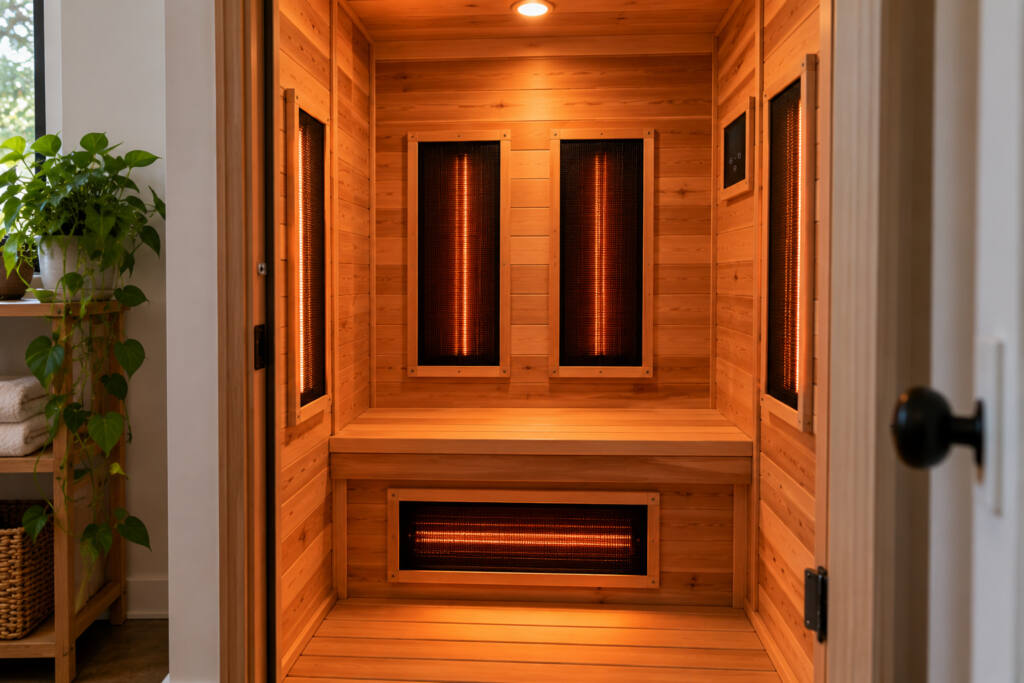
Choosing an infrared sauna heater for small space DIY builds is different from picking a traditional stone heater, because infrared systems use distributed panels rather than one central unit.
With a traditional sauna, you can choose a 4.5kW or 6kW heater, mount it according to the manufacturer’s clearances, add stones, and size it primarily around room volume.
Infrared is less standardized.
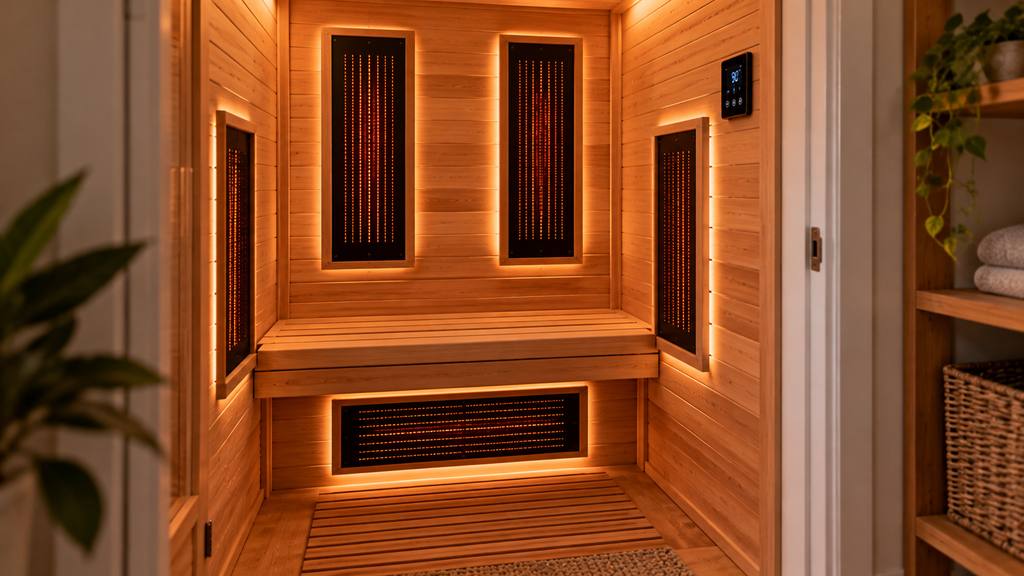
Instead of one central heater, most infrared saunas use multiple radiant panels positioned around your body. The controller, wiring, panel voltage, total wattage, mounting system, and temperature sensor all need to work together.
That makes buying a replacement or DIY infrared heater more complicated than ordering a Harvia-style stone heater.
It also makes this particular market surprisingly small.
Brands including Finnleo, Clearlight, Sunlighten, JNH Lifestyles, and Golden Designs use legitimate infrared heating systems in their cabins, but many of their replacement heaters are proprietary components rather than universal DIY heater kits. Finnleo does offer custom infrared conversion systems, for example, but comparable retail panel packages currently exceed the $2,000 ceiling in this guide.
So we have not filled this list with random replacement panels simply to reach five products.
The options below are actual infrared heating products sold for standalone use, custom construction, sauna conversion, or heater replacement.
Bottom Line
For a small one- or two-person custom sauna, the best value is the Sauna Parts World 1956W 120V Infrared Sauna Heater Kit.
It currently costs about $650, includes six carbon-ceramic heating panels, and is specifically intended for small custom rooms, closet conversions, and replacement projects. The manufacturer recommends it for rooms up to approximately 3.94′ × 4.92′ × 6.23′. It operates on 120V, although its 1,956W load means a dedicated 20A circuit is recommended.
Sauna Parts World 1956W 120V Infrared Sauna Heater Kit
For buyers who want far-infrared panels with finished wooden frames, the Sauna Parts World 2116W five-panel kit is the better upgrade. It currently costs about $899 and includes Canadian hemlock frames, pre-installed cables, and five heating zones.
Sauna Parts World 2116W Far Infrared Heater Panel Kit
For stronger heating in a small custom room, the 2330W Hybrid Infrared Heater Kit combines four carbon panels with three full-spectrum heaters. It costs about $989 and is rated for rooms up to approximately 131 cubic feet. Because it draws roughly 19.4A at 120V, the manufacturer recommends 240V for a better electrical safety margin.
Sauna Parts World 2330W Hybrid Infrared Sauna Heater Kit
If you want a much simpler single radiant heater rather than a distributed panel system, the SaunaSpace Hearth is the premium alternative. The three-bulb Trio uses 750W, while the four-bulb Quartet uses 1,000W. The Hearth is designed for direct radiant exposure rather than heating a conventional cabin through wall-mounted carbon panels.
If you are replacing a failed panel inside an existing Sunlighten, Clearlight, JNH, Golden Designs, or similar sauna, contact the original manufacturer before buying a universal kit. Matching physical dimensions is not enough; voltage, connectors, controller capacity, sensor logic, and wiring all matter.
For comparison, see our guide to the 5 best infrared saunas for apartments.
Quick Comparison Table
| Heater | Approx. price | Wattage | Recommended coverage | Heater type | Best for |
| Sauna Parts World 1956W Kit | $650 | 1,956W | Up to ~3.94′ × 4.92′ × 6.23′ | Carbon-ceramic panels | Best overall small DIY sauna |
| Sauna Parts World 2116W Kit | $899 | 2,116W | Best around 47.24″ × 47.24″ × 74.8″; max around 59.06″ × 47.24″ × 74.8″ | Far-infrared panels | Best finished panel kit |
| Sauna Parts World 2330W Hybrid Kit | $989 | 2,330W | Up to ~131 cu. ft. | Carbon + full-spectrum | Best higher-output system |
| SaunaSpace Hearth Trio | $1,495 depending on current pricing/configuration | 750W | Direct/targeted heating; no conventional cubic-foot rating published | Incandescent full-spectrum infrared | Best compact radiant setup |
| SaunaSpace Hearth Quartet | $1,495 depending on current pricing/configuration | 1,000W | Direct/full-body radiant heating; no conventional cubic-foot rating published | Incandescent full-spectrum infrared | Best premium single-panel option |
Prices can change. Confirm the current configuration and electrical requirements before ordering.
One important distinction: the Hearth products should not be sized using the same room-volume logic as distributed carbon-panel kits. They use direct radiant bulbs and are designed around proximity to the user rather than uniformly covering several sauna walls. SaunaSpace currently lists the Hearth with 750W and 1,000W configurations.
Infrared Sauna Heaters vs. Traditional Stone Heaters
An infrared heater and a traditional electric sauna heater do fundamentally different jobs.
Traditional Sauna Heater
A traditional electric sauna heater typically contains resistive heating elements surrounded by sauna stones.
The heater warms:
- The stones
- The surrounding air
- The walls and benches
- Eventually, you
A small residential traditional sauna commonly uses a heater somewhere around 4.5–6kW, with larger rooms requiring more.
Traditional saunas also allow small amounts of water to be poured over appropriate sauna stones to temporarily increase humidity.
The room itself becomes very hot.
Infrared Sauna Heater
Infrared systems rely more heavily on radiant heat directed toward the user.
Instead of installing one 6kW heater in a corner, you might install:
- Two panels behind the bench
- One on each side wall
- One calf panel
- One lower-body panel
That placement is critical.
A 2,000W infrared system with poor panel placement can feel worse than a lower-powered system that surrounds the user correctly.
JNH, for example, currently uses carbon-fiber panels throughout its infrared sauna range and emphasizes distributing panels around the user rather than relying on a single concentrated heat source.
Carbon vs. Ceramic vs. Full-Spectrum
Carbon panels create a relatively broad radiant surface.
Ceramic elements tend to produce more concentrated heat.
Some full-spectrum heaters use quartz, halogen, or other high-intensity emitters to produce stronger direct radiant output.
The practical difference for a DIY builder is that you cannot compare these systems using wattage alone.
2,000 watts distributed across six large carbon panels does not feel exactly like 2,000 watts coming from a few concentrated emitters.
Panel location and distance from your body matter.
How to Size an Infrared Sauna Heater
Traditional heater sizing usually begins with cubic feet.
Infrared sizing is less straightforward because the heater needs to radiate toward the person rather than simply heat all the air in the enclosure.
Still, room size is a useful starting point.
Calculate Cubic Feet First
Multiply:
Length × width × height = cubic feet
A small 3′ × 4′ × 6.5′ closet-style sauna is:
3 × 4 × 6.5 = 78 cubic feet
A 4′ × 4′ × 7′ sauna is:
4 × 4 × 7 = 112 cubic feet
A 4′ × 5′ × 7′ room is:
140 cubic feet
The Sauna Parts World 2330W hybrid kit, for example, is rated by the seller for a maximum room of approximately 131 cubic feet.
Do not install it in a 250-cubic-foot room and assume the extra warm-up time will compensate.
Consider Floor Area Too
Sauna Parts World’s current DIY guidance suggests approximately:
- 1,200–1,600W for a 36″ × 36″ one-person room
- 1,600–2,200W for a 48″ × 48″ room
- 2,000–2,600W for a 48″ × 60″ room
It also suggests roughly 100–150W per square foot of interior floor area as a practical starting range for its DIY systems. These are seller recommendations, not a universal engineering standard across all infrared heater manufacturers.
Insulation Matters
A converted closet with insulated walls and ceiling will retain heat much better than a thin, unfinished enclosure inside an unheated garage.
Do not compensate for bad construction simply by adding more heaters.
A better sequence is:
Build an appropriate enclosure → insulate correctly → minimize unnecessary heat loss → size the infrared system.
Glass Matters
Large glass doors and windows lose more heat than well-insulated walls.
A small room with a nearly full-glass front can therefore require more heating capacity than another room with identical dimensions and a smaller glass door.
This is another reason manufacturer room-size recommendations should be treated as a starting point rather than a guarantee.
Climate Matters Most in Garages and Outbuildings
A closet sauna inside a 70°F house has an easier job than an identical enclosure starting at 35°F in an unheated garage.
If you are building outside conditioned living space, solve the garage’s insulation, moisture, and electrical issues before choosing heaters.
For garage installations, see our guide to setting up a sauna in a garage.
1. Sauna Parts World 1956W 120V Kit — Best Overall
Sauna Parts World 1956W 120V Infrared Sauna Heater Kit
This is the most straightforward system here for a conventional small DIY infrared room.
The kit currently costs about $650 and includes six heater panels:
- One 480W panel
- Four 320W panels
- One 196W panel
Total output is 1,956W.
The seller recommends a maximum room around:
3.94′ × 4.92′ × 6.23′
That is exactly the sort of converted closet or compact one-to-two-person enclosure this article is targeting.
The heating elements use carbon-ceramic infrared construction, and the manufacturer says a properly sized and insulated installation can reach approximately 140°F.
Electrical Requirements
This is a 120V system, but do not confuse that with a low-power plug-in appliance.
At 1,956W:
1,956W ÷ 120V = 16.3A
The seller recommends a dedicated 20A circuit.
It also requires a compatible controller/power box separately.
DIY sauna builders on Reddit frequently mention that the 1,956W kit’s six-panel layout works best in rooms of roughly 80–100 cubic feet. Owners with larger rooms report needing to run it longer to reach target temperature, which is consistent with the manufacturer’s recommended room size.
Pros
- About $650
- Six heating panels
- 1,956W total
- 120V configuration
- Specifically intended for closet and custom sauna builds
- Useful manufacturer room-size recommendation
- Panels can surround the user
- Two-year warranty currently listed
Cons
- Controller/power box is separate
- Wooden heater frames are not included
- Dedicated 20A circuit recommended
- Installation is considerably more involved than buying a prefab sauna
- Not a drop-in replacement for proprietary cabin heaters
Who Should Buy It?
Buy this if you are building a small one- or two-person infrared sauna from scratch and want a distributed panel system without spending several thousand dollars.
2. Sauna Parts World 2116W Five-Panel Kit — Best Finished Panel System
Sauna Parts World 2116W Far Infrared Heater Panel Kit
The 2,116W kit costs approximately $899 and takes a slightly different approach.
It includes:
- Four 480W panels measuring approximately 23.62″ × 39.37″
- One 196W lower-body panel measuring approximately 11.81″ × 31.5″
- Five Canadian hemlock frames
- Pre-installed power cables
- Compatible connectors
- Mounting hardware
That makes it more finished than the $650 kit.
The suggested layout is sensible:
Two panels behind the user.
Two on the side walls.
One around the legs.
The manufacturer says the best experience is in a room around 47.24″ × 47.24″ × 74.8″ or smaller, with a recommended maximum around 59.06″ × 47.24″ × 74.8″.
Buyer reviews of the 2116W kit frequently highlight the hemlock frames as the main upgrade over the cheaper kit. The most common note is that the pre-installed cables save 1–2 hours of installation time compared with wiring bare panels.
Pros
- Five framed heaters
- 2,116W total
- Broad far-infrared coverage
- Hemlock frames included
- Pre-installed cables
- 110–220V system compatibility
- Designed for DIY and conversion projects
- Expandable if controller and circuit capacity allow
Cons
- Costs $249 more than the 1,956W system
- Compatible controller still matters
- More than 2,100W deserves careful circuit planning
- Five large wall panels require substantial usable wall area
Who Should Buy It?
This is the better choice if you want your DIY build to look more like a professionally finished infrared sauna rather than mounting bare heater components into homemade frames.
3. Sauna Parts World 2330W Hybrid Kit — Best High-Output Choice
Sauna Parts World 2330W Hybrid Infrared Sauna Heater Kit
This $989 system combines two infrared approaches.
You get:
- Four 320W carbon-fiber panels
- Three 350W full-spectrum heater modules
Total:
2,330W
The full-spectrum heaters measure approximately 29.9″ × 7.9″, while the carbon panels measure approximately 15.7″ × 39.4″. The recommended maximum room is around 4.9′ × 4.3′ × 6.2′, or approximately 131 cubic feet.
The advantage is more concentrated radiant heat combined with broader carbon-panel coverage.
The seller says the hybrid configuration heats approximately 30% faster than its all-panel configuration. Treat that as a manufacturer comparison rather than an independently verified universal performance figure.
Electrical Requirements Are the Catch
At 120V:
2,330W ÷ 120V ≈ 19.4A
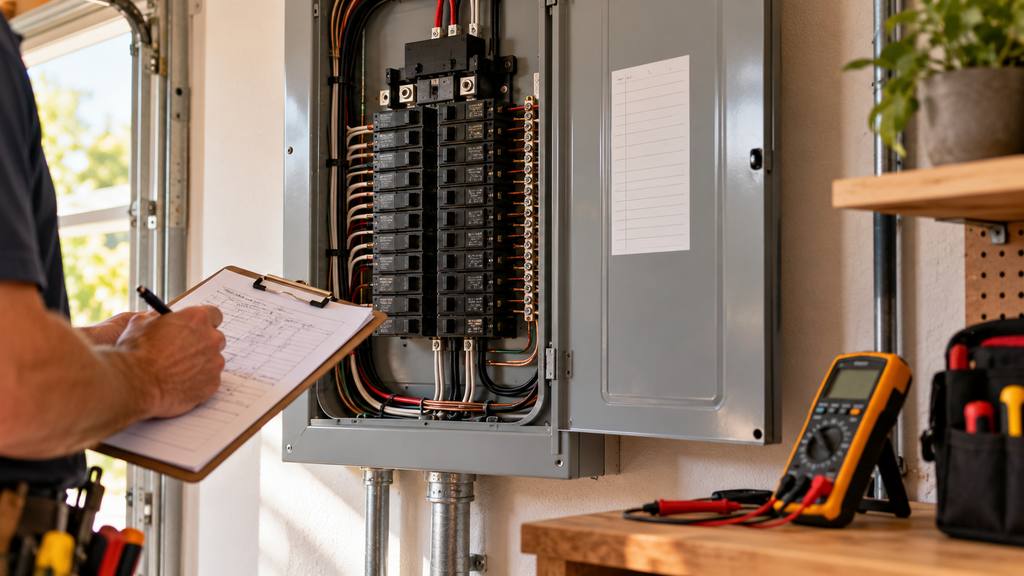
That is too close to the nominal capacity of a normal 20A circuit for us to recommend casually.
The manufacturer itself says 240V is preferred for better electrical margin and specifically says the complete 2,330W load is not recommended on a standard 120V/20A circuit.
At 240V, the load falls to approximately 9.7A.
Owners of the 2,330W hybrid kit consistently report faster warm-up times than all-carbon systems in similar-sized rooms. The most common caution is the electrical load — several buyers confirm that a 240V installation is essential for reliable performance.
Pros
- $989
- 2,330W
- Seven heating elements
- Carbon plus full-spectrum heat
- Up to approximately 131 cubic feet
- 120V or 240V configurations
- Stronger direct radiant heating than carbon panels alone
- Hemlock housings on full-spectrum modules
Cons
- 120V electrical load is awkward
- 240V is the more sensible installation
- Requires compatible controls
- More complicated heater placement
- Concentrated heaters require careful clearances
Who Should Buy It?
Choose this kit if you are building a serious small custom room and already expect to have an electrician involved.
For a renter hoping to use an existing bedroom outlet, this is not the option I would choose.
4. SaunaSpace Hearth Trio — Best Compact Direct-Radiant Heater
The Hearth is fundamentally different from the first three systems.
Instead of installing carbon panels around multiple walls, SaunaSpace places infrared bulbs into a portable basswood-and-stainless-steel heater assembly.
The Trio uses three FireLight bulbs for a total of approximately 750W. SaunaSpace positions it as the more compact Hearth configuration for smaller spaces and targeted use.
The Hearth can be used on its matching pedestal or appropriately mounted according to SaunaSpace’s instructions.
Why It Makes Sense for Tiny Spaces
You are not trying to find wall space for six panels.
You position one radiant source near the user.
That can be useful for a very small enclosure where a distributed carbon-panel system simply does not fit.
But do not interpret 750W as meaning the Trio will heat a conventional 120-cubic-foot wooden room as effectively as a 2,000W distributed panel system.
That is not what it is designed to do.
SaunaSpace owners on forums frequently mention that the Hearth works best when positioned 18–24 inches from the user. The most common note is that the direct radiant heat feels more intense than a carbon panel of the same wattage, but the coverage area is smaller.
Pros
- Approximately 750W
- Much lower electrical demand
- 120V US configuration available
- Compact
- Portable
- No complex six-panel wall layout
- All electrical components are listed by SaunaSpace as UL-listed
- 10-year warranty currently advertised
Cons
- Expensive per watt
- Direct radiant heating rather than even multi-wall coverage
- No conventional cubic-foot cabin rating
- Requires appropriate distance and positioning
- Not the logical choice for replacing carbon panels in an existing cabin
Who Should Buy It?
Choose the Trio if space is more constrained than budget and you specifically want a direct incandescent infrared approach.
5. SaunaSpace Hearth Quartet — Best Premium Single-Panel Heater
The Quartet increases the Hearth concept to four bulbs and 1,000W.
The current Quartet measures approximately:
23.75″W × 23.5″H × 9″D
and weighs about 11.4 pounds.
The US version runs at 120V, 8.3A, while a 240V version is also available. The power cord is approximately 15 feet long.
That makes its electrical requirements unusually easy compared with a 2,000W-plus DIY carbon system.
SaunaSpace also says the electrical components are UL-listed.
Verified reviews of the Quartet often mention the 10-year warranty and UL-listed components as the main reasons for choosing it over cheaper bulbs. The most common complaint is the price — several owners note that the Quartet costs more per watt than any carbon panel system.
Pros
- 1,000W
- Only about 8.3A at 120V
- Compact 23.75″ × 23.5″ heater
- Portable
- Four adjustable heating levels
- UL-listed electrical components
- No dedicated multi-panel controller system
- Can work in unusually small custom enclosures
Cons
- Around $1,500 depending current configuration/promotions
- Very expensive compared with carbon-panel kits
- No conventional cubic-foot rating
- One-direction radiant source
- Requires user positioning rather than surrounding the body with panels
Who Should Buy It?
The Quartet makes sense if you want a compact premium heater without building an elaborate panel-and-controller network.
For maximum heat per dollar, choose one of the Sauna Parts World systems instead.
Electrical Requirements: 120V vs. 240V
Infrared does not automatically mean plug-and-play.
This is particularly important in DIY builds.
A 1,000W Hearth draws only about 8.3A at 120V.
A 1,956W heater system draws roughly:
16.3A at 120V
A 2,330W system draws:
19.4A at 120V
That last number is exactly why wattage matters.
Dedicated Circuits
For higher-output systems, expect to need a dedicated circuit.
Do not assume an unused-looking wall receptacle is electrically unused.
The same branch circuit may also serve lights or receptacles in another room.
The 1,956W Sauna Parts World system specifically recommends a dedicated 120V/20A circuit.
The 2,330W hybrid kit is better suited to 240V according to its manufacturer because running the full load at 120V puts it very close to 20A.
For a full breakdown of 120V vs 240V, panel capacity, GFCI protection, and dedicated circuit requirements for US buyers, see our guide to sauna electrical requirements.
What About GFCI?
Do not make a blanket assumption that every sauna circuit should or should not use GFCI protection.
Requirements depend on:
- Location
- Applicable NEC edition
- Local amendments
- Equipment listing
- Manufacturer instructions
- Circuit configuration
This is especially important in bathrooms, garages, and other locations where GFCI requirements may apply.
Have a licensed electrician reconcile the product instructions with your local code rather than bypassing protection because an online forum says it causes nuisance trips.
DIY Installation Basics
A custom infrared sauna is partly a carpentry project and partly an electrical-system project.
The electrical part deserves more respect.
Plan Heater Locations Before Finishing the Walls
Do not build the entire enclosure and then ask where the heaters should go.
Map the seated user’s:
- Back
- Shoulders
- Sides
- Calves
- Legs
before installing interior paneling.
Distributed infrared systems work best when the heaters surround the body.
Sauna Parts World’s current guidance suggests roughly 35–40% of heating power behind the user, 30–40% on the side walls, and 10–20% around the lower legs, with an optional under-bench zone. Treat those percentages as its design guidance rather than a universal rule for every heater brand.
For temperature and humidity monitoring in your custom build, see our guide to sauna thermometers and hygrometers.
Match the Controller to the Heaters
This is critical.
A controller needs to match:
- Voltage
- Total wattage
- Number of heater outputs
- Connector system
- Temperature sensor
- Relay capacity
Do not buy six panels from one company and connect them to a random controller because the plugs look similar.
Sauna Parts World specifically warns against mixing unmatched controllers, power boxes, relays, and internal electrical components.
Do Not Hide Incompatible Replacement Panels Behind Wood
If you are repairing an existing infrared sauna, use manufacturer-approved replacement components whenever possible.
Golden Designs, JNH, Clearlight, Sunlighten, and other manufacturers engineer their cabins as complete electrical systems.
A universal heater can make sense when you are converting the entire heating/control system.
It is a much worse idea when you are trying to splice one unrelated panel into a proprietary existing system.
FAQ
Can I turn a closet into an infrared sauna?
Potentially, yes, but treat it as a construction project rather than simply hanging heaters inside an ordinary closet.
You need suitable heat-resistant materials, appropriate insulation, ventilation, electrical capacity, safe heater clearances, and a door/layout appropriate for sauna use.
Do not heat drywall, clothing-storage materials, or unknown composite surfaces simply because the heater physically fits.
Once your sauna is set up, see our guide to the best sauna accessories for small home saunas.
For a full step-by-step closet conversion guide, see our article on converting a closet into a small sauna room.
How many watts does a one-person infrared sauna need?
There is no universal wattage because heater design and placement vary.
For its DIY panel systems, Sauna Parts World suggests roughly 1,200–1,600W for a 36″ × 36″ one-person enclosure.
A direct-radiant system such as SaunaSpace uses a different design and should not be sized using that rule.
Can an infrared sauna heater run on 120V?
Yes.
All five options in this guide have a 120V configuration or version.
But voltage alone tells you very little.
A 750W heater and a 2,330W heater can both technically operate at 120V while placing dramatically different loads on the circuit.
Do infrared heaters need 240V?
Small systems generally do not.
Once total output rises beyond roughly 2,000W, however, 240V can become a much cleaner electrical solution.
The 2,330W Sauna Parts World hybrid kit specifically recommends 240V for better electrical margin.
Can I replace my traditional sauna heater with infrared panels?
Yes, if you perform a properly engineered conversion.
Finnleo, for example, explicitly offers custom systems for converting existing traditional saunas to infrared by replacing the traditional heater with infrared emitters.
That does not mean you should simply disconnect a stone heater and screw a few generic panels to the walls.
The room, controls, wiring, heater placement, and electrical system all need to be considered.
Can I run infrared panels and a traditional heater together?
Only if the system is specifically engineered and approved for hybrid operation.
Finnleo sells purpose-designed InfraSauna systems combining infrared emitters and a traditional heater.
That does not mean unrelated infrared panels can safely be added beside any traditional heater.
Follow the instructions for the exact system.
Are carbon heaters better than ceramic heaters?
Not universally.
Carbon panels generally provide a larger heating surface and more distributed heat.
Ceramic and other concentrated emitters can provide stronger localized radiant intensity.
The better system depends on room design, heater placement, temperature goals, and the type of infrared experience you want.
How much does an infrared sauna heater cost to run?
A 1,956W system running at full rated power for one hour uses approximately:
1.956 kWh
A 1,000W system uses approximately:
1 kWh
Actual consumption depends on controls and cycling.
For a full breakdown using current US electricity prices:
For ongoing electricity costs, see our complete US breakdown of sauna running costs.
Final Recommendation
For most people building a conventional small custom infrared sauna, I would start with the Sauna Parts World 1956W 120V Infrared Sauna Heater Kit.
Sauna Parts World 1956W 120V Infrared Sauna Heater Kit
At approximately $650, its six-panel configuration makes more sense for a traditional infrared cabin layout than relying on one powerful radiant source.
It is specifically intended for rooms up to approximately 3.94′ × 4.92′ × 6.23′, which covers many converted closets and compact one-to-two-person builds.
If you want a cleaner finished installation, spend more for the 2116W Far Infrared Panel Kit.
Sauna Parts World 2116W Far Infrared Heater Panel Kit
The Canadian hemlock frames, pre-installed cables, and five-zone layout reduce some of the fabrication work required with a more basic heater package.
For a stronger small-room system, choose the 2330W Hybrid Kit, but plan the electrical supply before buying it.
Sauna Parts World 2330W Hybrid Infrared Sauna Heater Kit
At roughly 19.4A on 120V, it is not a heater I would casually connect to an existing household circuit. A properly designed 240V installation is the more sensible configuration, consistent with the manufacturer’s recommendation.
For an extremely small enclosure where you want to avoid installing panels on three or four walls, the SaunaSpace Hearth Trio or Quartet offers a completely different approach.
The Quartet’s 1,000W load is particularly apartment-friendly from an electrical standpoint, requiring approximately 8.3A at 120V.
But it is expensive for the wattage and should be purchased because you specifically want direct incandescent infrared heat, not because it is the cheapest way to heat a DIY sauna.
The larger lesson is that infrared sauna heaters are systems, not interchangeable appliances.
Before buying anything, determine:
- Your exact interior dimensions.
- Your insulation and glass area.
- Where each heater will sit relative to your body.
- Total wattage.
- Available 120V or 240V circuit capacity.
- Controller compatibility.
- Heater clearances and mounting requirements.
If you already own an infrared sauna and only one panel has failed, start with the original manufacturer rather than converting the whole cabin.
If you are building from scratch, a matched panel kit is usually the safer and simpler route.
And if the complete DIY project begins approaching $2,000–$3,000 after heaters, controls, electrical work, lumber, insulation, door, and hardware, compare the final number against a complete 120V cabin before proceeding:
And if a permanent custom sauna turns out to require more room than you have available, the simplest small-apartment alternative is:
For a simpler alternative, see our guide to the 5 best infrared sauna blankets for small apartments.
For most small DIY rooms, our pick is the 1,956W six-panel kit. For higher-output custom builds, move to the 2,330W hybrid system and plan for appropriate electrical work. For extremely tight spaces, the SaunaSpace Hearth offers the cleanest direct-radiant alternative.
For accessories to complete your custom sauna build, see our guides to the best sauna accessories and the best sauna thermometers for small home saunas.
This post contains affiliate links. If you buy through them, we may earn a commission at no extra cost to you.