Disclosure: This post contains affiliate links. If you buy through them, we may earn a commission at no extra cost to you.
The purchase price gets most of the attention when you shop for a home sauna, but there is another obvious question before spending $2,000, $5,000, or more:
How much will the sauna add to your electric bill every month?
For most US homeowners, the answer is less dramatic than you might expect.
Using the latest nationwide residential electricity price available from the US Energy Information Administration — 18.31 cents per kilowatt-hour in July 2026 — a small infrared sauna used four times per week can cost roughly 4-6 per month in electricity. A 6kW traditional electric sauna under a conservative full-power calculation can land closer to $24 per month with warm-up included.
Actual consumption can be lower because a sauna heater does not necessarily draw its full rated wattage continuously after reaching temperature.
Location matters too. In July 2026, residential electricity averaged 48.00 cents/kWh in Hawaii versus 12.72 cents/kWh in Louisiana, according to the EIA.
That means two people running exactly the same sauna for exactly the same amount of time can have dramatically different operating costs.
Bottom Line
For most home sauna owners, electricity is not the biggest long-term cost.
At four sessions per week:
- A 1.35kW infrared sauna costs about $4.28/month using the July 2026 US average electricity price.
- A 1.75kW infrared sauna costs about $5.55/month.
- A 6kW traditional or barrel sauna, assuming 75 minutes of total powered time per session including warm-up, works out to about $23.78/month under a deliberately conservative full-rated-power calculation.
Even doubling those usage levels usually leaves electricity well below the cost of regular commercial sauna visits.
The biggest variables are heater size, warm-up time, frequency of use, local electricity rates, insulation, and where you install the sauna.
For buyers specifically trying to minimize operating costs, a compact indoor infrared sauna generally uses the least electricity.
For a traditional sauna, do not automatically reject a 6kW heater because of its wattage. A correctly sized heater that brings a well-insulated room to temperature efficiently can make more sense than undersizing the heater and forcing it to struggle for longer.
Almost Heaven Salem 2-Person Barrel Sauna]
1. How Sauna Running Costs Work
You do not need a complicated calculator to estimate sauna electricity costs.
The basic formula is:
Heater power in kW × operating time in hours × electricity price per kWh = electricity cost
Suppose your sauna has a 6kW heater.
You run it for one hour.
Your electricity costs $0.1831/kWh.
The maximum simple calculation is:
6 × 1 × $0.1831 = $1.10
So one hour at the heater’s full 6kW rating costs about $1.10 at that electricity price.
Use it four times per week for a month:
$1.10 × 4 × 4.33 = about $19.03/month
But there is an important complication.
Rated Wattage Is Not Necessarily Actual Consumption
A 6kW sauna heater does not necessarily consume exactly 6kWh every hour from the moment you turn it on until you turn it off.
During initial warm-up, the heating elements may operate at or near full power.
After the sauna reaches its thermostat setting, the heater can cycle on and off to maintain temperature.
That means:
6kW heater ≠ automatically 6kWh consumed every hour.
The same principle applies to many infrared saunas.
This article therefore uses nameplate/rated power for conservative comparisons, rather than pretending we have metered every sauna under identical conditions.
Your real electricity consumption can be lower.
Warm-Up Time Counts
This is one of the easiest costs to forget.
If you spend 30 minutes inside a traditional sauna but heat it for 45 minutes beforehand, your electrical session is not 30 minutes.
It is:
45-minute warm-up + 30-minute session = 75 minutes
Infrared cabins often require less preheating, and some users enter them while they are warming.
That difference helps explain why infrared sauna electricity costs can be significantly lower than traditional electric sauna costs.
2. Average US Electricity Rates in 2026
The most recent EIA monthly data available covers July 2026.
The nationwide average residential electricity price was 18.31 cents per kWh, up 4.9% from 17.45 cents in July 2025.
For context, the full-year US residential average was 17.30 cents/kWh in 2025.
For the calculations in this guide, we will therefore use:
$0.1831/kWh
That is more representative of current 2026 conditions than using an older 2024 or 2025 national average.
Electricity Costs Vary Dramatically by State
The national number is only a starting point.
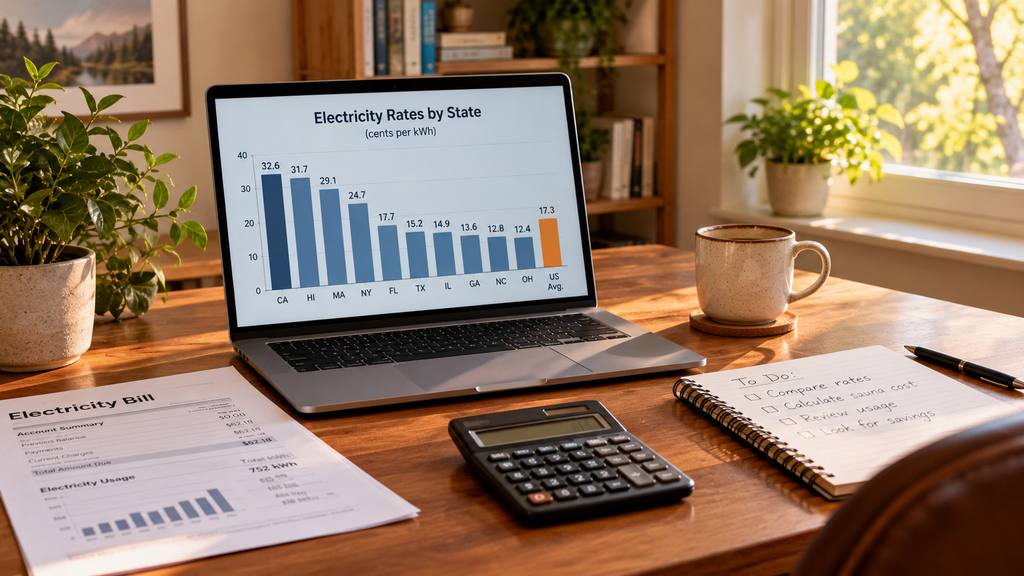
EIA’s July 2026 residential figures included:
| State | July 2026 residential electricity price |
| Hawaii | 48.00¢/kWh |
| California | 33.61¢/kWh |
| Maine | 32.41¢/kWh |
| Massachusetts | 30.49¢/kWh |
| New York | 29.90¢/kWh |
| Washington | 14.71¢/kWh |
| North Dakota | 13.41¢/kWh |
| Utah | 13.12¢/kWh |
| Nevada | 12.77¢/kWh |
| Louisiana | 12.72¢/kWh |
These are EIA statewide monthly averages, not a promise of what your utility charges. Your actual rate structure can include fixed fees, tiered pricing, time-of-use pricing, taxes, and other charges.
The difference is significant.
A 6kW heater running at full power for one hour costs approximately:
Louisiana at 12.72¢/kWh: $0.76
US July average at 18.31¢/kWh: $1.10
California at 33.61¢/kWh: $2.02
Hawaii at 48.00¢/kWh: $2.88
Same heater. Same hour.
Very different bill.
Seasonal Electricity Prices Matter Too
Residential electricity prices can change throughout the year.
The EIA’s monthly figures reflect those changes, and individual utilities may also use seasonal or time-of-use rate structures.
Your sauna itself can also consume more energy during cold weather.
A traditional sauna in an unheated Minnesota garage has a much larger temperature difference to overcome in January than an identical sauna installed inside a conditioned spare room.
If your sauna is going into a garage, our complete guide to setting up a sauna in a garage covers insulation, moisture control, and electrical planning.
3. Running Cost by Sauna Type
Infrared Saunas: Typically Around 1.0-2.0kW
For electricity-conscious buyers, compact infrared cabins are difficult to beat.
Small residential models commonly fall somewhere around 1.0-2.0kW, although larger infrared saunas can exceed that range.
For example, Sunlighten rates its one-person Signature I at 1,350 watts, while Clearlight rates its Sanctuary 1 at 1,750 watts.
Example: 1.35kW Infrared Sauna
Assume:
- 1.35kW
- One hour per use
- Four uses per week
- 4.33 weeks per month
- $0.1831/kWh
Monthly use:
1.35 × 1 × 4 × 4.33 = 23.38kWh
Cost:
23.38 × $0.1831 = about $4.28/month
That is about 25 cents per session using our conservative rated-power calculation.
Owner discussions in sauna forums consistently note that the Signature I’s 20A requirement catches apartment buyers off guard — the sauna uses only 1.35kW, but the circuit still needs to be dedicated.
Example: 1.75kW Infrared Sauna
Using the same schedule:
1.75 kW × 1 hour × 4 sessions/week × 4.33 weeks = 30.31 kWh
At $0.1831/kWh:
About $5.55/month
Even in relatively expensive California, using July 2026’s statewide average, that calculation rises to only about $10.19/month.
For a lower-power alternative, see our comparison of infrared sauna blankets.
This is why electricity cost should rarely be the deciding factor between two similarly sized infrared cabins.
Purchase price, electrical compatibility, dimensions, construction, warranty, and heater layout are likely to matter more.
For a full comparison of infrared heater systems and their electrical requirements, see our guide to infrared sauna heaters for small spaces.
Traditional Electric Saunas: Typically 4.5-8.0kW
Traditional electric saunas consume more power because they are heating the air, wood interior, sauna stones, and everything else inside the room to much higher temperatures.
A small home sauna may use around a 4.5kW heater.
A common two-to-four-person sauna uses around 6kW.
Larger residential rooms may require 8kW or more.
The correct heater size depends on sauna volume, insulation, glass area, construction, and the heater manufacturer’s sizing guidance.
Example: 4.5kW Traditional Sauna
Assume 75 minutes of powered time per session:
- 45-minute warm-up
- 30-minute sauna session
- Four sessions per week
Monthly powered time:
1.25 × 4 × 4.33 = 21.65 hours
At a theoretical continuous 4.5kW draw:
4.5 × 21.65 = 97.43kWh
At 18.31¢/kWh:
About $17.84/month
Again, this is a conservative calculation that assumes the elements draw their full rated output throughout the entire 75 minutes.
Actual consumption can be lower as the thermostat cycles.
Example: 8kW Traditional Sauna
Using the same assumptions:
8 × 21.65 = 173.2kWh
173.2 × $0.1831 = about $31.71/month
That is still only about $1.83 per session under our conservative calculation.
The larger financial difference between infrared and traditional sauna ownership is often upfront installation, not monthly electricity.
A small infrared sauna may operate on 120V service.
A 6kW traditional heater commonly needs a hardwired 240V circuit.
Clearlight owners frequently mention that the 1,750W rating is generous — the heater rarely draws full power after the first 20 minutes, so actual monthly cost is typically below what rated-power calculations suggest.
Barrel Saunas: Around 6kW Is Common
Barrel is a shape, not a heating technology.
Most conventional barrel saunas use the same type of electric stone heater you would find in a traditional cabin.
For example, the current Almost Heaven Salem 2-Person Barrel Sauna uses a 6kW, 240V heater on a 30A hardwired circuit. Almost Heaven says the heater can reach up to 194°F in approximately 45-60 minutes.
Almost Heaven Salem 2-Person Barrel Sauna
Using our 75-minute/session conservative calculation:
6kW × 21.65 monthly hours = 129.9kWh
At 18.31¢:
About $23.78/month
Outdoor Placement Changes the Equation
An outdoor barrel sauna in a cold climate may take longer to reach temperature than an indoor sauna.
Wind, ambient temperature, wood construction, glass area, and weather exposure can all influence heat loss.
That does not change the heater’s rated 6kW output.
It changes how long the heater needs to operate.
If your winter warm-up increases from 45 minutes to 60 minutes, you are paying for another 15 minutes of operation every session.
For cold-climate installation guidance, see our guide to setting up a sauna in a garage.
Almost Heaven owners in cold climates report that a barrel sauna’s outdoor placement can add 10–15 minutes of warm-up time in winter, which pushes the monthly running cost closer to $30 rather than the $24 calculated here.
Bonus: What About a Steam Shower?
A steam shower is not a sauna.
But buyers considering a small-space heat setup often compare the two, so it is worth including.
Residential steam generators can have surprisingly high power ratings because they must boil water rapidly.
A compact steam generator might be around 6-9kW, while larger steam rooms can require more.
MrSteam, for example, offers multiple residential generator sizes in its MS series, with generator selection based on the steam-room characteristics and calculated volume.
The important difference is session length.
A steam generator may have a high rated wattage, but you may use it for only 20-30 minutes.
A theoretical 9kW generator operating continuously for 30 minutes consumes:
9 × 0.5 = 4.5kWh
At $0.1831/kWh:
About $0.82 per session
You also consume water, although the water cost is usually small compared with electricity and installation.
Do not choose a steam generator by wattage alone. It must be properly sized to the enclosure.
4. 2026 Sauna Running Cost Comparison
Here is what the numbers look like using real sauna models.
For consistency, the table assumes:
Infrared: 60 minutes powered per session.
Traditional/barrel: 75 minutes powered per session, including warm-up.
Frequency: Four sessions per week, or approximately 17.32 sessions per month.
Electricity: $0.1831/kWh, the US residential average for July 2026.
The estimates deliberately assume full rated draw throughout the calculated powered period. Real-world consumption can be lower when heaters cycle.
| Model | Type | Rated power | Estimated cost/session | Estimated cost/month |
| Sunlighten Signature I | Infrared | 1.35kW | $0.25 | $4.28 |
| Clearlight Sanctuary 1 | Infrared | 1.75kW | $0.32 | $5.55 |
| Finnleo Hallmark 44 | Traditional | 1.7kW configuration* | $0.39** | $6.74 |
| Almost Heaven Salem | Barrel/traditional | 6kW | $1.37 | $23.78 |
| Almost Heaven Auburn | Traditional cabin | 6kW | $1.37 | $23.78 |
| Almost Heaven Hillsboro | Traditional cabin | 6kW | $1.37 | $23.78 |
| Almost Heaven Audra | Barrel/traditional | 6kW | $1.37 | $23.78 |
*Finnleo’s current Hallmark 44 documentation lists 1.7kW and 2.2kW heater configurations. The 1.7kW version works with 120V 15A or 20A household service, while the 2.2kW version requires a dedicated 120V/20A circuit.
**Calculated using the same 75-minute assumption as other traditional models for consistency. Actual Hallmark usage will depend on configuration and session pattern.
Sunlighten lists the Signature I at 1,350W on a dedicated 120V/20A circuit. Clearlight lists the Sanctuary 1 at 1,750W and 14.6A on 120V.
Almost Heaven currently specifies 6kW/240V heaters for the Salem, Auburn, Hillsboro, and Audra configurations shown here.
These figures cover operating costs only. If you haven’t yet installed the sauna, factor in the electrical work — see our guide to sauna circuit requirements and installation costs.
Why Several Traditional Models Cost the Same
Because electricity does not care what the sauna looks like.
If two saunas both have a 6kW heater operating for the same length of time, their theoretical maximum electricity cost is the same.
Where they differ is real-world warm-up and cycling.
Room volume, insulation, glass area, outdoor temperature, ventilation, construction, and heat loss determine how hard that 6kW heater actually works.
5. Factors That Affect Your Actual Sauna Cost
Climate
Climate matters most when the sauna is outdoors or in an unconditioned space.
Imagine two identical barrel saunas.
One starts at 75°F.
The other starts at 20°F.
The second sauna has considerably more heating to do before reaching 180°F.
That usually means longer warm-up and more electricity.
Indoor vs. Garage Installation
A sauna installed in a 70°F spare room starts with a major advantage over one in an unheated garage.
An insulated garage can narrow the difference.
An uninsulated detached garage in a northern climate can increase winter warm-up considerably.
This is one reason we recommend solving garage insulation and moisture issues before installing a sauna.
Insulation
Insulation matters twice.
First, it reduces the energy required to reach operating temperature.
Second, it reduces the energy needed to maintain that temperature.
This matters especially with traditional saunas operating around 170-190°F.
Do not save a small amount of money on construction only to build a room that constantly loses heat.
Glass Area
Glass looks good, but it generally insulates less effectively than a properly insulated sauna wall.
Large glass fronts and windows can therefore increase the heater capacity needed for a traditional sauna.
Follow the heater manufacturer’s sizing calculations rather than sizing a heater from floor dimensions alone.
Warm-Up Time
This can matter more than the actual session.
Consider our 6kW sauna at the national July 2026 average.
Thirty minutes of full-power warm-up:
6 × 0.5 × $0.1831 = $0.55
Sixty minutes:
6 × 1 × $0.1831 = $1.10
If you sauna frequently, unnecessary preheating adds up.
Frequency
Our main calculations assume four sessions per week.
If you use the sauna twice weekly, approximately halve them.
If you use it daily, multiply accordingly.
For a 6kW sauna running for 75 minutes every day:
6 × 1.25 × 30 = 225kWh/month
At $0.1831:
About $41.20/month
For a 1.35kW infrared sauna used for one hour every day:
1.35 × 30 = 40.5kWh
About $7.42/month
That is a substantial difference in percentage terms, but both are relatively modest compared with the initial equipment cost.
Thermostat Setting
Heating a traditional sauna to 190°F generally asks more of the system than stopping at a lower temperature.
The same applies to maintaining temperature.
Use the temperature you actually enjoy rather than automatically setting the sauna to its maximum.
Number of People
Adding another person does not double electricity consumption.
This is one reason a home sauna can become economically attractive for couples.
If two people share the same session, you are heating the room once.
6. How to Reduce Sauna Running Costs
Use a Timer Properly
Do not turn a sauna on an hour earlier than necessary because you might use it later.
Learn its actual warm-up time under your conditions.
If it needs 35 minutes, turning it on 90 minutes early wastes energy.
Smart controls can help, but scheduling does not make electricity cheaper by itself. It simply helps you operate the heater for the amount of time you actually need.
Check for Off-Peak Electricity Rates
Some utilities offer time-of-use plans where electricity costs substantially less during certain hours.
If your utility charges less after 9 p.m., an evening sauna session may cost less than one during the afternoon peak.
But do not assume your utility offers off-peak pricing.
Check your actual rate plan.
Improve Insulation
For a custom traditional sauna, good insulation is not an optional efficiency upgrade.
It is part of building the sauna correctly.
Insulation is particularly important in:
- Detached garages
- Basements
- Outdoor saunas
- Cold climates
- Rooms with exterior walls
Keep the Door Closed
Opening the door repeatedly releases hot air.
Get your towel and water ready before starting the session.
This will not transform your electricity bill, but there is no reason to make the heater recover lost heat unnecessarily.
Do Not Oversize the Sauna
If only one person will use the sauna 90% of the time, you probably do not need a six-person room.
A larger room requires more heating capacity and generally costs more to heat.
This is especially relevant for apartment and condo buyers.
If you want to monitor your sauna’s actual conditions rather than relying on the controller, see our guide to sauna thermometers and hygrometers.
For compact infrared saunas designed for small spaces, see our comparison of the 5 best infrared saunas for apartments.
Do Not Undersize the Heater Either
Buying the smallest possible heater is not automatically more efficient.
An undersized heater can produce frustratingly long warm-up times and struggle to maintain temperature.
Use the heater size specified for your room volume and construction.
Shorten Unnecessary Warm-Up
Infrared users have another advantage.
You may not need to wait until the cabin reaches its maximum temperature before entering.
If your manufacturer’s instructions allow it and you enjoy warming up with the cabin, you can effectively combine warm-up time and session time.
7. Home Sauna vs. Gym Membership or Spa Visits
Electricity is where home sauna ownership starts to look inexpensive.
The purchase price is another story.
Compared With a Gym Membership
Gym prices vary enormously by city and membership tier. A 2026 pricing survey covering almost 1,700 gyms and studios found a median traditional-gym list price of about $60/month, while budget options can be much cheaper and premium clubs can exceed $250/month.
Not every gym has a sauna.
And you should not buy a $5,000 home sauna purely to save $20 on electricity or replace a gym membership that you also use for exercise.
But the operating-cost comparison is useful:
Compact infrared home sauna: roughly 4-6/month in our example.
6kW traditional home sauna: roughly $24/month in our conservative example.
The electricity portion of home ownership is therefore often cheaper than even a modest monthly gym membership.
Compared With Paying Per Sauna Visit
Commercial sauna prices vary even more.
One sauna-industry source puts individual infrared sauna sessions in 2026 at roughly 30-70 per visit, depending on location and session length.
At four visits per week, even the bottom of that range becomes:
$30 × 17.32 = about $520/month
At $50 per session:
About $866/month
That does not mean a home sauna automatically “saves $800 every month.”
You still have to account for:
- Purchase price
- Shipping
- Electrical installation
- Maintenance
- Repairs
- Space used in your home
- Financing costs, if applicable
But once a home sauna is installed, electricity is a relatively small part of its ongoing cost.
8. FAQ
How much does it cost to run a sauna for one hour?
At the July 2026 US residential average of 18.31¢/kWh:
A 1.35kW sauna costs about $0.25/hour at full rated draw.
A 1.75kW sauna costs about $0.32/hour.
A 4.5kW heater costs about $0.82/hour.
A 6kW heater costs about $1.10/hour.
An 8kW heater costs about $1.46/hour.
Actual consumption may be lower when thermostats cycle.
How much does a sauna add to your electric bill each month?
For four sessions per week, a compact infrared sauna may add roughly 4-6/month under the assumptions used in this guide.
A 6kW traditional sauna used for 75 powered minutes per session works out to approximately $24/month using a conservative full-power calculation.
Your rate and usage can change that substantially.
Are infrared saunas cheaper to run?
Generally, yes.
Compact infrared cabins commonly use much less electrical power than traditional electric sauna heaters and often require less preheating.
Sunlighten’s Signature I, for example, is rated at 1.35kW, while the Almost Heaven Salem uses a 6kW heater.
That does not mean infrared is automatically the better sauna. They provide different heating experiences.
Does a 240V sauna cost more than a 120V sauna?
Not because it is 240V.
Energy consumption is what matters.
A 240V appliance does not automatically cost twice as much to run as a 120V appliance.
Look at the heater’s kilowatt rating and how long it operates.
A 2kW load running for one hour consumes approximately 2kWh whether the equipment’s electrical design uses 120V or 240V.
How much does a 6kW sauna heater cost to run?
At the July 2026 US average of 18.31¢/kWh, a 6kW heater costs about $1.10 per hour at full rated output — roughly $23.78 per month at four sessions per week with 75 minutes of powered time per session.
Actual consumption is often lower because the heater cycles after reaching temperature.
Is an outdoor sauna more expensive to run?
It can be.
Cold ambient temperatures, wind, construction, insulation, and glass area can increase warm-up time and heat loss.
The difference will depend heavily on climate and sauna design.
An outdoor barrel in North Dakota in January should not be expected to behave exactly like an indoor cabin in a conditioned room.
Should I turn my sauna off immediately after using it?
Follow the manufacturer’s instructions.
Some sauna manufacturers recommend a drying period after use, particularly when water has been used on the stones.
Saving a few cents is not worth creating a persistent moisture problem inside the sauna.
Does pouring water on sauna stones increase electricity use?
Not enough to be the primary concern for most homeowners.
Adding water temporarily changes the humidity and sensation of heat, and the heater continues maintaining the sauna according to its controls.
Use only the amount and type of water permitted by your heater manufacturer.
9. Final Recommendations
If operating cost is one of your main buying constraints, start by deciding whether you want infrared or traditional heat.
The electricity difference between those categories is much larger than the difference between most similar models within either category.
Lowest Running-Cost Premium Pick: Sunlighten Signature I
Sunlighten rates the one-person Signature I at:
- 1,350W
- 120V
- Dedicated 20A circuit
- NEMA 5-20R outlet
- 37.8″W × 39.8″D × 77.7″H
At four one-hour sessions per week and the July 2026 US average electricity price, its theoretical rated-power consumption works out to only about:
$4.28/month
That makes the electricity cost almost irrelevant compared with the sauna’s purchase price.
The catch is electrical compatibility. Although it is 120V, it requires a dedicated 20A circuit rather than simply any standard 15A receptacle.
For condo and apartment buyers, check that before ordering.
Standard-Outlet Infrared Pick: Clearlight Sanctuary 1
Clearlight rates the Sanctuary 1 at:
- 1,750W
- 120V
- 14.6A
- NEMA 5-15P
- 42.5″W × 48.25″D × 77″H on its current product page
The manufacturer says it plugs into a 120V/15A household outlet, although your installation still needs to meet the manufacturer’s electrical requirements.
Our four-times-per-week calculation puts its electricity cost around:
$5.55/month
Even at California’s July 2026 statewide residential average of 33.61¢/kWh, the same conservative calculation is only around $10.19/month.
Traditional Sauna Pick: Almost Heaven Salem
Almost Heaven Salem 2-Person Barrel Sauna
If you specifically want traditional sauna temperatures and stones, the Almost Heaven Salem provides a useful example of what to expect financially.
The current model uses:
- 6kW heater
- 240V
- 30A service
- Hardwired heater connection
- Up to 194°F
- 78″W × 47″D × 75⅜”H assembled dimensions
At four sessions per week and 75 powered minutes per session, that works out to about $23.78 per month — roughly $285 per year.
Actual use can be lower because the heater can cycle after reaching temperature.
For a garage installation, climate and garage temperature become particularly important.
So, Is a Home Sauna Expensive to Run in 2026?
Usually, not compared with the cost of buying and installing one.
For most people, the financial hierarchy looks like this:
Purchase price > electrical installation > electricity consumption.
Where you live matters.
As the state table earlier showed, where you live changes the math considerably.
So before trusting any online sauna running-cost estimate, look at your latest electric bill.
For an even safer budget, calculate as though the heater operates at full rated power for the entire period. Your actual consumption may come in below that because of thermostat cycling.
If you live in an apartment or condo and electricity capacity is as important as cost, start here:
Related reading: The 5 Best Infrared Saunas for Apartments That Run on Standard 120V Power
If the sauna is going into a garage:
Related reading: How to Set Up a Sauna in a Garage — A Complete Beginner’s Guide
And if you are planning a complete hot-and-cold recovery area:
Related reading: The 3 Best Small Cold Plunges for Apartments, Showers, and Balconies
The monthly electric bill should rarely be the reason you reject a home sauna. Available space, electrical capacity, installation cost, and how often you will actually use it are usually much bigger considerations.
Thinking about adding a cold plunge to your recovery setup? Our cold plunge vs ice bath comparison explains which is right for you.
This post contains affiliate links. If you buy through them, we may earn a commission at no extra cost to you.