Disclosure: This article contains affiliate links, including Amazon Associates links. If you purchase through them, we may earn a commission at no extra cost to you.
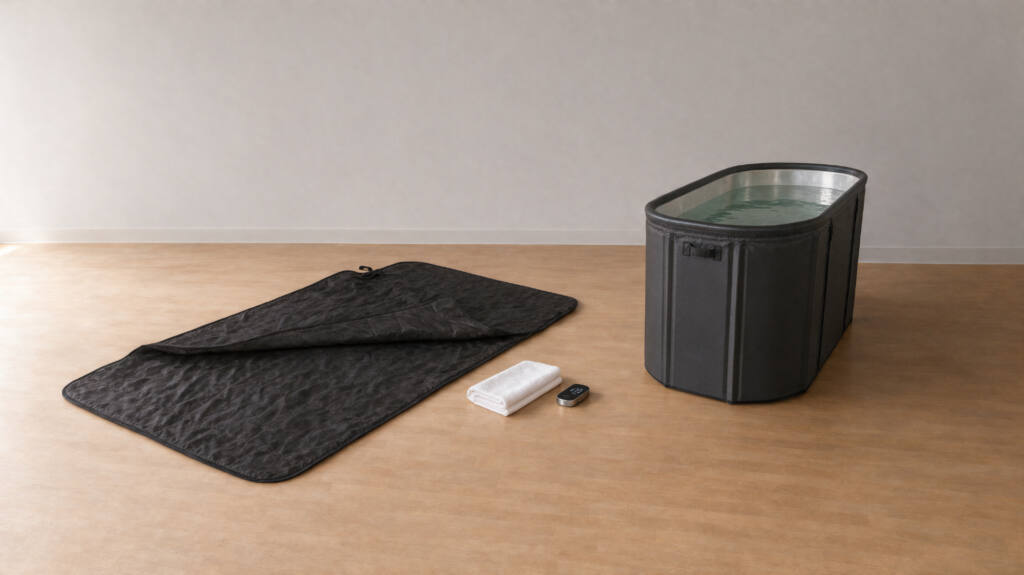
A sauna and cold plunge setup can work in a small apartment, condo, or home without a dedicated wellness room, but the key is choosing equipment that fits your electrical capacity, floor structure, and available space.
Contrast therapy—the practice of alternating heat and cold exposure—has become popular among athletes, fitness enthusiasts, and people interested in recovery. A warm sauna session followed by cold-water immersion can create a noticeable change in how the body feels, and some people find the routine relaxing or invigorating.
However, you do not need a $10,000 backyard installation to experiment with it.
A portable infrared sauna blanket and an existing shower can provide a simple introduction. A compact 120V infrared sauna and a properly installed portable cold plunge can create a more dedicated arrangement.
The challenge is making both parts work safely.
A sauna generates heat and consumes electricity. A cold plunge introduces substantial water weight, moisture, and drainage requirements. Combining them in one small room requires careful planning.
This guide explains what the science actually supports, how to select a practical small-space setup, how to alternate heat and cold conservatively, and what the equipment may cost to operate.
Bottom Line: The Best Contrast Therapy Setup for Small Spaces
For most renters, start with a portable infrared sauna blanket and an existing shower—not a full sauna cabin and a water-filled plunge tub. This avoids adding hundreds of pounds of water to an apartment floor and generally requires less dedicated space.
For homeowners with a suitable ground-level installation area, a compact 120V infrared sauna paired with a small, insulated portable plunge can be a more convenient long-term arrangement.
Three practical configurations are worth considering:
| Setup | Approximate initial equipment budget | Space needed | Electrical requirements | Best for |
| Infrared sauna blanket + existing shower | $200–$700 | Floor or bed-sized blanket area, plus bathroom | Manufacturer-specified 120V outlet; shower requires no separate cooling equipment | Renters and beginners |
| Compact 120V infrared cabin + existing shower | $1,000–$3,000+ | Small cabin footprint, access clearance, and bathroom | Often dedicated 120V circuit, depending on model | Homeowners wanting regular sauna sessions |
| Compact 120V infrared cabin + portable ice-cooled plunge | $1,100–$3,500+ | Separate dry sauna area and structurally suitable wet area | Sauna circuit; no electrical cooling required for ice-only tub | Ground-level homes and approved installations |
| Infrared blanket + portable plunge and chiller | $600–$2,000+ | Blanket area, tub footprint, chiller clearance | Separate equipment requirements; circuit capacity must be verified | Frequent users with suitable space |
These are illustrative planning ranges, not verified current retail prices. They exclude structural assessment, electrical upgrades, ongoing ice, and water-treatment costs.
The most important rule: A cold plunge is not automatically apartment-safe because the empty tub is lightweight. A 60-gallon fill contains approximately 500 pounds of water before adding the occupant and container.
Also, contrast therapy is optional. You can benefit from enjoying heat or cold separately without performing intense alternating sessions.
The Science of Contrast Therapy: What Actually Happens?
Contrast therapy involves moving between warm and cold environments, usually through a sauna, warm bath, cold shower, or cold-water immersion.
The immediate physiological responses are well understood. The long-term recovery benefits are less certain.
Heat Exposure and Vasodilation
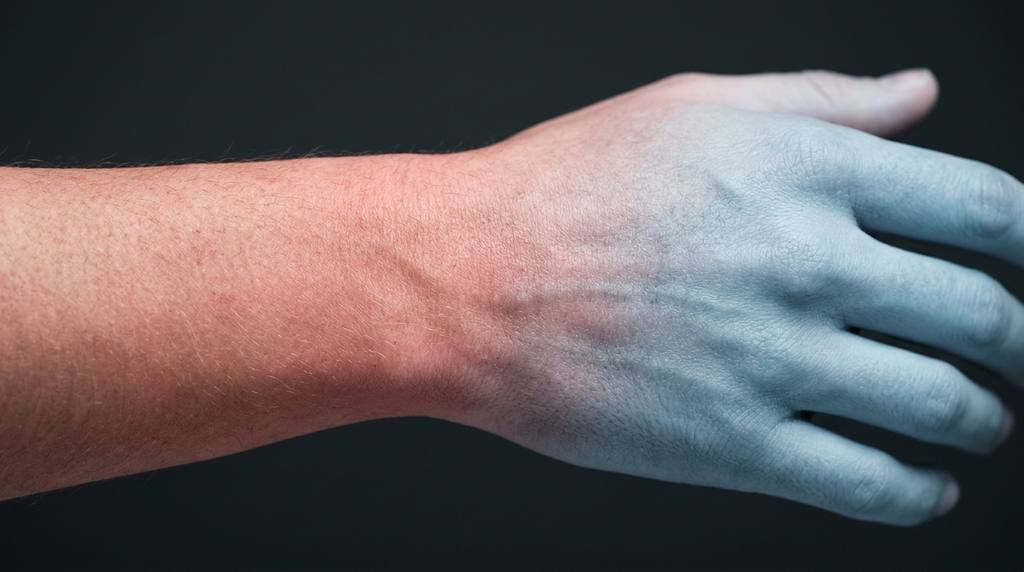
When your body heats up, blood vessels in the skin generally widen—a process called vasodilation.
This helps increase blood flow near the surface and supports heat dissipation.
Heart rate typically rises as the cardiovascular system works to regulate body temperature.
Sweating also helps cool the body through evaporation.
A sauna can create these responses, although the intensity depends on temperature, humidity, duration, and the type of sauna.
A traditional sauna and an infrared sauna do not necessarily produce identical heat exposure.
Cold Exposure and Vasoconstriction
Cold-water immersion produces a different response.
Blood vessels in the skin generally narrow, a process called vasoconstriction, reducing blood flow near the surface.
Cold water can also trigger an immediate cold-shock response involving rapid breathing, increased heart rate, and elevated blood pressure.
This response is one reason sudden immersion in very cold water can be hazardous.
Cold exposure is not simply the opposite of sauna exposure. The transition can create additional cardiovascular stress, particularly in people with underlying health conditions.
Does Alternating Hot and Cold Flush Lactic Acid?
The idea that contrast therapy flushes lactic acid is a common explanation, but it is too simplistic.
During exercise, the body produces lactate, which is also a useful fuel and metabolic intermediate. Lactate is not simply a waste product responsible for all post-exercise soreness.
There is insufficient evidence to claim that alternating sauna and cold plunge sessions reliably removes lactate faster or produces superior long-term recovery.
Some studies of contrast water therapy suggest potential improvements in perceived soreness or short-term recovery measures compared with passive rest, but findings vary with the protocol and outcome measured.
Most of that research involves alternating hot and cold water, not necessarily a sauna followed by a cold plunge.
Does Contrast Therapy Reduce Inflammation?
Cold-water immersion can temporarily influence circulation, pain perception, and certain inflammatory responses.
However, that does not establish that every contrast therapy routine reduces systemic inflammation or improves long-term health.
The effects depend on the temperature, duration, timing, and individual.
For strength-training enthusiasts, frequent cold-water immersion immediately after resistance training may also interfere with some muscle-growth adaptations.
If maximizing hypertrophy is your main goal, consider separating intense cold immersion from your lifting sessions rather than assuming colder is always better.
What Benefits Are Reasonable to Expect?
A practical contrast therapy routine may offer:
- A subjective feeling of relaxation or alertness.
- Temporary changes in perceived muscle soreness.
- A structured recovery ritual.
- Enjoyment of heat and cold exposure.
It should not be presented as a proven method to detoxify the body, eliminate inflammation, or guarantee faster recovery.
The strongest reason to create a home setup is that you enjoy the routine and can perform it comfortably and safely.
The Small-Space Solution: Choosing Your Sauna and Cold Plunge
The most efficient small-space design uses equipment that can be stored or shared with existing bathroom facilities.
You do not need two permanent installations.
The Sauna Option: Infrared Sauna Blanket
An infrared sauna blanket is one of the simplest ways to add heat exposure to a small home.
It folds for storage and generally uses a standard US 120V electrical supply, subject to the manufacturer’s specific requirements.
Unlike a full cabin, it does not need a dedicated room.
You can use it in an appropriate dry area with the required heat-resistant surface and clearance.
For product comparisons, see our guide to the best infrared sauna blankets for apartments.
A blanket has limitations. It heats the body differently from a traditional sauna, may not expose the head and respiratory environment to the same heat, and requires careful attention to skin comfort and overheating.
Always follow the manufacturer’s temperature, clothing, placement, and duration instructions.
Owners who use sauna blankets in small apartments frequently mention that the ability to fold it up and slide it under the bed is the main reason they chose it over a cabin, but they also warn that you must lay it flat to cool down completely before folding it, or the trapped heat can damage the internal elements.
The Sauna Option: Compact 120V Infrared Cabin
If you want a more traditional seated experience, a compact infrared cabin may be suitable.
Some one-person models are designed for nominal 120V service.
However, a standard-looking plug does not mean the sauna can safely share a circuit with other appliances.
Many models require a dedicated 15A or 20A circuit.
Confirm the nameplate power, circuit requirements, ventilation clearances, ceiling height, and assembly dimensions before purchasing.
Our guide to the 5 best infrared saunas for apartments covers compact models designed around residential power constraints.
For renters, landlord approval is important, even when the cabin does not require permanent construction.
The Cold Option: Portable Inflatable Tub
A portable inflatable or folding cold plunge is attractive because it can be drained and packed away.
You do not need to install permanent plumbing.
A compact round tub may fit in certain bathrooms or utility rooms, while a longer oval model requires substantially more floor space.
Our guide to the best inflatable cold plunges for apartments compares portable options.
But portability applies when the tub is empty.
A water-filled plunge may weigh hundreds of pounds, and its concentrated load can exceed what a particular floor or shower pan is suitable to support.
Do not place one on an upstairs floor or balcony without appropriate building approval and structural assessment.
The Cold Option: DIY Stock Tank
A plastic stock tank can provide a simple ice-cooled plunge for a suitable ground-level installation.
It avoids the need for an electric chiller.
However, stock tanks still require appropriate structural support, drainage, cleaning, and safe entry and exit.
Not every livestock tank is approved for human immersion, so verify the container’s intended use and materials.
Our DIY cold plunge guide explains these considerations.
Do not use an ordinary chest freezer as a water-filled bathtub. A thermostat and added sealant cannot eliminate its electrical and structural hazards.
The Simplest Alternative: Use Your Existing Shower
For renters, a shower is often the most practical cold-exposure option.
It already has plumbing and drainage.
You can finish a warm session, move to the bathroom, and use cooler shower water without storing a separate tub.
Shower water temperature depends on your local supply and season, so it may not be as cold as an ice bath.
That is not necessarily a disadvantage.
A moderate cold shower can be a more manageable introduction than plunging into near-freezing water.
How to Execute a Contrast Therapy Protocol Step by Step
There is no universally established sauna-to-cold-plunge ratio that is optimal for everyone.
You may encounter routines recommending 15 minutes of heat, three minutes of cold, repeated three or four times. These are examples of popular protocols, not scientifically established requirements or appropriate starting targets for beginners.
For small-space home use, a shorter, more conservative approach is preferable.
Step 1: Prepare Both Areas Before Starting
Check that the sauna is operating normally and that the cold-water temperature is known.
If using a portable tub, confirm that it is structurally supported, filled according to the manufacturer’s instructions, and positioned near an appropriate drain.
Keep a dry towel, water for drinking, and a stable place to sit nearby.
Do not begin if you feel unwell, dehydrated, or dizzy.
Avoid alcohol before and during heat or cold exposure.
Step 2: Begin With a Moderate Heat Session
For someone new to sauna use, an illustrative starting session might be approximately 5–10 minutes at a comfortable, manufacturer-approved setting.
Do not treat this as a minimum duration.
Infrared sauna blankets, infrared cabins, and traditional saunas operate differently, so follow the instructions for your specific equipment.
Exit if you become lightheaded, nauseated, unusually weak, or uncomfortable.
The goal is manageable heat exposure, not enduring the highest temperature.
Step 3: Transition Gradually From Heat to Cold
After leaving the sauna, sit or stand in a safe, dry area and allow your breathing and balance to settle.
Use a towel to remove sweat and avoid rushing across wet flooring.
If you are new to contrast therapy, start with a cool shower rather than immediate immersion in very cold water.
For an approved plunge setup, enter slowly while maintaining normal breathing. Keep your head above water and avoid breath-holding.
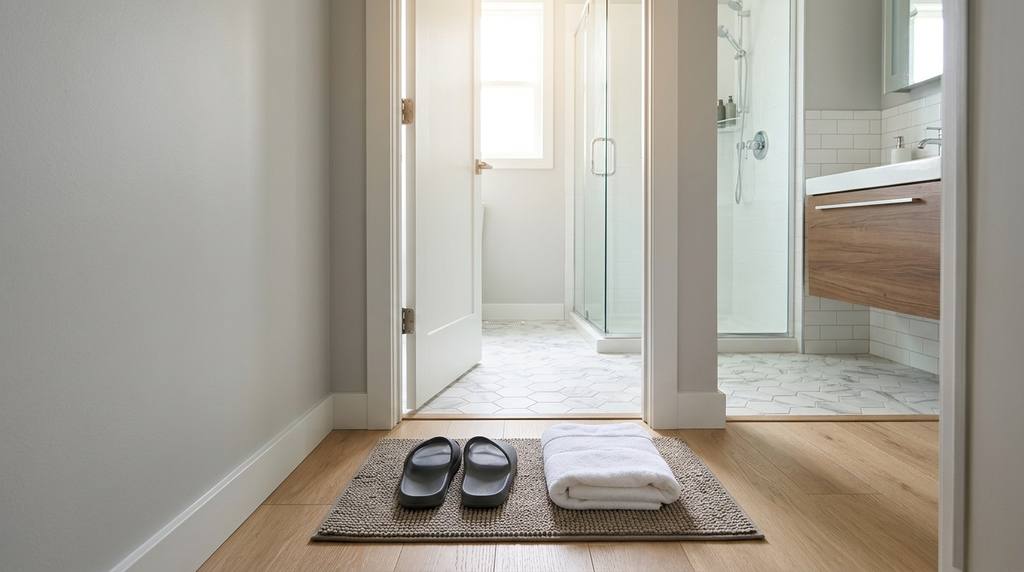
Renters who set up a blanket in the bedroom and use the shower for cold exposure frequently note that the walk between the two rooms is the hardest part of the routine, especially if you have to cross carpet or navigate around furniture while your heart rate is elevated.
Step 4: Keep Cold Exposure Brief
A beginner might start with a short cool shower or, if medically appropriate and using a safely installed plunge, a brief immersion of approximately 15–30 seconds at a tolerable temperature.
This is an illustrative conservative starting point, not a universal medical prescription.
There is no need to start at 37°F or 40°F.
Water in the 55–65°F range may already feel quite cold, especially after heat exposure.
Cold tolerance varies considerably. If you experience uncontrolled gasping, chest discomfort, dizziness, numbness, or difficulty breathing, stop immediately.
Never remain in cold water simply to finish a timer.
To understand the physiological reasons why shorter is often safer, read our science-based guide on how long you should stay in a cold plunge.
Step 5: Decide Whether to Repeat
Beginners do not need three or four cycles.
One manageable heat exposure followed by a short cool-down is a reasonable introduction.
Only consider additional cycles after establishing that you tolerate both environments comfortably, and avoid progressively intensifying the session just to reach a target number.
A longer routine is not automatically more beneficial.
Step 6: Finish and Recover
After your final exposure, dry off and warm up gradually if you feel chilled.
Drink water as needed.
Avoid driving, strenuous activity, or another intense session if you feel dizzy or unusually fatigued.
If symptoms persist or are concerning, seek medical attention.
Why Timing Matters
Timing helps you avoid unintentionally extending sessions, especially when alternating between two environments.
A simple timer is sufficient.
You can use the Contrast Therapy Timer to organize your heat, transition, and cold intervals.
Treat its settings as scheduling aids, not medically validated exposure targets.
Comparing Common Protocols
| Approach | Illustrative heat exposure | Illustrative cold exposure | Main consideration |
| Beginner introduction | 5–10 minutes, as tolerated | Brief cool shower or 15–30 seconds of tolerable immersion | One cycle may be sufficient |
| Moderate established routine | 10–15 minutes, if tolerated | 30–90 seconds at a tolerable temperature | Individual response matters |
| Common advanced routine | 15 minutes | 3 minutes | Not an appropriate default for beginners |
| Multi-cycle routine | Repeated heat periods | Repeated cold periods | More cardiovascular stress and no proven optimal cycle count |
These are descriptions of possible routines, not recommendations for everyone. People with cardiovascular disease, uncontrolled blood pressure, fainting disorders, pregnancy, or other relevant medical concerns should obtain individualized medical advice before trying intense heat or cold exposure.
Managing the Logistics: Space, Weight, Electricity, and Water
A combined setup is only practical when both pieces of equipment can be used without interfering with one another.
Space: Keep Heat and Water Separate
A small apartment does not necessarily need a dedicated contrast therapy room.
For example, an infrared blanket might be used in a suitable dry bedroom area, followed by a cool shower in the bathroom.
For a compact infrared cabin, a dry corner of a ground-level home or suitable garage may work better.
Avoid placing electrical sauna equipment immediately beside a plunge where splashing, condensation, or wet feet could create hazards.
Follow all manufacturer-required distances from water, walls, furniture, and combustible materials.
Do not block doors, hallways, or emergency exits.
For a small garage, a practical arrangement might have the sauna along one wall and the plunge near an approved drain, with enough room between them for safe movement and equipment maintenance.
Weight: The Cold Plunge Is Usually the Bigger Structural Concern
A portable cold plunge can create a substantial load.
Water weighs approximately 8.34 pounds per US gallon.
| Water volume | Water weight | With a 180-lb occupant |
| 30 gallons | 250 lb | 430 lb |
| 40 gallons | 334 lb | 514 lb |
| 50 gallons | 417 lb | 597 lb |
| 60 gallons | 500 lb | 680 lb |
| 80 gallons | 667 lb | 847 lb |
| 100 gallons | 834 lb | 1,014 lb |
These totals exclude the tub and accessories.
The actual operating volume may be lower than the tub’s advertised capacity, but the occupied load still needs evaluation.
Use the Cold Plunge Weight Calculator before choosing a location.
An elevated apartment floor, balcony, or shower pan must not be assumed suitable merely because the tub fits. Obtain building approval and a qualified structural assessment where needed.
Electricity: Calculate the Combined Load
An infrared sauna and an electric water chiller may both draw substantial power.
For illustration:
- A 1,500W infrared sauna draws approximately 12.5A at 120V.
- A chiller drawing 600W uses approximately 5A at 120V.
- Together, they would draw approximately 17.5A.
That exceeds the rating of a 15A circuit and leaves inadequate capacity for other loads on a 20A circuit, particularly where continuous-load requirements apply.
These are illustrative wattages, not specifications for particular models.
Check each appliance’s nameplate and installation instructions.
A dedicated circuit may be required for the sauna, chiller, or both. Required GFCI protection and outlet placement must also be followed.
Do not connect both appliances to a power strip or use an extension cord to bypass circuit limitations.
For monthly electricity estimates, use our Electricity Cost Calculator.
Water: Plan Filling, Drainage, and Cleaning
A portable plunge requires a suitable water source and a reliable way to empty it.
If using a hose, secure the discharge end and confirm that the receiving drain can handle the flow.
A compatible utility pump may be necessary if the drain is higher than the tub outlet.
Never leave filling or draining unattended.
For an ice-only tub without approved filtration and sanitation, draining and cleaning after each session is a conservative approach.
For a chiller-equipped system, follow the manufacturer’s filtration, sanitation, and water-testing instructions.
Cold water is not automatically sanitary.
Monthly Running Costs
The cost of contrast therapy depends on the equipment and frequency of use.
Consider a 1,500W infrared sauna used for 30 minutes per session, four times weekly.
At approximately 17 sessions per month and an illustrative electricity rate of $0.18/kWh:
1.5 kW × 0.5 hours × 17 sessions × $0.18 = approximately $2.30 monthly.
If you also purchase 10 pounds of ice per session at $0.25 per pound:
10 × $0.25 × 17 = approximately $42.50 monthly.
A chiller might reduce purchased-ice costs but add electricity, filtration, and maintenance expenses.
These figures are planning examples, not measured consumption or guaranteed costs.
Optional: Breathwork and Guided Recovery Protocols
Breathwork can help some people approach contrast therapy more calmly by encouraging attention to breathing and reducing the urge to panic during uncomfortable sensations.
However, claims that particular breathing techniques substantially increase the physiological benefits of sauna and cold exposure require stronger evidence.
For cold-water immersion, avoid hyperventilation, prolonged breath-holding, or any practice intended to suppress the normal urge to breathe. These techniques can increase the risk of fainting or drowning.
Simple, comfortable breathing and a gradual transition are safer priorities.
Some people find that structured breathwork helps them manage the physical shock of cold water. If you want to explore this, look for programs taught by credentialed instructors (such as certified Wim Hof instructors or yoga therapists) that emphasize safe, controlled breathing rather than extreme breath-holding or hyperventilation.
Frequently Asked Questions
Can I do contrast therapy in an apartment shower?
Yes. A suitable sauna blanket or compact sauna followed by a cool shower can provide a practical alternating heat-and-cold routine without installing a separate plunge.
A shower also avoids adding a large water-filled tub to the apartment floor.
Keep electrical sauna equipment in an appropriate dry location and follow all installation requirements.
How long should I stay in the cold plunge?
There is no universally safe or optimal duration.
Beginners should approach cold immersion conservatively, using tolerable temperatures and brief exposures.
Stop immediately if you experience uncontrolled breathing, dizziness, chest discomfort, or unusual symptoms.
Do not use a fixed three-minute target as a requirement.
Do I need a chiller for contrast therapy?
No. You can use a cool shower or an appropriately installed ice-cooled tub.
A chiller becomes more attractive if you plunge frequently and want consistent temperature control.
It also adds electrical, ventilation, filtration, and maintenance requirements.
Is contrast therapy better than using a sauna alone?
Not necessarily.
Contrast therapy produces different sensations and physiological responses, but evidence does not establish that alternating heat and cold is always superior to sauna use alone.
The best choice depends on your goals, health, preferences, and tolerance.
Should I finish with heat or cold?
There is no well-established universal rule.
Some people prefer finishing warm for comfort, while others enjoy a brief cool finish.
Choose the option that allows you to recover comfortably and avoid prolonged chilling, dizziness, or overheating.
Can I combine an infrared sauna blanket with a cold plunge?
Yes, provided both devices are used according to their instructions and the plunge location is structurally suitable.
Keep the sauna blanket and electrical connections away from splash zones.
Allow enough time between sessions to move safely and assess how you feel.
Is contrast therapy safe for people with high blood pressure?
Heat and cold can both affect blood pressure and cardiovascular workload.
Sudden cold immersion may produce a particularly strong response.
People with hypertension, heart disease, arrhythmias, or other cardiovascular concerns should consult their healthcare professional before trying contrast therapy.
Does contrast therapy help muscle recovery?
It may improve perceived soreness or certain short-term recovery measures for some people, but results are inconsistent and depend on the protocol.
There is no strong basis for promising that it flushes lactic acid or accelerates every form of recovery.
Frequent cold immersion immediately after resistance training may also interfere with some muscle-building adaptations.
Final Recommendations: Build the Simplest Safe Setup First
Best for Renters: Infrared Sauna Blanket and Cool Shower
For most apartment renters, this is the most practical combination.
It requires relatively little storage space and avoids the structural concerns of a large water-filled tub.
Choose a blanket that matches your electrical capacity and use it only in a suitable dry area.
Best for Small-Home Owners: Compact 120V Sauna and Portable Plunge
If you have a suitable ground-level room or garage, a compact infrared cabin paired with a small ice-cooled plunge can provide a dedicated setup.
Confirm the sauna’s circuit requirements and the plunge’s occupied weight before purchasing.
Avoid selecting a larger tub simply because it holds more water.
Best for Frequent Users: Sauna and Chiller-Equipped Plunge
A refrigerated plunge may make sense if you use it regularly and have sufficient space, electrical capacity, ventilation, and a proper sanitation system.
Expect higher upfront costs and additional maintenance.
The Overall Verdict
A sauna and cold plunge setup does not need to be expensive or permanent to be useful.
For most people living in apartments or small homes, the most sensible approach is to begin with a compact heat source and an existing shower.
If you later add a plunge tub, prioritize structural support, drainage, and water maintenance before convenience features.
If you add a chiller, verify the electrical load and ventilation requirements.
Most importantly, use heat and cold conservatively. Longer sessions, lower temperatures, and more cycles are not automatically better.
The right contrast therapy routine is one you can perform comfortably, safely, and consistently without compromising your home or health.
This post contains affiliate links. If you buy through them, we may earn a commission at no extra cost to you.