Disclosure: This article contains affiliate links, including Amazon Associates links. If you purchase through them, we may earn a commission at no extra cost to you.
Learning how to keep cold plunge water clean is often the difference between enjoying your cold plunge regularly and getting frustrated with cloudy water, slippery surfaces, and constant draining.
Buying a cold plunge is relatively straightforward. Maintaining the water is where many new owners discover the real work.
Every time you enter the tub, you introduce sweat, skin oils, hair, and microorganisms. Dust and debris can also enter the water, especially in garages and outdoor installations.
Cold temperatures slow some biological processes, but they do not sterilize water.
A cold plunge that looks perfectly clear can still contain harmful microorganisms. Conversely, cloudy water may result from particles, poor filtration, water chemistry problems, or microbial growth.
The solution is not simply adding more chemicals.
It is understanding the difference between filtration and sanitation, choosing a maintenance routine appropriate for your equipment, and knowing when the safest option is to drain and refill.
This guide explains three levels of cold plunge maintenance, a practical weekly routine, common mistakes, realistic operating costs, and how to decide when your water needs replacing.
Bottom Line: How to Keep Cold Plunge Water Clean
The safest maintenance approach depends on whether your cold plunge has a manufacturer-approved filtration and disinfection system.
For a basic inflatable or ice-only tub without one, draining and cleaning after every session is the most conservative option.
For a plunge specifically designed to retain water, a properly sized circulation filter, compatible sanitizer, routine testing, and periodic water replacement can support longer use.
Do not assume a chiller or UV lamp makes water safe indefinitely.
Here is the practical distinction:
| Setup | Maintenance approach | Water retention | Best for |
| Basic portable tub without filtration or sanitizer | Drain, clean, and dry after each use | One session | Occasional users and renters |
| Portable tub with approved circulation and sanitation | Test sanitizer, monitor pH, clean filter, inspect water | According to manufacturer and test results | Regular users with limited space |
| Integrated chiller, filtration, and sanitation system | Test water, maintain sanitizer, service filter and equipment | According to manufacturer and water quality | Frequent users and homeowners |
There is no universal number of days that guarantees safe water. Water quality depends on the number of bathers, organic contamination, sanitizer performance, circulation, temperature, and equipment design.
A weekly maintenance schedule is useful, but some checks—particularly sanitizer and pH testing—may need to happen before every session.
The Golden Rule: Filtration vs. Sanitation
The most important concept in cold plunge maintenance is that filtration and sanitation perform different jobs.
A filter can remove particles.
A sanitizer controls microorganisms.
You generally need both when retaining water in a recirculating plunge system, unless the manufacturer specifies a different validated treatment design.
What Filtration Actually Does
A circulation pump moves water through a filter that captures suspended material.
Depending on the filter’s construction and rating, it may remove hair, lint, dirt, skin particles, and other debris.
Filters are often described by their micron rating.
For example, a 20-micron filter is designed to capture particles of a particular size, but its actual removal efficiency depends on whether the rating is nominal or absolute and how the filter is constructed.
A finer filter may capture smaller particles but can also require more frequent cleaning or create greater flow resistance.
A standard particle filter does not reliably kill bacteria or viruses.
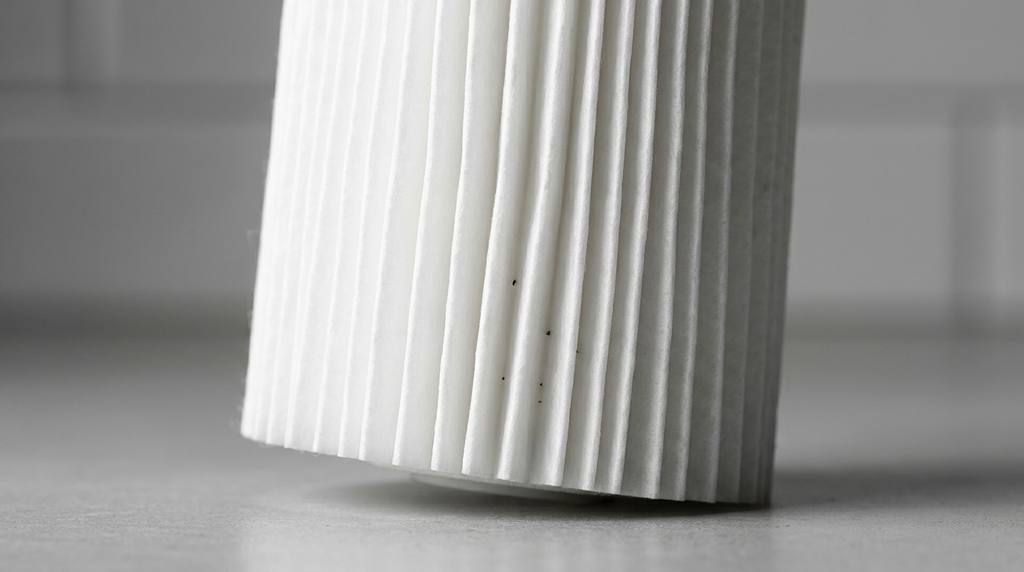
Owners who install a filter often notice that the water looks clearer almost immediately, but visual clarity is not proof of sanitation, so test the water rather than relying on appearance.
What Sanitation Does
Sanitation is the process of controlling harmful microorganisms in the water.
For systems designed to use them, approved disinfectants such as chlorine or bromine can provide a measurable sanitizer residual.
That residual is important because contamination can enter the water each time someone uses the plunge.
A sanitizer must be compatible with the tub, plumbing, pump, chiller, seals, and heat exchanger.
Some manufacturers prohibit particular chemicals because they can damage components or create safety problems.
Never assume that a treatment suitable for a swimming pool is automatically appropriate for a small cold plunge.
What About UV and Ozone?
Ultraviolet treatment and ozone can contribute to water treatment when incorporated into a properly engineered system.
However, their effects depend on equipment design, flow rate, water clarity, exposure conditions, and maintenance.
UV generally acts on water passing through the treatment chamber. It does not leave a lasting disinfectant residual throughout the tub.
Ozone can oxidize contaminants and inactivate certain microorganisms under appropriate conditions, but it also requires careful engineering and safety controls.
Neither a UV lamp nor an ozone generator should automatically be treated as a complete replacement for a manufacturer-required sanitizer residual.
What About Hydrogen Peroxide?
Hydrogen peroxide is sometimes marketed for cold plunge water care.
Its suitability depends on the product formulation, concentration, treatment system, and manufacturer’s instructions.
Do not assume ordinary household hydrogen peroxide provides reliable disinfection for a shared or repeatedly used plunge.
Also, some oxidizers and sanitizer combinations can interfere with one another.
Never mix hydrogen peroxide with chlorine or other treatment chemicals unless the specific system manufacturer explicitly authorizes that combination.
The Practical Rule
If you want to keep water between sessions, choose a tub and treatment system designed for that purpose.
Follow the manufacturer’s documented water chemistry and maintenance requirements.
Do not build an improvised chemical program from unrelated pool, spa, and household products.
The Three Levels of Cold Plunge Water Maintenance
Not every owner needs the same equipment.
A renter who uses a portable tub twice monthly has different requirements from someone who runs a refrigerated plunge every morning.
Level 1: Drain and Refill — Best for Ice-Only Renters
This is the simplest approach.
You fill the tub with clean water, cool it with ice, use it, and then drain and clean the container.
There is no need to maintain water chemistry between sessions because the water is not being stored for reuse.
Basic Routine
- Start with a clean tub and potable water.
- Shower before entering.
- Use the plunge conservatively.
- Drain the water through an approved route.
- Wash the tub using a manufacturer-approved cleaning product.
- Rinse thoroughly and allow it to dry.
Avoid abrasive cleaners that could damage inflatable liners or seals.
Do not leave a damp folding tub packed away, as trapped moisture can encourage odors and mold.
Advantages
- No ongoing sanitizer dosing.
- Simple cleaning procedure.
- Fewer components to maintain.
- Well suited to occasional use.
Disadvantages
- More frequent water use.
- Repeated filling and draining.
- More time spent setting up.
- Ice may need to be purchased for each session.
For renters, this is often more manageable than installing a filtration system.
Our guide to the best cold plunge for renters covers portable setups that avoid permanent plumbing.
Level 2: Weekly Refresh — For Portable Tubs With Approved Treatment Systems
Some inflatable or portable plunges can be paired with compatible circulation and sanitation equipment.
This may allow water to be retained between sessions, but only when the system is designed and maintained for that use.
A weekly refresh should not mean adding a random dose of treatment once every seven days and assuming the water remains safe.
What You Need
- A manufacturer-approved circulation and filtration system.
- A compatible sanitizer or validated disinfection arrangement.
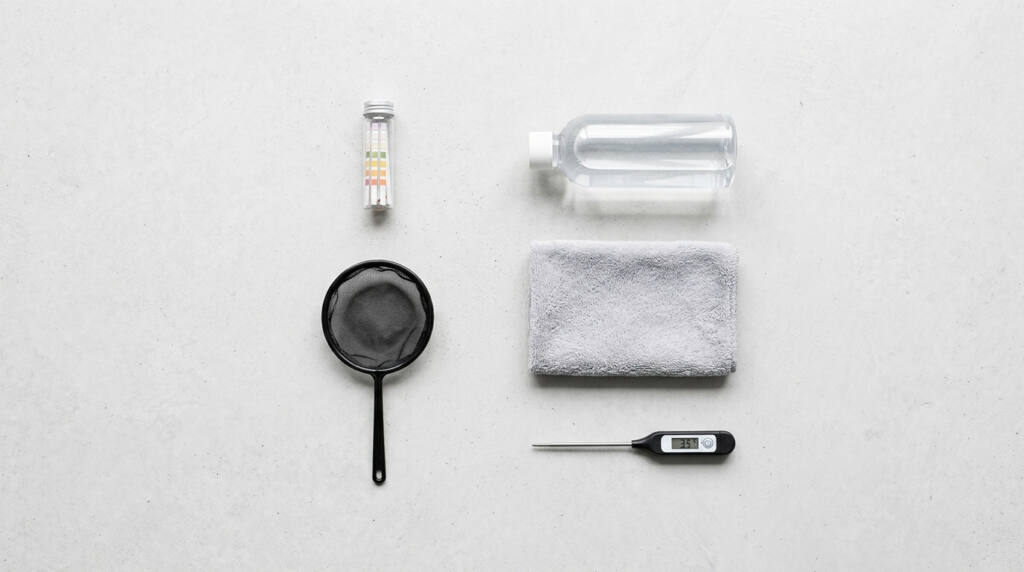
- Water testing equipment.
- A cleaning and inspection routine.
- A clear water-replacement policy.
Pool and Spa Water Test Strips
Test strips can provide convenient measurements, but they must be appropriate for the sanitizer used and capable of measuring the required range.
For important decisions, a suitable liquid test kit may offer more precise readings, depending on the parameter and kit.
Chlorine and Bromine
Chlorine and bromine are familiar water disinfectants.
However, cold plunge tubs differ from conventional swimming pools and hot tubs in volume, materials, circulation, and operating temperature.
Use only products and dosing methods permitted by the plunge manufacturer.
Follow the specified target ranges for pH and sanitizer residual, testing frequency, and corrective procedures.
Do not use generic dosage charts without checking that they apply to your exact system.
Liquid Water Treatments
Products such as Ouster may help manage oils, particles, or other water-care concerns.
Ouster 3in1 Cold Plunge Water Treatment
However, a product advertised for managing oils or particles should not automatically be considered a disinfectant.
Unless its label specifically establishes antimicrobial efficacy and approved directions for that purpose, do not rely on it to control harmful microorganisms.
Follow the product label and tub manufacturer’s compatibility instructions.
Owners who switch from draining after every session to retaining water often discover that keeping the surface looking clean is easier than maintaining reliable sanitizer readings, so establish a testing routine before extending the water-change interval.
What a Weekly Refresh Really Means
For a compatible treated system, a weekly refresh may involve inspecting the water, cleaning the filter, checking the tub surfaces, and performing any manufacturer-required treatment or partial water replacement.
Sanitizer and pH checks may be required more frequently, including before each use.
If the sanitizer cannot be maintained within the approved range, stop using the plunge until the problem is corrected.
Level 3: Integrated Chiller System — For Frequent Users
A refrigerated cold plunge may include a pump, filter, chiller, and additional treatment equipment.
These systems can reduce the work involved in cooling and circulating water.
But they are not maintenance-free.
The phrase set and forget is misleading when applied to water sanitation.
What the Equipment Does
The chiller controls water temperature.
The pump circulates water.
The filter removes particles.
UV or ozone equipment, if included, provides additional treatment according to its design.
A compatible sanitizer or other validated treatment method is still necessary when specified by the manufacturer.
Routine Responsibilities
Owners typically need to:
- Monitor water chemistry at the required frequency.
- Clean or replace filter cartridges.
- Inspect hoses and fittings.
- Check pump operation and circulation.
- Clean the tub interior.
- Replace water when required.
- Maintain UV or ozone components, if installed.
Choose replacement cartridges specified for your equipment.
A filter that looks similar may have different dimensions, flow resistance, or filtration characteristics.
Why Cold Temperature Is Not Enough
Refrigeration can slow some microbial activity, but it does not sterilize water.
Certain microorganisms can survive in cold environments, and contamination may accumulate through repeated use.
If your chiller includes filtration but no approved sanitation method, do not assume the water can safely remain in the tub for weeks.
For equipment comparisons, see our guide to cold plunge chillers under $1,000.
The 15-Minute Weekly Cold Plunge Maintenance Routine
For a properly equipped plunge with manufacturer-approved filtration and sanitation, a short weekly inspection can help prevent small maintenance problems from becoming expensive ones.
The following routine is a practical checklist, not a substitute for the manufacturer’s maintenance schedule.
Important: Fifteen minutes is enough for basic checks and cleaning, but not necessarily for chemical adjustment, filter soaking, disinfection, or a complete water change. Water testing may also be required before every session.
Step 1: Skim the Surface — 2 Minutes
Start by removing visible debris.
Hair, lint, dust, and leaves can collect on the surface or around the edges of the tub.
Use a fine-mesh skimmer to collect floating particles before they enter the circulation system.
Rinse the scoop after use and allow it to dry.
For more maintenance tools, see our guide to the best cold plunge accessories.
Step 2: Test pH and Sanitizer — 3 Minutes
Use a testing method compatible with your system.
For a plunge maintained with chlorine or bromine, check the sanitizer residual and pH against the ranges specified by the manufacturer.
Do not rely on a single universal pH or chlorine target for every cold plunge.
A manufacturer-approved system may use different chemistry from a conventional swimming pool.
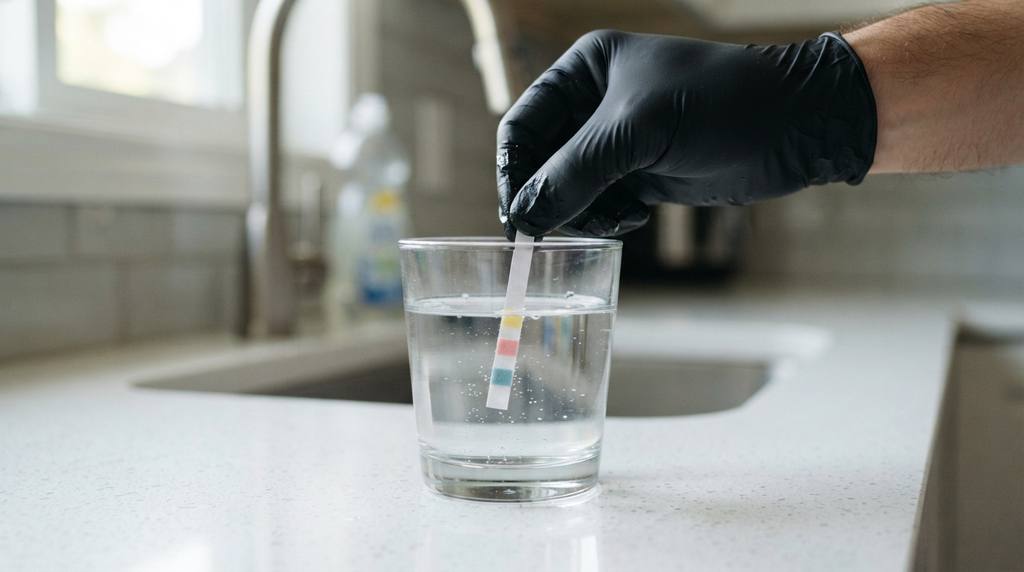
If the readings are outside the permitted range, do not enter the water until you have corrected the problem and confirmed the water is suitable for use.
Never add chemicals while someone is in the tub.
Follow all label instructions for dosing, circulation, waiting periods, and retesting.
Step 3: Inspect and Clean the Filter — 4 Minutes
Check the filter for visible debris, restricted flow, or signs that replacement is needed.
Some cartridges can be rinsed.
Others must be replaced rather than washed.
Follow the specific filter manufacturer’s instructions.
Before opening a filter housing, shut down the equipment and isolate electrical power as directed by the manual.
Do not operate a pump without its required filter or with an improperly secured housing.
If cleaning requires soaking or drying, that process will take longer than this brief inspection.
Step 4: Check Temperature and Circulation — 2 Minutes
Use a reliable thermometer to check the actual water temperature.
Compare the reading with the chiller’s displayed temperature, if applicable.
A difference between the two readings may indicate sensor placement, calibration, or circulation issues.
Check that water is circulating normally and that hoses are not kinked or leaking.
A chiller that runs while water circulation is restricted may experience performance problems or equipment damage.
Step 5: Inspect the Tub and Surrounding Floor — 4 Minutes
Look for residue around the waterline, slippery surfaces, damaged fittings, or moisture beneath the tub.
Check the cover for dirt and trapped water.
Wipe accessible surfaces using a product approved by the tub manufacturer.
If you notice persistent slime, unusual odors, or unexplained cloudiness, do not assume that a quick wipe is sufficient.
The water and treatment system may require more extensive cleaning or replacement.
A Simple Maintenance Schedule
| Task | Suggested checkpoint | Important qualification |
| Shower before use | Every session | Reduces contamination entering the tub |
| Check sanitizer and pH | Before use or as required | Follow the manufacturer’s testing schedule |
| Check temperature | Every session | Use a suitable thermometer |
| Remove visible debris | As needed | Does not replace filtration |
| Inspect filter and circulation | Weekly or as specified | Clean or replace according to instructions |
| Inspect tub and floor | Weekly and after leaks | Watch for moisture and damaged fittings |
| Drain and deep-clean | Based on system instructions and water quality | No universal safe interval |
Common Cold Plunge Water Maintenance Mistakes
A few habits can undermine even a well-equipped system.
Mistake 1: Using Household Bleach Without an Approved Procedure
Household bleach contains sodium hypochlorite, which is also used in certain water-disinfection applications.
However, household bleach formulations can vary in concentration and may contain additives unsuitable for plunge water.
Do not pour household bleach into a cold plunge unless the equipment manufacturer explicitly approves that exact product type and provides an appropriate dosing procedure.
Using an unapproved concentration can create unsafe water chemistry and damage equipment.
Never mix bleach with acids, ammonia, or other cleaning chemicals.
Mistake 2: Adding Extra Sanitizer to Be Safe
More sanitizer is not automatically better.
Excessive concentrations can irritate skin and eyes, damage materials, and make the water unsuitable for immersion.
Adding extra chemicals also does not compensate for poor filtration, heavy contamination, or inadequate circulation.
Measure the water, follow the approved treatment instructions, and retest before entering.
Mistake 3: Ignoring the Filter
A dirty filter can restrict water flow.
That can reduce filtration performance and interfere with chiller operation.
A filter may also become a place where contaminants accumulate.
Clean or replace it according to the manufacturer’s schedule rather than waiting for the water to look dirty.
Mistake 4: Skipping the Pre-Plunge Shower
Showering before entering is one of the simplest ways to reduce contamination.
Rinse away sweat, body oils, lotions, and other residues.
Avoid entering with heavy sunscreen, makeup, or recently applied skincare products.
Owners who use the same plunge regularly often notice a waterline film developing faster when people enter without rinsing, so a brief shower can reduce cleaning work later.
Showering does not replace disinfection, but it reduces the amount of material the treatment system must handle.
Mistake 5: Assuming Clear Water Is Safe
Water can appear clear while containing microorganisms.
A clean appearance is encouraging, but it is not a substitute for proper sanitizer readings, equipment maintenance, and manufacturer-approved treatment.
If the treatment system is not operating correctly, do not rely on appearance alone.
Mistake 6: Mixing Incompatible Treatments
Some treatment products are designed for specific systems.
Combining chlorine, bromine, peroxide, ozone-related chemicals, or other additives without verified compatibility can create hazardous reactions or interfere with disinfection.
Keep chemicals in their original labeled containers.
Store them away from children, pets, heat, and moisture, following label directions.
Never mix concentrated chemicals together.
Mistake 7: Keeping Water Too Long
Cold temperatures and filtration can make old water look acceptable.
But organic contaminants, dissolved substances, and treatment byproducts can accumulate over time.
A water change is sometimes the simplest and safest corrective action.
Do not keep extending the replacement interval simply because the water looks clear.
How Often Should You Change Cold Plunge Water?
The correct interval depends on your equipment and water-management system.
A common recommendation of changing water every two to four weeks may be a useful planning example for certain properly treated residential systems, but it is not a universal safe schedule.
Some systems require more frequent changes. Others may permit longer intervals under specific maintenance conditions.
Unfiltered, Ice-Only Tubs
For an ice-only tub without approved filtration and sanitation, drain and clean after every session.
This is particularly appropriate for portable tubs used occasionally by renters.
Do not assume that adding a small amount of water treatment allows an otherwise untreated tub to retain water safely for a week.
Filtered Tubs With Approved Sanitation
A manufacturer-approved filtered and sanitized plunge may allow water to be retained for days or weeks.
A two-to-four-week replacement interval can serve as a budgeting scenario, but the actual schedule must come from the manufacturer’s instructions, water-test results, and operating conditions.
More frequent replacement may be necessary with heavy use, multiple bathers, or persistent chemistry problems.
Chiller-Equipped Systems
A chiller does not determine the water-change interval.
The filtration, sanitation system, water chemistry, and bathing frequency are more important.
Follow the specific manufacturer’s schedule rather than assuming refrigeration makes monthly replacement sufficient.
When to Drain Immediately
Stop using the plunge and follow the manufacturer’s cleaning and disinfection procedure when:
- Water becomes persistently cloudy, slimy, or unusually odorous.
- The sanitizer cannot be maintained within the approved range.
- There is fecal, vomit, or other significant bodily-fluid contamination.
- The filtration or sanitation system has failed and water safety cannot be established.
- You suspect contamination from cleaning chemicals or other substances.
A simple drain and rinse may not be sufficient after serious contamination. Follow the applicable manufacturer procedure before refilling.
Monthly Cold Plunge Maintenance Costs
Keeping water clean does not necessarily require expensive equipment, but there are recurring costs.
The biggest differences are water replacement frequency, filter type, and the sanitation system.
Water Replacement Costs
Suppose your plunge holds 80 gallons.
At an illustrative combined water and sewer usage rate of $15 per 1,000 gallons:
- One 80-gallon refill costs approximately $1.20 in usage-based charges.
- Four refills cost approximately $4.80.
- Eight refills cost approximately $9.60.
Actual utility bills depend on local rates, fixed charges, and sewer billing rules.
A large plunge also takes more time to fill and drain.
Filtration and Sanitation Costs
The following are illustrative monthly budgets, not verified product prices or recommended chemical-dosing schedules.
| Maintenance expense | Illustrative monthly cost |
| Water testing supplies | $3–$10 |
| Compatible water-care products | $5–$20 |
| Replacement filter cartridges | $5–$25 |
| Cleaning supplies | $2–$10 |
| Water usage | $2–$15 |
| Illustrative combined budget | $17–$80 |
Not every system needs every item. A reusable filter may reduce cartridge purchases, while a more complex treatment system may have additional maintenance costs.
These figures exclude chiller electricity and major equipment replacement.
What About Chiller Electricity?
For a refrigerated plunge, electricity is a separate operating expense.
For example, a system averaging 400W of electrical consumption for six hours per day would use:
0.4 kW × 6 hours × 30 days = 72 kWh.
At $0.18/kWh, that equals approximately $12.96 monthly.
This is an illustrative calculation, not a verified consumption figure for a specific chiller.
Insulation, ambient temperature, compressor cycling, and pump runtime all affect actual usage.
Don’t Forget the Cost of Drainage
Water disposal is particularly important in apartments.
A large tub may require a suitable utility pump and hose if gravity drainage is not possible.
Never discharge water where it could damage flooring, neighboring apartments, or building structures.
If you’re choosing a new plunge, calculate its complete occupied weight using our cold plunge weight calculator before planning its installation.
Frequently Asked Questions
Can I use pool chlorine in a cold plunge?
Only if the cold plunge manufacturer specifically approves the product and provides suitable water-chemistry instructions.
Pool chlorine products vary in formulation and concentration.
A chemical suitable for a large swimming pool may not be appropriate for a small plunge with different materials and circulation equipment.
Never guess at the dose.
Why did my cold plunge water turn cloudy?
Cloudiness can result from suspended particles, oils, inadequate filtration, water-chemistry problems, or microbial contamination.
Do not assume the cause based on appearance alone.
Stop using the tub until the cause is identified and corrected according to the manufacturer’s instructions.
If safe water quality cannot be established, drain and clean the system.
Does cold water kill bacteria?
No. Cold water does not reliably sterilize a plunge.
Some microorganisms may grow more slowly at lower temperatures, but others can survive.
Proper sanitation remains necessary when water is retained between sessions.
Can I keep cold plunge water clean without a filter?
For an occasional-use portable tub, the conservative approach is to drain, clean, rinse, and dry it after every session.
If you want to retain water, use a manufacturer-approved treatment system appropriate for that purpose.
Adding chemicals to an unfiltered tub does not automatically make extended water storage safe.
Is ozone enough to sanitize a cold plunge?
Not necessarily.
Ozone can contribute to water treatment in a properly designed system, but its effectiveness depends on equipment design and operating conditions.
It does not automatically provide the persistent sanitizer residual that some systems require.
Follow the manufacturer’s complete treatment instructions.
How often should I test cold plunge water?
Follow your system’s specified testing schedule.
For water maintained with a sanitizer residual, checking sanitizer and pH before use is a prudent practice, particularly for residential systems without automated monitoring.
Test more frequently after heavy use, chemical adjustments, or unexpected water-quality changes.
Can I leave cold plunge water in the tub for a month?
Possibly, but only if the manufacturer permits that interval and the filtration, sanitation, and water-quality conditions support it.
A month is not a guaranteed safe period.
If your tub lacks an approved system for retaining water, drain and clean it after use.
Do I need to shower before using a cold plunge?
Yes, a brief shower is a useful hygiene measure.
It reduces the sweat, oils, cosmetics, and debris entering the water.
However, showering does not replace filtration, disinfection, or water testing.
Final Recommendations: Keep the Routine Simple
For Renters With Portable Ice-Only Tubs
Use clean water for each session.
Shower beforehand, then drain, clean, rinse, and dry the tub afterward.
This avoids the complexity of storing chemically treated water in a small apartment.
For Inflatable Tub Owners Who Want to Retain Water
First confirm that the tub is designed for repeated water storage with a compatible circulation and sanitation system.
Use the specified filter, approved sanitizer, and appropriate testing equipment.
Do not extend the water-change interval without reliable water-quality checks.
For Chiller Owners
Treat the chiller, filtration, and sanitation equipment as separate parts of the maintenance system.
Keep the filter clean, maintain the approved water chemistry, inspect circulation, and replace water according to the manufacturer’s instructions.
A refrigerated plunge can be convenient, but it is never truly maintenance-free.
Our Overall Verdict
Learning how to keep cold plunge water clean comes down to a few consistent habits: reducing contamination before entering, filtering out debris, maintaining approved sanitation, testing the water, and replacing it when required.
For an unfiltered tub, fresh water each session is the simplest conservative choice.
For a properly equipped system, water may be retained longer—but only with appropriate maintenance and testing.
If you combine your plunge with a sauna, our contrast therapy setup guide explains how to manage both activities safely in a small home.
The goal is not to keep the same water indefinitely. It is to maintain a clean, properly managed plunge without unnecessary work or avoidable health risks.
This post contains affiliate links. If you buy through them, we may earn a commission at no extra cost to you.