Disclosure: This article contains affiliate links, including Amazon Associates links. If you purchase through them, we may earn a commission at no extra cost to you.
If you’re wondering do saunas help you lose weight, the science points to an important distinction: sweating can temporarily lower the number on your scale, but it does not mean you have burned a meaningful amount of body fat.
It’s an appealing idea. Spend 20 minutes relaxing in a hot sauna, sweat heavily, and step out several pounds lighter.
Social media often presents this as evidence that saunas burn fat, accelerate metabolism, or remove toxins that prevent weight loss.
Unfortunately, the physiology doesn’t work that way.
Sweat is primarily water and electrolytes. Fat loss occurs through metabolic processes that use stored energy, not through sweating fat out of your skin.
That doesn’t mean saunas are useless for someone trying to manage their weight.
Regular sauna use may offer cardiovascular, relaxation, and sleep-related benefits. For some people, these can provide indirect support for a sustainable wellness routine.
The key is understanding what sauna exposure can realistically accomplish—and what it cannot.
This guide separates water loss from fat loss, explains what happens when your body heats up, compares infrared and traditional saunas, and shows how to incorporate sauna sessions safely into a healthy lifestyle.
The Short Answer: Do Saunas Help You Lose Weight?
No. Sauna sessions do not directly produce significant, sustained fat loss.
A sauna can temporarily reduce your body weight through sweating, but most of that immediate change is water loss.
When you drink fluids and restore normal hydration, the lost water weight returns.
Owners who weigh themselves right after a sauna frequently see the scale drop by 2 or 3 pounds, but they often note that this weight comes right back after drinking a single bottle of water, proving that the change is just temporary hydration loss.
Sauna exposure does increase heart rate and places additional demands on the cardiovascular system.
That requires some energy, but the additional calorie expenditure is generally too small and uncertain to treat sauna use as a meaningful weight-loss strategy.
A sauna can still be useful as part of a healthy routine.
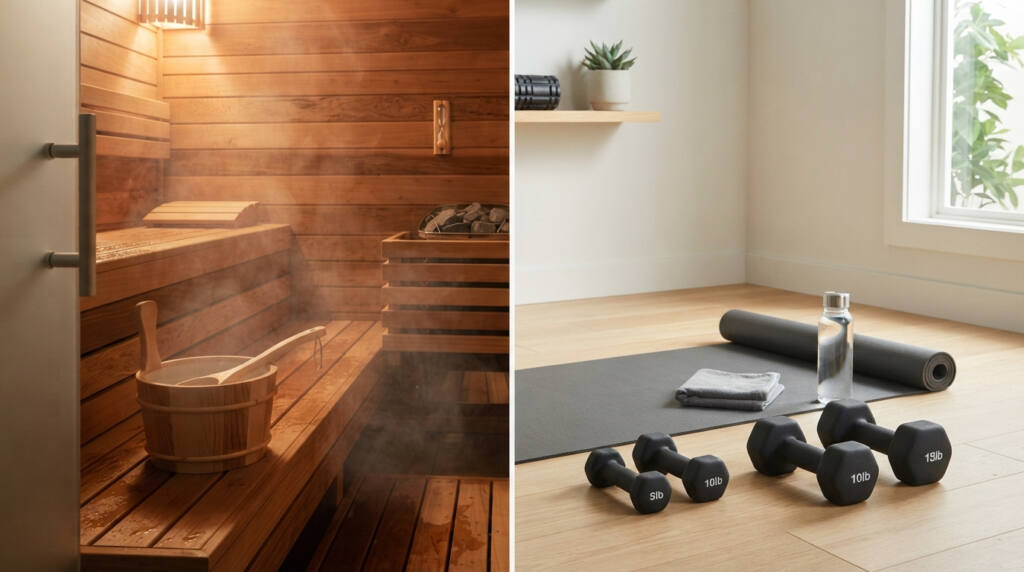
For example, someone who enjoys relaxing after exercise may find that regular sauna sessions make their wellness habits more sustainable.
However, those are potential indirect benefits, not evidence that heat exposure independently causes fat loss.
Water Weight vs. Fat Loss
| What changes? | Water weight | Body fat |
| Main mechanism | Fluid loss through sweating | Metabolic use of stored energy |
| How quickly can it change? | Minutes to hours | Generally over days to months |
| What happens after drinking water? | Weight usually returns | Rehydration does not reverse actual fat loss |
| Does sauna exposure directly cause it? | Yes, temporarily | Not to a meaningful established degree |
| Useful measure of long-term progress? | No | Yes, alongside other health measures |
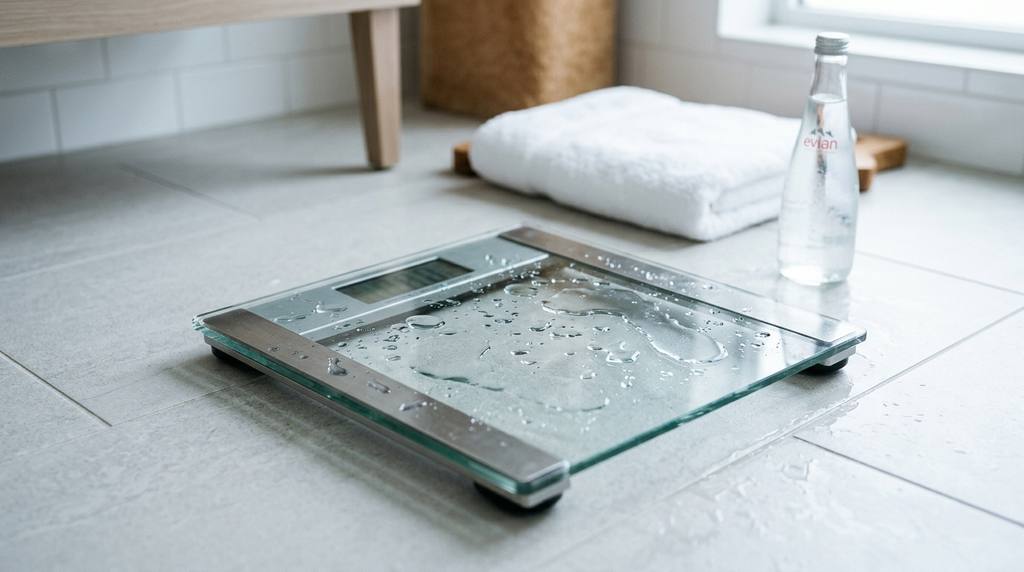
Bottom line: If your weight drops immediately after a sauna, you have primarily lost fluid—not fat.
The Science: What Actually Happens When You Sweat?
Understanding how sweating works makes most sauna weight-loss claims easier to evaluate.
Sweat Is Mostly Water and Electrolytes
Sweating is one of the body’s main cooling mechanisms.
As your body temperature rises, sweat glands release fluid onto the skin.
When that moisture evaporates, it helps remove heat.
Sweat consists primarily of water, along with electrolytes such as sodium and chloride and smaller amounts of other substances.
It does not contain meaningful quantities of body fat.
You cannot sweat fat cells out through your pores.
A person who sweats heavily is not necessarily burning more calories or losing more fat than someone who sweats less.
Sweat rate depends on heat exposure, humidity, genetics, acclimatization, hydration, and other factors.
How Your Body Actually Loses Fat
Body fat is stored primarily as triglycerides.
When the body needs energy, it can break down these molecules and metabolize their components.
The carbon in metabolized fat ultimately leaves the body mainly as carbon dioxide through breathing. Hydrogen and oxygen also contribute to water produced during metabolism.
This is fundamentally different from losing water through sweat.
Sustained fat loss generally requires an energy deficit over time, meaning energy intake is lower than energy expenditure.
Dietary habits, physical activity, sleep, medications, health conditions, and individual physiology can all influence weight management.
Sauna exposure does not bypass these processes.
Does a Higher Heart Rate Mean More Calories Burned?
Not necessarily.
During a sauna session, your heart rate often increases as the cardiovascular system works to dissipate heat.
That response can resemble certain aspects of exercise.
However, a higher heart rate caused by heat does not mean your muscles are performing the same mechanical work as they would during walking, cycling, or running.
Fitness trackers may overestimate calorie expenditure if they interpret a heat-induced heart-rate increase as exercise intensity.
A sauna session can increase energy expenditure above resting levels, but the amount varies and is difficult to estimate accurately without direct measurement.
How Many Calories Does a Sauna Burn?
There is no reliable universal figure for calories burned during a 15-, 20-, or 30-minute sauna session.
Body size, heat exposure, duration, and individual physiology all matter.
To illustrate the scale, consider a hypothetical 180-pound adult.
Using the standard MET-based energy equation, a 20-minute activity at 1.5 METs would expend approximately 43 calories, while an activity at 2.0 METs would expend approximately 57 calories.
These are mathematical illustrations, not validated MET ratings for sauna bathing.
The additional expenditure above resting energy use would be smaller.
For a personalized illustrative estimate, use our sauna calorie calculator.
Treat calculator results as estimates, not measurements of fat loss.
Why Comparing a Sauna to a Walk Is Misleading
A light walk also uses energy, but it involves muscular activity and physical movement.
Walking contributes to physical fitness in ways passive heat exposure does not fully replicate.
Sauna exposure may create cardiovascular stress, but it does not replace the mechanical, muscular, and metabolic benefits of regular exercise.
If your goal is weight management, walking regularly is a more evidence-supported strategy than attempting to increase your sauna calorie burn.
How Saunas May Indirectly Support Weight Management
Although saunas do not directly burn substantial amounts of body fat, they may complement behaviors that support long-term health.
The important phrase is indirect support.
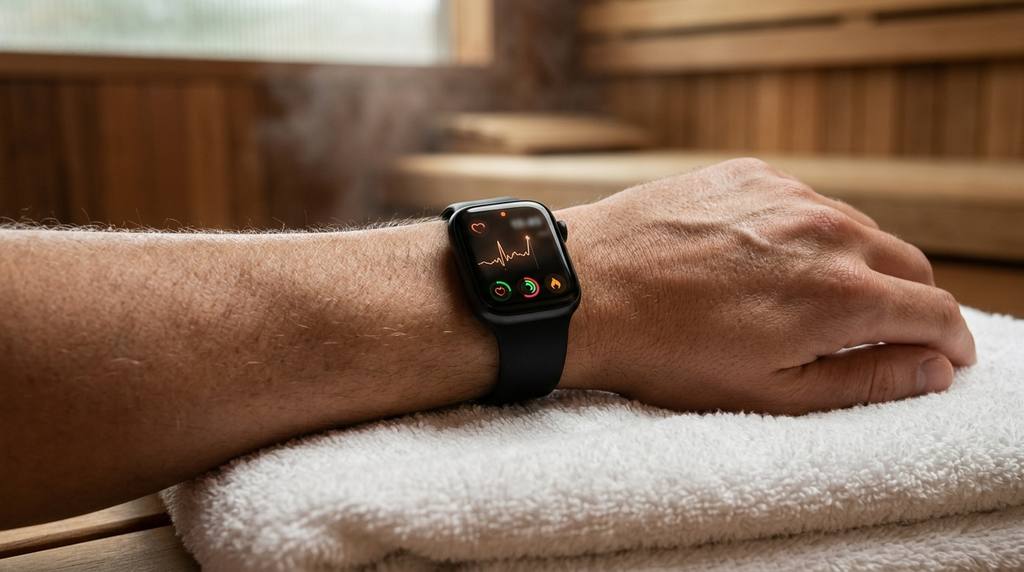
A sauna should be considered an optional addition to a healthy lifestyle, not a replacement for nutrition, exercise, or medical care.
1. Cardiovascular Health and Circulation
Heat exposure causes blood vessels near the skin to widen, helping the body release heat.
Heart rate increases, and circulation changes as the cardiovascular system responds to the higher temperature.
Research on regular sauna bathing has found associations with certain favorable cardiovascular outcomes, including lower rates of some cardiovascular events in observational populations.
However, association does not prove causation.
People who use saunas regularly may differ in physical activity, lifestyle, health status, and other characteristics from those who do not.
Small intervention studies have also investigated blood pressure and vascular function, but more research is needed to establish the magnitude and durability of these effects.
Fitness enthusiasts frequently mention that using a sauna after a workout is a great mental transition to the rest of the day, but they are careful to point out that the sauna itself does not replace the actual muscular work of lifting or running.
Sauna use can complement a healthy lifestyle, but it does not provide the full cardiovascular and muscular benefits of physical activity.
2. Muscle Recovery and Exercise Consistency
Some people use saunas after exercise because warmth feels relaxing and may temporarily reduce their perception of stiffness.
If this makes a person more comfortable maintaining an exercise routine, it could indirectly support weight management.
However, evidence that sauna bathing reliably accelerates muscle repair or allows people to train harder is limited.
Feeling better after a session is not the same as demonstrating faster physiological recovery.
A sauna also cannot compensate for inadequate sleep, poor nutrition, or insufficient rest between demanding workouts.
Use heat as an optional recovery ritual rather than a reason to increase training intensity beyond your capacity.
3. Stress Reduction and Eating Habits
Stress can influence appetite, food choices, and daily routines.
For some people, stress contributes to emotional eating or makes healthy habits more difficult to maintain.
A comfortable sauna session may promote relaxation and provide time away from screens and other distractions.
But the claim that sauna use consistently lowers cortisol and therefore prevents stress eating is not established.
Cortisol is a normal hormone involved in stress responses, metabolism, and many other functions.
Acute heat exposure can actually increase certain stress-related hormonal responses, depending on the conditions.
The more defensible benefit is behavioral: if sauna time helps you relax and maintain a sustainable routine, that may be useful.
It is not a proven hormonal weight-loss treatment.
4. Sleep and Metabolic Health
Sleep is an important component of weight management.
Insufficient or disrupted sleep can affect appetite regulation, food choices, energy levels, and the ability to maintain physical activity.
Some sauna users report feeling more relaxed or sleeping better after an evening session.
However, research directly establishing that sauna use improves sleep enough to cause measurable weight loss is limited.
If you enjoy sauna bathing in the evening, experiment with a comfortable schedule that allows your body to cool before bedtime.
Avoid excessively long or hot sessions that leave you dehydrated or uncomfortable.
5. Building a Consistent Wellness Routine
For many people, this is the most realistic benefit.
A sauna can become part of a predictable routine that includes exercise, hydration, nutritious meals, and adequate sleep.
It may also provide a relaxing alternative to less helpful habits.
That is worthwhile even if the sauna itself contributes little to calorie expenditure.
The indirect support comes from how sauna use fits into your overall lifestyle, not from sweating more intensely.
The Water Weight Trap: Why the Scale Drops After a Sauna
One of the most persuasive sauna weight-loss claims comes from before-and-after weigh-ins.
Someone steps into a sauna, sweats heavily, and then weighs two pounds less.
The result is real, but its meaning is frequently misunderstood.
How Much Water Can You Lose?
Sweat losses vary widely with temperature, humidity, duration, individual sweat rate, and acclimatization.
For illustration, losing one pound of body weight through sweating corresponds to approximately 16 fluid ounces of water by weight.
Two pounds correspond to approximately 32 fluid ounces, or about one US quart.
These are approximate fluid-equivalent calculations, not targets for sauna use.
Losing that fluid does not mean you have lost two pounds of body fat.
Once you restore normal hydration, the weight typically returns.
Why Wrestlers and Bodybuilders Use Saunas
Some weight-class athletes use heat exposure to temporarily reduce body mass before weigh-ins.
This is commonly called cutting water weight.
The goal is to manipulate fluid balance, not to reduce body fat during a single session.
These practices can cause dehydration, electrolyte disturbances, impaired performance, kidney injury, heat illness, and cardiovascular complications.
They can be especially dangerous when combined with fluid restriction, intense exercise, diuretics, or other rapid weight-cutting methods.
Do not imitate competitive weight-cutting routines for everyday weight loss.
A lower number on the scale is not worth compromising hydration and health.
Why Sweating Out a Bad Diet Doesn’t Work
Suppose you eat more energy than your body needs over an extended period.
Spending additional time in a sauna does not simply erase that energy surplus.
Even if you lose several pounds of water during a session, the underlying energy balance has not meaningfully changed.
The same applies to claims that sweating removes dietary fat or sugar.
Your digestive and metabolic systems process nutrients through complex biochemical pathways. Sweat is not an alternative route for eliminating excess calorie intake.
A Better Way to Track Progress
If weight management is your goal, avoid judging progress immediately after a sauna.
Instead, assess longer-term trends under reasonably consistent conditions.
For example, compare measurements taken at similar times of day, with normal hydration, rather than immediately following heavy sweating.
Body weight naturally fluctuates because of water balance, sodium intake, digestion, and other factors.
Changes over several weeks are generally more informative than a single post-sauna reading.
What About Infrared Saunas? Do They Burn More Calories?
Infrared saunas are often marketed as especially effective for weight loss.
Some advertisements claim that a short infrared session can burn hundreds of calories or provide the equivalent of an intense workout.
Those claims deserve scrutiny.
Infrared vs. Traditional Sauna Heating
A traditional sauna primarily heats the surrounding air, while infrared heaters deliver radiant energy that warms the body and nearby surfaces.
The two experiences can differ substantially in operating temperature and perceived comfort.
Infrared systems often operate at lower air temperatures than traditional saunas.
However, neither heating method has been shown to produce substantial, sustained fat loss simply through passive exposure.
Do Infrared Saunas Have Higher MET Values?
A metabolic equivalent, or MET, is a unit used to describe energy expenditure relative to resting metabolism.
It is useful for comparing activities when reliable measurements are available.
But there is no universally accepted set of MET values demonstrating that infrared sauna bathing burns substantially more calories than traditional sauna bathing.
Comparing the two using unsupported MET ratings can create false precision.
Similarly, a heart-rate monitor cannot reliably determine sauna calorie expenditure simply by observing an elevated pulse.
There is no convincing basis for choosing infrared over traditional sauna specifically to accelerate fat loss.
Choose the heating method that suits your space, budget, comfort, and electrical capacity.
Why Infrared Can Still Make Sense for Small Apartments
For renters, the practical advantages of infrared equipment may be more important than claims about calorie expenditure.
A compact infrared cabin can sometimes operate on a suitable 120V circuit, depending on its specifications.
An infrared sauna blanket can be stored between sessions without dedicating permanent floor space to a cabin.
For portable options, see our guide to the best infrared sauna blankets for apartments.
For seated models, compare the best infrared saunas for apartments.
Both categories require appropriate electrical connections, manufacturer-approved placement, and attention to overheating risks.
How to Use a Sauna Safely for Wellness
Whether your goal is relaxation, general wellness, or indirect support for weight management, sauna safety should come before temperature or session length.
Start With Short, Comfortable Sessions
For someone new to sauna use, a brief session of approximately 5–10 minutes may be a reasonable introduction, provided the manufacturer’s instructions and individual health circumstances allow it.
There is no need to stay until you feel exhausted or excessively hot.
Temperature, humidity, and the type of sauna all influence heat stress.
Leave immediately if you experience dizziness, nausea, unusual weakness, chest discomfort, or difficulty breathing.
Stay Hydrated
Drink fluids according to your needs before and after sauna use.
For ordinary short sessions, water is generally sufficient for many healthy adults.
Longer sessions or substantial sweating may require additional attention to electrolyte replacement, but this depends on individual circumstances.
Avoid deliberately restricting fluids to make the scale show a lower number.
A reusable water bottle makes it easier to maintain a normal hydration routine.
Bambaw 24 oz Insulated Stainless Steel Water Bottle
Avoid Sauna Suits and Excessive Heat
Wearing a sauna suit to increase sweating does not increase fat loss in proportion to the fluid lost.
It can interfere with heat dissipation and raise the risk of overheating and dehydration.
Similarly, increasing sauna temperature or extending sessions simply to sweat more is not an effective weight-loss strategy.
Use the equipment as intended.
Monitor Temperature and Humidity
A suitable thermometer can help you understand the conditions inside a traditional sauna.
A hygrometer can also be useful where humidity is relevant.
Harvia SAS92300 Thermo-Hygrometer
Choose a device rated for the temperatures and humidity it will encounter.
Infrared blankets and some portable systems have their own temperature controls, so follow the manufacturer’s guidance rather than assuming an ordinary room thermometer provides an accurate measurement of body heat exposure.
Know When to Avoid Sauna Use
People with cardiovascular disease, uncontrolled blood pressure, a history of fainting, pregnancy, or other relevant medical conditions should seek individualized medical advice before sauna use.
Avoid sauna bathing when ill, intoxicated, or significantly dehydrated.
Some medications can affect heat tolerance or fluid balance.
Saunas are not a substitute for exercise, medical treatment, or professional weight-management guidance.
What About Alternating Sauna and Cold Plunge?
Some people combine heat exposure with cold-water immersion.
This practice is known as contrast therapy.
It can create additional cardiovascular stress, particularly when transitioning rapidly from heat to very cold water.
If you are interested in combining both, read our contrast therapy setup guide.
For cold-water duration and safety, see how long to stay in a cold plunge.
Neither adding cold immersion nor increasing the number of heat-and-cold cycles has been established as a reliable fat-loss method.
Frequently Asked Questions
How many calories does a 20-minute sauna burn?
There is no reliable universal number.
Energy expenditure depends on body size, temperature, duration, and individual physiology.
A sauna can increase energy use somewhat above resting levels, but heart-rate-based calorie estimates may be misleading during heat exposure.
Do not treat a 20-minute session as equivalent to a workout.
Can you lose belly fat by sitting in a sauna?
No. Sauna exposure does not selectively remove abdominal fat.
You may sweat more around your torso, but sweating in a particular area does not cause fat loss from that area.
Long-term changes in abdominal fat depend on broader metabolic and lifestyle factors.
Why do I weigh less after using a sauna?
The immediate difference is primarily water lost through sweating.
Your body weight generally returns toward its previous level after normal hydration.
That temporary reduction should not be confused with fat loss.
Can sauna use detox your body?
Your liver and kidneys perform the body’s primary processes for metabolizing and eliminating many waste products and potentially harmful substances.
Although small amounts of certain substances may appear in sweat, there is insufficient evidence that routine sauna sweating provides a clinically meaningful detoxification benefit.
Do not use sauna sessions as a treatment for suspected toxin exposure.
Are infrared saunas better for weight loss?
There is no convincing evidence that infrared saunas produce greater meaningful fat loss than traditional saunas.
Both can create heat stress and sweating, but neither replaces nutrition and physical activity.
Choose based on comfort, space, electrical requirements, and personal preference.
Can I use a sauna every day to lose weight?
Daily sauna use is not a proven weight-loss strategy.
Frequency should depend on your health, tolerance, hydration, and the manufacturer’s recommendations.
More frequent or longer sessions do not necessarily produce better outcomes and may increase the risk of dehydration or heat illness.
Does sweating more mean you’re burning more fat?
No.
Sweat production reflects the body’s cooling response, not the amount of fat being metabolized.
You can sweat heavily while expending relatively little energy.
You can also burn substantial energy during exercise without sweating heavily, depending on the environment.
Should I use a sauna before or after exercise?
Either may be appropriate depending on your goals and health, but heat exposure can contribute to fatigue and dehydration.
After exercise, allow your heart rate and breathing to settle and replace fluids as needed.
Avoid an intense sauna session immediately after a workout if you already feel overheated, dizzy, or dehydrated.
There is no evidence that using a sauna at a particular time guarantees greater fat loss.
Final Recommendations: Use a Sauna for Wellness, Not Rapid Weight Loss
If your primary goal is losing body fat, prioritize habits with stronger evidence: sustainable nutrition, regular physical activity, adequate sleep, and appropriate medical support when needed.
A sauna can be an enjoyable addition to those habits.
It may help you relax, create a consistent wellness ritual, and provide some cardiovascular responses associated with passive heat exposure.
But those potential benefits should not be confused with meaningful calorie burning or direct fat loss.
For a small apartment, an infrared sauna blanket may be the most practical option because it requires relatively little permanent space.
For homeowners with an appropriate electrical supply and dedicated room, a compact infrared cabin may offer a more comfortable seated experience.
Neither is a fat-burning shortcut.
The answer to “do saunas help you lose weight” is that saunas can temporarily reduce water weight and may offer indirect support for healthy routines, but they do not directly cause significant sustained fat loss.
Enjoy sauna sessions for their comfort and potential wellness benefits, rehydrate afterward, and measure weight-management progress over time rather than immediately after sweating.
This post contains affiliate links. If you buy through them, we may earn a commission at no extra cost to you.